
Old British Treasury notes: what they are worth today
Old British Treasury notes are small pieces of First World War financial history, but their age alone does not determine their value. This article explains how the notes are identified, what affects current collector prices, and how appraisal, sale, insurance and estate valuation are generally handled in the UK.
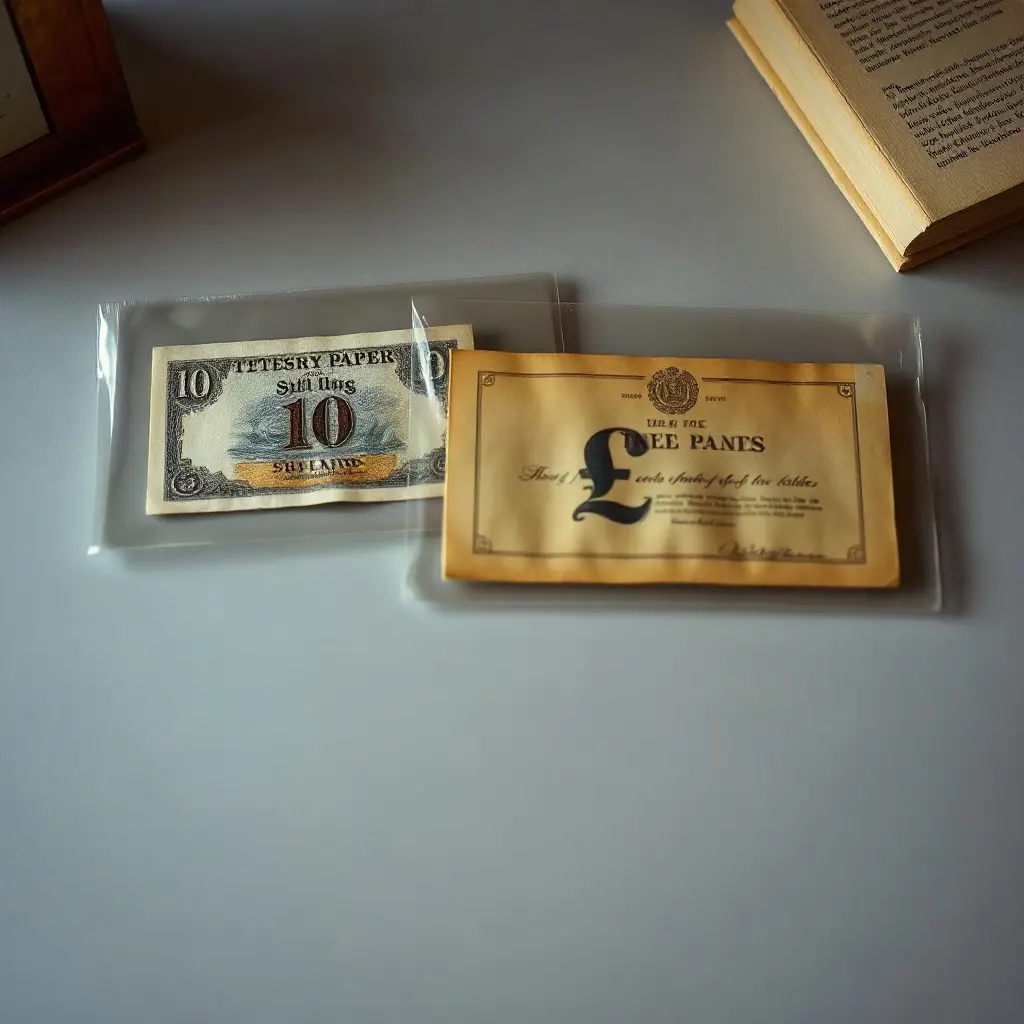
The best-known issues are the 10-shilling and £1 Treasury notes introduced in 1914, with production continuing into the post-war period before their replacement by Bank of England notes. As a broad guide, ordinary circulated examples can be worth tens to low hundreds of pounds: roughly £20–£100 for a 10-shilling note and £30–£150 for a £1 note, depending on the specific issue and condition. Unusually scarce, exceptional or well-preserved examples can exceed those ranges, while damage or a common variety can reduce them. A specialist's assessment and recent comparable sales are more useful than age or a seller's asking price alone.
Which notes count as British Treasury notes?
The notes most often meant by “British Treasury notes” are the emergency currency issued after the outbreak of the First World War. The 1914 Currency and Bank Notes Act authorised the Treasury to issue paper notes for 10 shillings and £1. They helped meet demand for cash when gold coins were being hoarded and ordinary currency was under pressure. The notes are sometimes called Bradbury notes, after John Bradbury, the Treasury official whose signature appears on early issues.
They are not the same as every old British banknote. Bank of England notes, Scottish and Northern Irish banknotes, later wartime emergency issues and local or commercial scrip have different issuers and collecting markets. Treasury notes were issued for several years; Bank of England £1 and 10-shilling notes began to replace them in 1928. Exact issue details matter because a note's date, wording, signature and design help identify the variety being valued.
Indicative values for old British Treasury notes
For a genuine, ordinary circulated example, a 10-shilling Treasury note may commonly fall around £20–£100, while a £1 note may be around £30–£150. These are broad indicative UK collector-market ranges, not fixed catalogue prices or guaranteed sale proceeds. A crisp, unusually clean note or a less commonly encountered issue may bring several hundred pounds, while a heavily worn, stained or repaired example can sell for less. Some exceptional examples may go beyond that, but rarity and buyer competition need to be demonstrated rather than assumed.
The value of old British Treasury notes is best judged against completed sales of the same denomination and closely matching variety. A dealer's asking price is not proof that a note will sell for that amount; auction results also need context, since buyer's premiums, seller's charges and the condition of each example differ. A small change in grade can matter greatly for paper money, and an online photograph may hide tears, pinholes, fading or repairs.
What changes a note's value?
Condition is a major influence. Collectors generally prefer paper that is clean, flexible and free of tears, folds, stains, pinholes, tape, writing and repairs. A note that appears uncirculated may still have a handling crease or a small defect that affects its grade. Flattening, washing, pressing or trimming a note can reduce its value, so cosmetic treatment is not a safe way to improve it.
Other factors include the issue date, signature, serial number, printing characteristics and how often that variety appears in the market. A low or repeating serial may interest some collectors, but it does not automatically make a note rare. An antique banknote valuation should identify the exact type and condition, then compare it with relevant realised prices. Rarity and condition are relative: a variety may be uncommon in high grade but more available in worn condition.
When rarity changes the picture
Rare currency appraisal is useful when a note has a variety or feature that is hard to price from broad guides. A specialist can compare its design and printed details with reference material, assess whether the serial or signature is significant, and look for signs of alteration or reproduction. For an unusual Treasury note, the difference between a genuinely scarce feature and a merely unusual-looking one can be substantial.
Rarity does not always mean a high sale price. A scarce variety in poor condition may attract fewer bidders than a more familiar note in excellent condition, and demand can shift between collecting interests. A written opinion is particularly helpful where a note is being divided among heirs, insured separately or considered for a high-value collection. It should state what was examined and whether the figure represents auction expectations, dealer value or another basis.
How sales of vintage notes usually work
People who sell vintage banknotes generally use one of three routes: a numismatic auction, a specialist paper-money dealer or a private transaction. Auction houses can expose a note to several collectors, but sale is not certain and commission, photography, insurance and other terms affect the amount ultimately received. A dealer may make a direct offer based on resale prospects and operating costs. A private sale can avoid some intermediary fees, but leaves the parties to agree on authenticity, payment and delivery arrangements.
The usual process is to identify the note, obtain one or more informed opinions, and compare the proposed sale method with recent results for similar examples. For a small group of common notes, the cost and effort of a formal appraisal may outweigh the likely gain in precision. For a rare or high-value note, an independent written assessment can help distinguish a reasoned price estimate from an unsupported claim. Any quoted figure should make clear whether fees are included.
What British currency collectors look for
British currency collectors may focus on the history of Treasury issues, particular signatures, serial-number patterns, design variations or high-grade examples. Some collect a complete run of denominations or dates; others concentrate on emergency currency or compare Treasury notes with Bank of England issues. This means the same note can appeal to different groups for different reasons, and collector interest is not determined by face value.
Historical background can help explain a note but does not substitute for condition and market evidence. A note from the first year of issue is not automatically more valuable than every later example. Collectors also look for a clear, legible design and original paper, while damage or restoration can affect both display appeal and resale. Well-documented provenance may be useful, especially for unusual notes, but a family story alone does not establish rarity or price.
Finding a suitable local valuer
A search for antique valuation services near me may return general antique shops, auctioneers, jewellery valuers and specialists in coins or paper money. For Treasury notes, relevant experience in numismatics and banknotes is important: a general antiques valuer may be able to refer the item but may not grade or identify the issue precisely. UK auction houses with a numismatic department and independent paper-money specialists are common places to find this expertise.
Before commissioning a report, ask what the valuation is for and what the fee covers. An auction estimate, an insurance replacement figure and an open-market valuation for an estate are different tasks, so the intended use should be stated. Fees may be a flat charge, an hourly rate or part of an auction arrangement, and terms differ by provider. A useful written report identifies the note, its condition, the valuation basis and the date of assessment.
Insurance and collection records
Collectable banknotes insurance is usually considered as part of a collection or valuables policy, rather than as a special cover automatically attached to each note. Insurers set their own limits, documentation requirements, security conditions and treatment of items kept at home or in storage. A high value asset insurance assessment may use a replacement value, which can differ from the amount likely to be realised at auction after fees.
Records make later claims and reviews easier to assess. Keep clear photographs of both sides, a note's identifying details, purchase or inheritance documentation where available, and any specialist valuation. Store paper currency away from direct light, damp and handling damage, using archival-quality sleeves or holders. The insurer, not the valuer, determines whether the report meets policy requirements and how often an updated assessment is needed.
Valuation when a collection forms part of an estate
For UK inheritance tax purposes, estate assets are generally valued at their open-market value at the relevant date: broadly, the price they might reasonably fetch if sold in the open market. A collection of Treasury notes should not simply be assigned face value, nor should an ambitious asking price be treated as proof of market value. The executor or administrator is responsible for the estate information, and HM Revenue & Customs may ask for support where a declared figure is material or uncertain.
A specialist estate appraisal can record issue, condition, comparable sales and the basis used for the estimate. For a modest group, documented auction comparisons may be adequate; a valuable or unusual collection is more likely to merit a formal report from a banknote expert or auction valuer. The appraisal should distinguish a single-note estimate from a group value, since selling several notes together may not produce the sum of separate individual estimates.
Handling, authenticity and common mistakes
Handle a note as little as possible, with clean, dry hands, and avoid folding or writing on it. Do not attempt to remove stains, repair tears with tape or press out creases. Such changes can damage the original paper and complicate grading. If a note's printing, paper or serial looks inconsistent, an experienced paper-money specialist can inspect it; photographs alone may not reveal a reproduction or alteration.
Common valuation mistakes include relying on a high online listing, assuming every old note is rare, and confusing the printed denomination with collector value. A £1 note does not become worth £1 in today's purchasing power as a collectible, nor does its age guarantee a large premium. The soundest estimate combines accurate identification, honest condition assessment and relevant completed sales, with uncertainty acknowledged when the variety or market evidence is limited.