
3 nights in Barcelona with return flights and central hotel included: an independent cost and planning guide
Key facts
- Barcelona–El Prat Airport connects with central Barcelona by bus, rail, metro and taxi.
- The Aerobús reaches Plaça de Catalunya in about 25 to 35 minutes and costs €7.45 in a 2026 guide.
- A 2026 guide lists the T-casual at €13 for 10 journeys, with airport restrictions applying.
- Barcelona’s tourist tax is reported at roughly €6 to €12 per person per night from April 2026.
A three-night Barcelona break from Ireland usually means an outbound flight, a return flight and three nights of accommodation, with roughly four calendar days shaped by departure and arrival times. The phrase “central hotel” is not a precise category, so the exact district, room standard, meals, baggage, transfers, taxes and attraction tickets need separate checking before the overall cost can be assessed.
What a three-night arrangement usually covers
Return flights mean two separate air journeys between an Irish airport and Barcelona–El Prat Airport. Dublin and Cork commonly appear in published travel comparisons, while Belfast can also feature in broader Ireland-facing travel planning. Flight schedules determine how much usable time remains, since an evening arrival or early departure can reduce the first or final sightseeing period considerably.
Accommodation described as central may be in Eixample, the Gothic Quarter, El Born, Raval, Plaça de Catalunya or nearby parts of the city. It does not automatically mean a particular hotel rating, breakfast, balcony, lift, air conditioning or walking distance from every landmark. A central address can improve access to sights, but busy streets, nightlife, noise and smaller rooms may also affect the experience.
Understanding 2026 costs
A reliable three-night total depends on travel dates, departure airport, flight times, cabin baggage, hotel category, room occupancy, cancellation terms and local taxes. Headline package wording may combine flights and accommodation while treating luggage, seat selection, meals, airport transfers and attraction entry as separate costs. A meaningful comparison therefore requires the full terms rather than a single starting figure.
| Cost area | What can change the amount | How it is commonly treated |
|---|---|---|
| Return flights | Airport, dates, schedule, baggage and seat choice | Usually a separate travel component |
| Three hotel nights | District, rating, room type, occupancy and season | May include breakfast, or accommodation only |
| Airport transfer | Bus, train, metro or taxi choice | Often excluded unless expressly stated |
| City sightseeing | Timed entry and attraction selection | Normally paid separately |
Barcelona’s 2026 visitor costs include transport and admission charges that can materially change the spending plan. A 2026 travel guide reports Sagrada Família entry from €26, while the same guide describes Park Güell as operating with timed access. These are destination expenses, not automatic parts of a flight-and-hotel arrangement. 1
Flights from Ireland and airport transport
Barcelona–El Prat is the city’s principal airport and is connected with Barcelona by public transport and taxis. The Aerobús runs towards Plaça de Catalunya in approximately 25 to 35 minutes and is listed at €7.45 in a 2026 Barcelona guide. Plaça de Catalunya is close to the Gothic Quarter, Eixample and several metro connections, making it a practical arrival point for many central hotels. 1
The airport metro is another option, although airport-specific ticket rules matter. The 2026 guide lists the Airport ticket at €5.90 and states that the T-casual and ordinary single tickets are not valid at the airport metro stations. The R2 Nord train from Terminal 2 can be useful for some journeys, but the terminal, hotel address and arrival time should be matched carefully before selecting a route. 1
Which areas count as central Barcelona
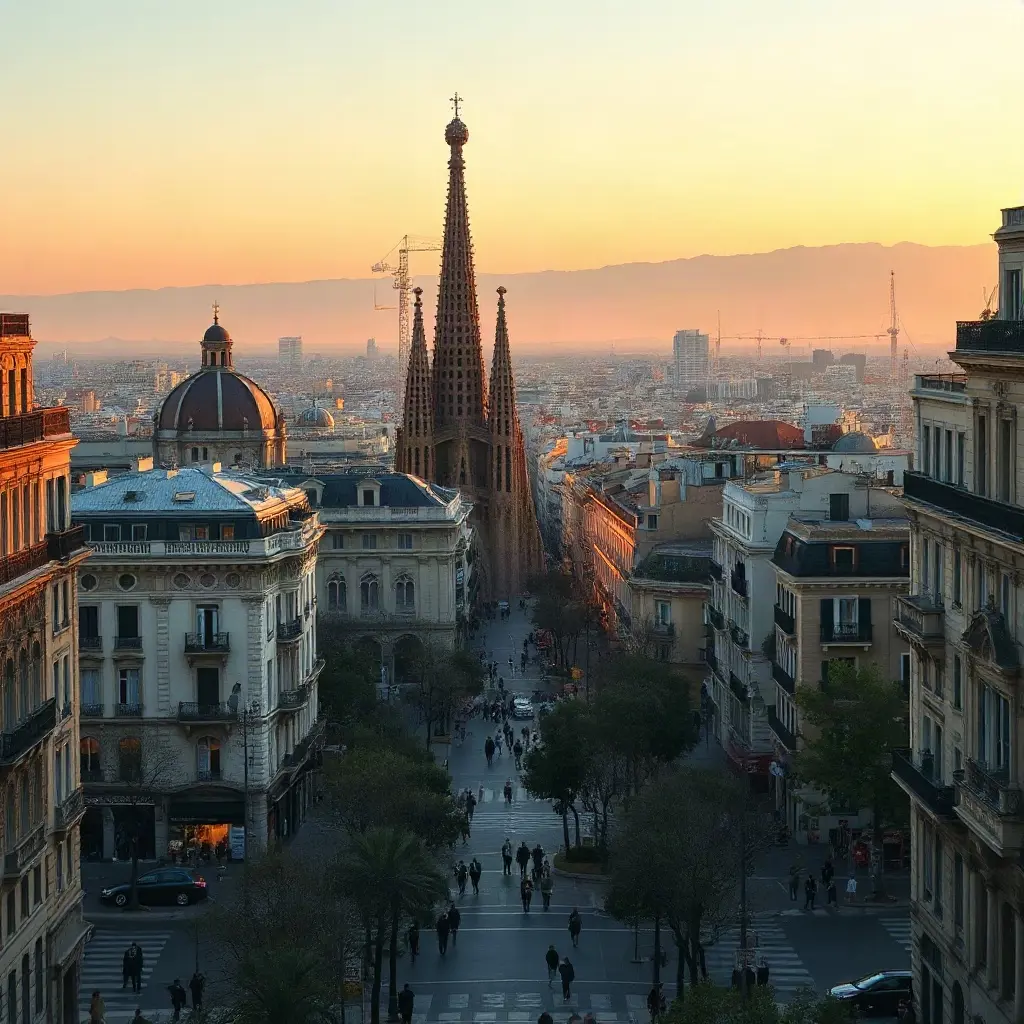
Eixample is a practical base for first-time visitors, with its broad avenues, regular street plan, restaurants and access towards Sagrada Família and Passeig de Gràcia. The Gothic Quarter places travellers near historic lanes, cathedral areas, Plaça Reial and La Rambla, although its narrow streets can be crowded and noisy. El Born offers museums, dining and a walkable route towards the waterfront.
Raval sits beside La Rambla and is close to the Boqueria Market, cultural venues and the old city, but the atmosphere changes noticeably from street to street. Gràcia is more residential and can provide a less tourist-focused setting, while remaining connected to the centre. Poblenou and Les Corts are well-connected alternatives, although describing them as central depends on the exact address and the traveller’s priorities.
A realistic three-night sightseeing plan
Arrival day is best kept flexible. After reaching the hotel, a short walk through the nearest district can provide an introduction without committing to a timed attraction. A second day could combine the Sagrada Família with Eixample and Passeig de Gràcia, provided entry times and travel intervals are planned. Sagrada Família tickets are reported from €26 in a 2026 guide. 1
The third day could focus on Park Güell, Gràcia and a return towards the old city, or replace the park with Montjuïc and the waterfront. The final morning is suitable for a nearby market, beach promenade or neighbourhood walk if the flight leaves later. La Rambla, the Gothic Quarter, Barceloneta and Gaudí-related architecture can fit into three nights, but attempting every major museum and landmark would make the schedule rushed.
Extra charges, entry rules and seasonal planning
Potential additions include checked baggage, cabin-bag upgrades, seat selection, meals, airport transfers, hotel breakfast, attraction tickets, local transport and travel insurance. Tourist tax also needs attention: a 2026 Barcelona guide reports roughly €6 to €12 per person per night from April 2026, depending on the accommodation and applicable rules. The amount should be checked against the final accommodation terms because taxes can be collected separately. 1
Irish travellers should check current Spanish entry requirements and airline document rules before departure, including the validity and acceptability of identification. Weather is generally most comfortable for extensive walking in spring, early summer and early autumn, while July and August can bring greater heat and visitor pressure. Festivals, school holidays, local events and timed-entry capacity can affect both accommodation costs and the practicality of a short itinerary, so dates are a central part of the calculation.
Sources
- Barcelona Travel Guide 2026: When to Go, Stay & Get Around: https://voyagehacks.com/en/destinations/europe/spain/barcelona/