
A Guide to the Different Types of Dental Bridges
Losing a tooth can affect your smile, your ability to chew, and even the alignment of your remaining teeth. A dental bridge is a common and effective solution for replacing one or more missing teeth, restoring both function and appearance. Understanding the different types available is the first step in discussing your options with a dental professional.
What Is a Dental Bridge?
A dental bridge is a fixed dental restoration used to replace one or more missing teeth by joining an artificial tooth, known as a pontic, to adjacent teeth or dental implants. The natural teeth or implants that provide support are called abutment teeth. The primary purpose of a bridge is to literally 'bridge' the gap left by a missing tooth, preventing surrounding teeth from shifting out of position, which could lead to bite problems and other complications.
Beyond maintaining tooth alignment, bridges restore the ability to chew and speak properly and help preserve the natural shape of your face. They are custom-made to match the color and shape of your natural teeth, providing a seamless and functional solution. A well-maintained bridge can last for many years, making it a reliable option for tooth replacement.
Traditional Dental Bridges
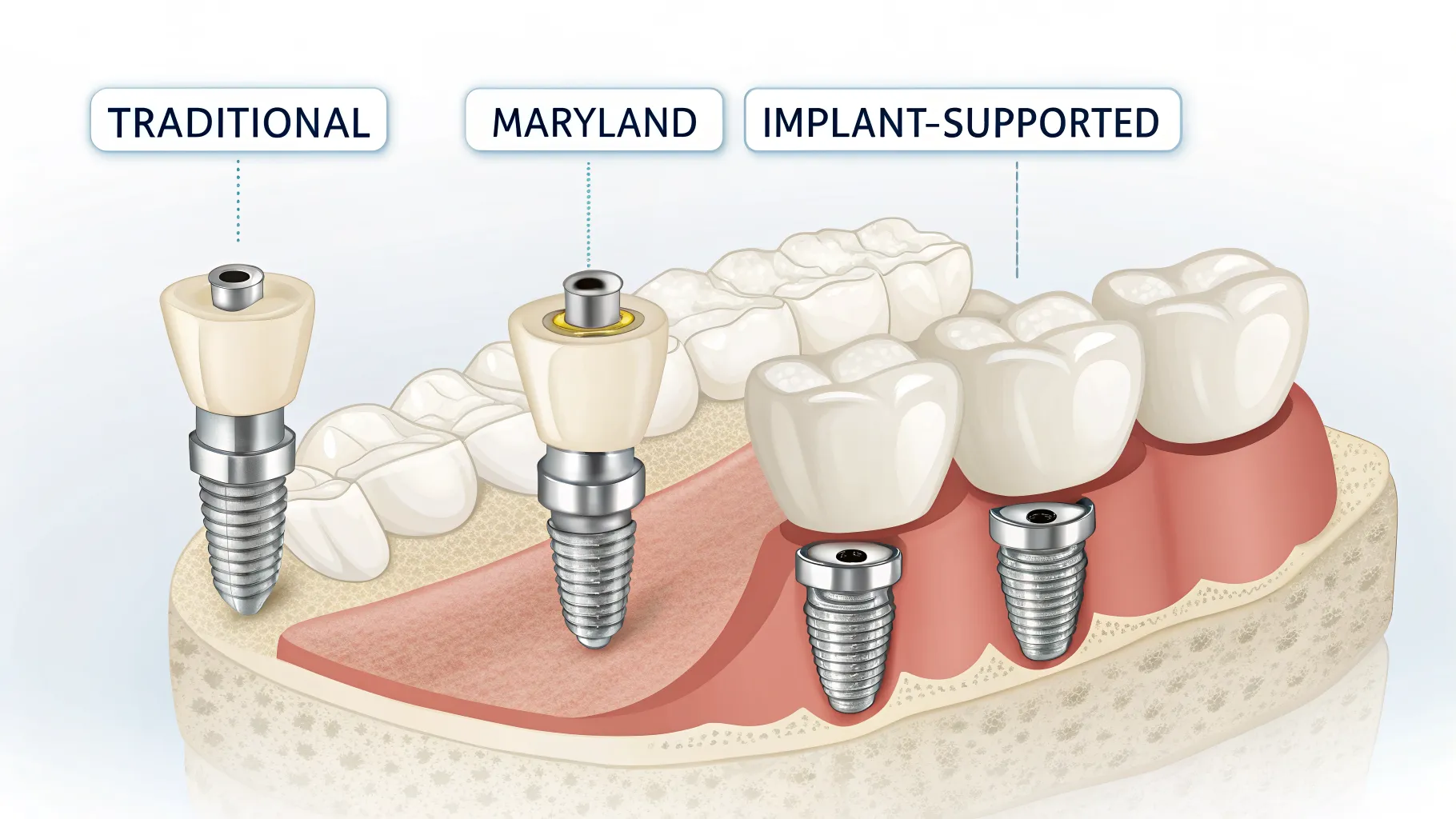
The most common type of dental bridge is the traditional bridge. This design consists of one or more pontics held in place by dental crowns that are cemented onto the abutment teeth on either side of the gap. For a traditional bridge to be an option, you must have natural, healthy teeth on both sides of the space left by the missing tooth.
The process involves preparing the abutment teeth by removing a portion of their enamel to make room for the crowns. An impression of the teeth is then taken to create a model for the bridge, pontic, and crowns. While the permanent bridge is being fabricated in a lab, a temporary bridge is placed to protect the exposed teeth and gums. Once ready, the permanent bridge is cemented into place.
Cantilever Bridges
A cantilever bridge is similar to a traditional bridge, but it is used when there are adjacent teeth on only one side of the gap. In this case, the pontic is supported by being attached to a dental crown that is cemented to a single abutment tooth. This structure works like a cantilever in construction, with the support anchored firmly on one end.
Because all the biting force is placed on one abutment tooth, cantilever bridges are not as common as traditional bridges. They are typically not recommended for the back of the mouth where chewing forces are greatest, as this can put too much strain on the single supporting tooth and lead to complications. They may be a viable option in areas with less stress, such as the front teeth.
Maryland Bonded Bridges
Also known as a resin-bonded bridge, the Maryland bridge is considered a more conservative alternative to the traditional bridge. Instead of using dental crowns on the abutment teeth, this type of bridge uses a metal or porcelain framework with 'wings' on each side of the pontic. These wings are bonded to the back of the adjacent natural teeth, holding the artificial tooth in place.
The main advantage of a Maryland bridge is that it does not require significant removal of enamel from the neighboring teeth. This makes it a less invasive option. However, its strength is limited by the bonding agent, so it is typically only used for replacing missing front teeth where the bite force is not as strong. It may not be suitable for molars.
Implant-Supported Bridges
An implant-supported bridge is considered the most stable and durable solution. Instead of being supported by natural teeth, this type of bridge is anchored by dental implants. Typically, one implant is surgically placed for every missing tooth to hold the bridge in position. In cases where it isn't possible to place one implant per tooth, a bridge may be suspended between two implants that anchor it on either end.
Although this process requires surgery and can take several months to complete, it offers significant benefits. The implants integrate with the jawbone, providing excellent support and preventing the bone loss that often occurs with missing teeth. This helps maintain the structure of your jaw and face. An implant-supported bridge feels very secure and functions just like natural teeth.
Materials Used in Dental Bridges
The material used to construct a dental bridge impacts its appearance, durability, and cost. A dentist will recommend the best material based on the location of the missing tooth, aesthetic desires, and functional needs. Common materials include:
- Porcelain-Fused-to-Metal (PFM): These bridges offer a good combination of strength from the metal substructure and aesthetics from the porcelain overlay. They are very durable but can sometimes show a dark metal line at the gumline over time.
- All-Ceramic or All-Porcelain: These provide the best and most natural look, making them an excellent choice for front teeth. Modern ceramics are much stronger than they used to be, but they may not always be suitable for areas with heavy biting forces.
- Zirconia: This is a very strong and durable type of ceramic that can withstand heavy chewing forces. It has excellent aesthetics and is becoming an increasingly popular choice for bridges in all areas of the mouth.
Choosing the Right Type for You
The best type of dental bridge for an individual depends on several factors. These include the number of missing teeth, the location of the gap, the condition of the adjacent teeth and gums, and overall oral health. Budget and personal preference also play a significant role in the decision-making process.
A thorough consultation with a dental professional is essential. The dentist will perform an examination, which may include X-rays, to assess the health of your jawbone and remaining teeth. Based on these findings, they can explain the pros and cons of each suitable option and help you make an informed choice that best fits your specific situation and long-term dental health goals.