
A Guide to the Different Types of Dental Bridges
Losing a tooth can affect your smile, your ability to chew, and the alignment of your other teeth. A dental bridge is a common and effective solution for filling the gap left by one or more missing teeth. Understanding the different types available is the first step toward restoring your smile's function and appearance.
What Is a Dental Bridge?
A dental bridge is a fixed dental restoration used to replace one or more missing teeth by joining an artificial tooth definitively to adjacent teeth or dental implants. It consists of two main parts: the abutments and the pontic. The abutment teeth are the neighboring teeth on either side of the gap that provide support for the bridge. A crown is typically placed over each abutment tooth.
The pontic is the artificial tooth that fills the empty space. Bridges are custom-made to match the color and shape of your natural teeth, ensuring a seamless look. Beyond aesthetics, a bridge helps restore your ability to chew properly, maintains the shape of your face, and prevents remaining teeth from drifting out of position, which can cause other dental problems over time.
Traditional Dental Bridges
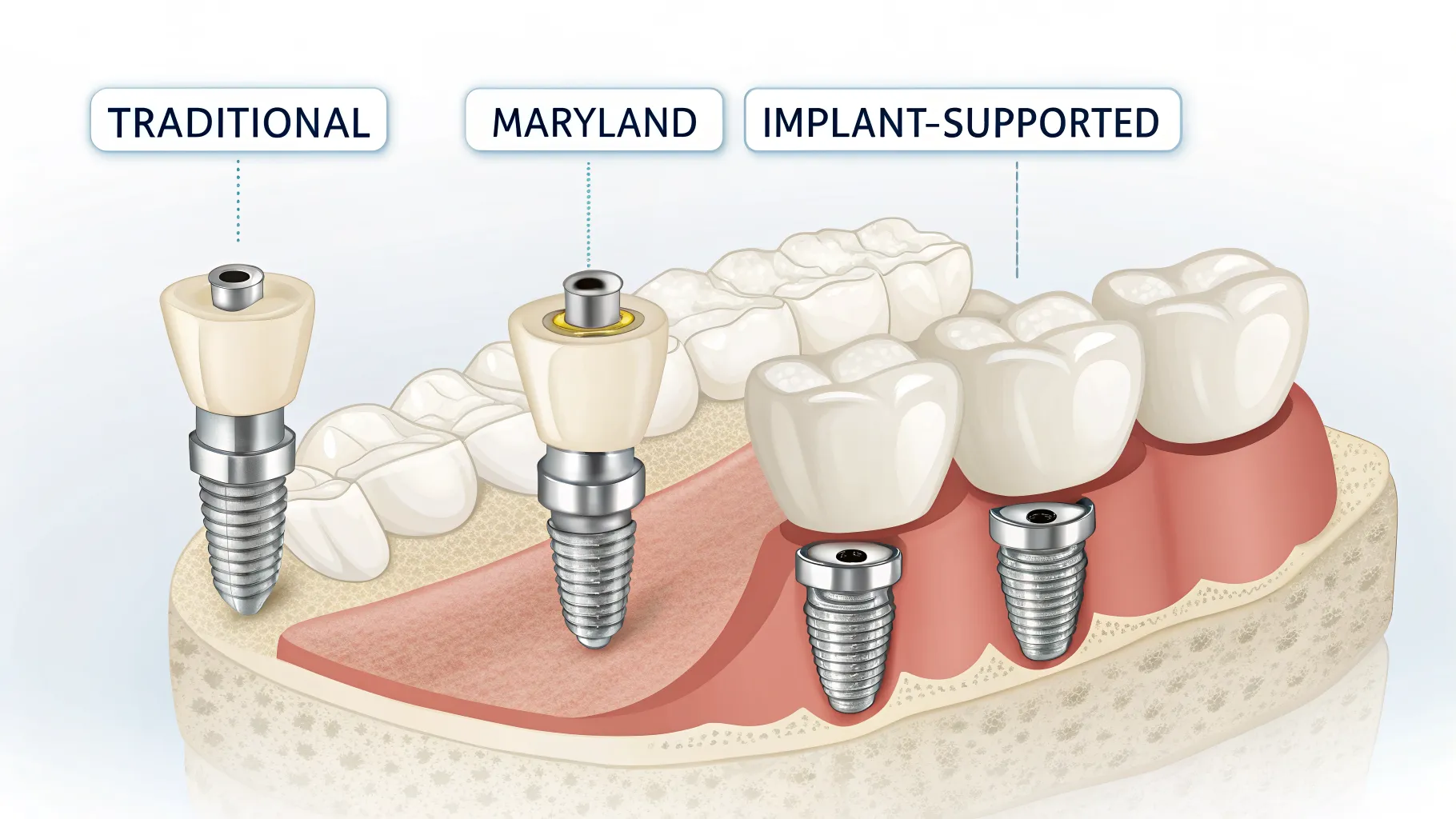
The most common type of dental bridge is the traditional bridge. This design consists of a pontic held in place by dental crowns that have been cemented onto each of the abutment teeth. A traditional bridge is an option when you have natural teeth on both sides of the gap created by your missing tooth or teeth. They are strong enough to be used for replacing molars.
The main disadvantage of a traditional bridge is that the procedure requires the dentist to prepare the adjacent abutment teeth by removing a significant amount of their enamel. This is done to make room for the crowns that will be placed over them. This alteration is irreversible, so it's a significant consideration if the neighboring teeth are otherwise healthy and free of decay or fillings.
Cantilever Bridges
A cantilever bridge is similar to a traditional bridge, but the pontic is supported by a crown on only one abutment tooth. This type of bridge is used when there are teeth on only one side of the open space. Because the entire structure is supported by a single tooth, it is not as strong as a traditional bridge and is generally not recommended for the back of the mouth where chewing forces are greatest.
The preparation for a cantilever bridge still involves altering a healthy tooth to place a crown. Due to the physics involved, these bridges can act as a lever, which may place too much force on the supporting abutment tooth. This can lead to complications such as loosened crowns or fractures in the supporting tooth, so dentists carefully evaluate each case before recommending this option.
Maryland Bridges
The Maryland bridge, also known as a resin-bonded bridge, is considered a more conservative alternative to the traditional bridge. This design features a pontic that is held in place by a metal or porcelain framework. This framework is bonded onto the back of the teeth adjacent to the gap, so there is no need to place crowns on the abutment teeth. The preparation involves minimal to no removal of tooth enamel.
Because this bridge is not held in place by crowns, it is not as strong as a traditional bridge. The strength of the bridge depends on the adhesive used to bond it to the teeth. It is most often used to replace missing front teeth, as they do not endure the same biting and chewing pressure as back teeth. The framework may also discolor the abutment teeth over time.
Implant-Supported Bridges
An implant-supported bridge is a highly stable and durable solution that uses dental implants for support instead of crowns or frameworks on natural teeth. This bridge typically involves placing one implant for every missing tooth to create a solid foundation. In cases where placing one implant for each tooth is not possible, a bridge may consist of a pontic suspended between two implant-supported crowns.
The primary advantage of this type of bridge is that it does not require support from adjacent natural teeth, preserving their structure. Dental implants also stimulate the jawbone, preventing the bone loss that often occurs after a tooth is lost. The process is more invasive and takes longer than other bridge procedures, as it involves surgery and a healing period for the implants to fuse with the bone.
Choosing the Right Dental Bridge Material
The material used for your dental bridge plays a significant role in its appearance, durability, and cost. Your dentist will help you choose the best option based on the location of the missing tooth, your biting force, and your aesthetic preferences. The most common materials include:
- Porcelain-fused-to-metal (PFM): This material offers a combination of strength from the metal substructure and good aesthetics from the porcelain outer layer. However, the metal can sometimes become visible as a dark line at the gumline.
- All-Ceramic or All-Porcelain: These bridges provide the best and most natural-looking aesthetic. They are an excellent choice for front teeth but may not be as strong as PFM or zirconia bridges for areas with heavy chewing forces.
- Zirconia: A type of ceramic, zirconia is extremely strong and durable, making it suitable for bridges anywhere in the mouth. It can be layered with porcelain for a more natural appearance.
- Metal Alloys: Bridges made from gold or other metal alloys are incredibly strong and resistant to wear. They are very kind to the opposing natural teeth but are not a popular choice due to their metallic appearance.
Each material has its own set of benefits and considerations. Discussing these with your dental professional will ensure you receive a restoration that meets your functional needs and cosmetic goals, providing a long-lasting solution for your missing teeth.