
Makeup mistakes to avoid after 50: An evidence-based guide to adapting a mature-skin routine
Makeup mistakes to avoid after 50 are less about banning color or abandoning cosmetics and more about recognizing that skin, facial features, and application needs can change over time. Professional guidance consistently emphasizes hydration, thinner layers, softer definition, and updated techniques rather than giving up makeup altogether. 1
1. Skipping skin preparation and hydration
Neglecting skincare before makeup can leave mature skin looking patchy, dull, or flaky because reduced oil production makes the surface more likely to grip unevenly. L’Oréal Paris makeup artist Jodi Urichuk recommends sunscreen, removing makeup at night, exfoliating for texture, and using hydrating serums and moisturizers with ingredients such as antioxidants and retinoids. These are skincare considerations, not substitutes for professional medical advice, particularly when irritation or sensitivity is present. 1
A practical preparation mistake is applying makeup immediately over a heavy layer of moisturizer. Guidance from EpiLynx recommends allowing moisturizer to absorb for three to five minutes before foundation, while other professional advice supports hydrating primer as a barrier that can reduce settling into expression lines. The relevant maintenance issue is consistency: dry-skin preparation has to be repeated regularly, not treated as an occasional correction after makeup begins separating. 2
2. Using too much foundation or an overly matte finish
Heavy foundation is one of the most frequently identified mature-skin mistakes. Fine lines, dryness, and uneven texture can become more visible when multiple layers collect in creases, producing a cakey or mask-like appearance. L’Oréal Paris, Glamour, and Laura Mercier guidance all favor lightweight, hydrating, buildable formulas over full-matte coverage. Coverage can be concentrated around redness or discoloration instead of spread uniformly across areas where the skin already appears even. 1
The finish matters because matte products can absorb light and emphasize flatness, while overly heavy formulas may settle into texture. A skin tint, serum-style base, or lightweight foundation is described in the supplied research as more flexible for mature skin, but individual skin type remains important. Oily areas may still require targeted setting, and a luminous finish should not be confused with visible greasiness or excessive shine. 3
3. Over-powdering the complexion and under-eyes
Applying powder across the entire face can make mature skin appear drier and can highlight fine lines. Laura Mercier’s guidance recommends using powder only where needed, commonly around the forehead, nose, and chin, while keeping the under-eye area especially light. Laura Geller similarly identifies excessive powder as a concern for people dealing with dryness or fine lines. The issue is not powder itself, but the thickness, placement, and repeated touch-ups that accumulate during wear. 4
Under-eye concealer creates a related risk. A large amount may initially appear brightening, yet excess product can collect in crepiness and make texture more apparent. Research summarized from Harper’s Bazaar recommends limiting concealer to the areas requiring correction rather than covering the entire under-eye. Color correction can also reduce the temptation to add coverage, especially where redness, sun damage, or discoloration would otherwise encourage heavier foundation and concealer use. 5
4. Choosing the wrong shade or relying on color without correction
A foundation shade that is too dark, too orange, or mismatched to the neck can create visible contrast and draw attention to uneven tone. The supplied research identifies shade selection as a factor that may accentuate dark spots and pigmentation rather than harmonize the complexion. Testing should therefore account for the face and neck, changing daylight, and the formula’s finish. A shade that looks acceptable under indoor lighting may appear noticeably different outside. 6
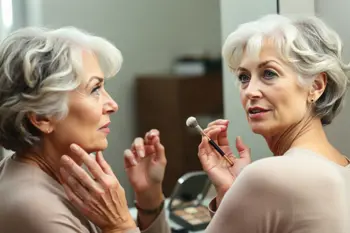
Color correction is another area where adding more foundation can produce a less natural result. The research identifies correction as useful for areas of redness or sun-related discoloration before foundation is applied. The goal is selective neutralization, followed by a thin base layer, rather than covering every variation in skin tone. Natural freckles and some tonal variation may remain visible, which can prevent the complexion from appearing flat or heavily masked. 7
5. Applying harsh eye definition and misplaced shimmer
Heavy, dark eyeliner along the lower lash line can make eyes appear smaller or visually pull them downward. The supplied professional guidance favors softer definition, with brown or other less severe shades often creating a gentler effect than an uninterrupted black line. Application can also become more difficult when near vision changes. The National Eye Institute information cited in the research notes that presbyopia commonly makes close-up tasks harder after age 45, increasing the value of adequate lighting and a final mirror check. 8
Shimmer is not automatically unsuitable after 50, but highly reflective or metallic products can settle into lines and emphasize texture. Glamour’s cited makeup artists caution against glittery, metallic, or overly shimmery formulas containing mica when they highlight creases. Placement is therefore more important than a universal age rule: a soft sheen on smoother areas may read differently from concentrated sparkle on deeply lined lids or under-eye skin. 2
6. Neglecting brows, lips, and the balance of color
Brows help frame the face, and the research notes that thinning eyebrows can contribute to a washed-out appearance when they are left undefined. The common mistake is either ignoring sparse areas or drawing a rigid, overly dark shape. A more controlled approach is to restore the appearance of fullness with light, hair-like definition and a shape that follows the existing brow structure. As with eyeliner, close-up precision becomes more challenging when vision changes, so lighting and magnification may affect results. 9
Lip texture also influences finish. Matte lipstick may emphasize dryness and vertical lines when lips are already less hydrated, whereas cream or satin textures are described in the research as more comfortable-looking and visually supple. This does not make bright or red lipstick prohibited; the supplied AGEIST analysis specifically warns that many age-based beauty rules are trends rather than universal truths. The durable principle is to control weight, dryness, and placement while retaining personal color preferences. 3
How to evaluate a revised routine
The most useful test is not whether makeup looks flawless at arm’s length, but whether it remains comfortable and balanced through the day. Check for foundation collecting around the mouth and nose, powder accentuating dry patches, concealer gathering under the eyes, and liner becoming heavier on one side. These outcomes can indicate excess product, insufficient preparation, an unsuitable finish, or application performed under inadequate lighting. Adjust one variable at a time so the cause of improvement remains clear. 4
Routine changes should also account for ongoing skin maintenance and personal tolerance. Sunscreen, gentle cleansing, hydration, and careful removal remain relevant, while exfoliators, antioxidants, or retinoids may require professional guidance for sensitive skin. Waterproof eye formulas can be drying according to the supplied research, and products that sting, cause redness, or worsen flaking should be discontinued and assessed appropriately. Mature makeup is not a fixed category: the most reliable approach is lighter, targeted application adapted to the individual complexion. 1
Sources
- L’Oréal Paris, “Common Makeup Mistakes Made by Women Over 50,” https://www.lorealparis.ca/en-ca/the-most-common-makeup-mistakes-made-by-women-over-50
- Glamour, “How to Apply Makeup for Older Women, According to Pro Makeup Artists,” https://www.glamour.com/story/how-to-apply-makeup-for-older-women
- AGEIST, “Makeup Tips for Women Over 50: Products and Tips That Work,” https://www.ageist.com/fashion-beauty/makeup-for-women-over-50-products-and-tips-that-work-plus-advice-to-ignore/
- Luna London, “7 Makeup Mistakes for Mature Skin That Makeup Artists Fix First,” https://lunalondon.com/blogs/news/makeup-mistakes-for-mature-skin
- Harper’s Bazaar, “Makeup Mistakes That Age You,” https://www.harpersbazaar.com/beauty/makeup/g30640327/makeup-mistakes-that-age-you/
- Vogue Australia, “The Foundation Mistakes That Are Dating Your Look,” https://www.vogue.com.au/beauty/skin/the-foundation-mistakes-that-are-dating-your-look/news-story/1b545f47d9571e6c38214f4945d94715
- Woman’s Day, “Makeup Mistakes That Age You,” https://www.womansday.com/style/beauty/g2263/makeup-mistakes-that-age-you/
- National Eye Institute guidance cited in the supplied research, https://www.nei.nih.gov/learn-about-eye-health/eye-conditions-and-diseases/presbyopia
- AARP, “Makeup Mistakes After 50,” https://www.aarp.org/home-family/personal-care/info-2023/makeup-mistakes-after-50.html