
Local community garden projects and volunteering in Melbourne: An Analysis of Urban Green Initiatives
Urban residents frequently seek ways to engage with the natural environment through local community garden projects and volunteering in Melbourne, fostering sustainability and social ties. These initiatives range from formal council-managed spaces and neighborhood learning centers to grassroots guerilla gardens that transform underutilized urban land into productive hubs. Current data indicates that Melbourne supports a vast network of gardens that provide opportunities for seedling propagation, garden maintenance, and neighborhood building activities throughout the year 15.
The Landscape of Community Gardening in Greater Melbourne
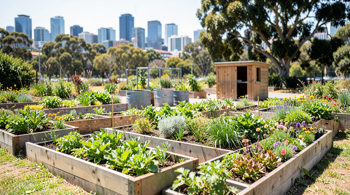
Formal community gardens in Melbourne often utilize a plot-hire system where residents can plant and harvest their own produce. For instance, the Dandenong Community and Learning Centre features individual plots available for hire, allowing community members to grow fruits and herbs in a space located adjacent to a woodwork community shed 1. These gardens frequently operate with an open gate policy, welcoming both experienced gardeners and beginners to participate in weekly gardening sessions that emphasize knowledge sharing and environmental education 1.
In higher density urban environments, such as the Docklands, community gardens provide a peaceful green refuge amidst busy high-rise neighborhoods. The Docklands Community Garden, situated on Geographe Street, serves as a vital environmental asset for the local postcode 3008 area 2. Furthermore, the 3000acres initiative provides a digital resource hub to help residents locate these spaces and start new projects on vacant urban land, navigating the necessary local council permits or Memorandums of Understanding required for public land use 31.
The Intersection of Urban Agriculture and Food Relief
Many gardening projects in Melbourne are deeply integrated with social services and food relief efforts. The Elwood and St Kilda Neighbourhood Learning Centre (ESNLC) operates a Kitchen Garden where volunteers dedicate a minimum of two hours per week to cultivate fresh produce 3. All produce grown at this site is donated to the Christ Church Mission Open House meals program to support local food relief initiatives 3. This model demonstrates how urban agriculture can address food insecurity while fostering community spirit through scheduled Friday morning sessions 3.
A significant milestone in this sector was marked by FareShare's Abbotsford kitchen garden, which celebrated ten years of operation in 2026 4. Originally a neglected dumping ground near the Victoria Park train station, the site now produces thousands of kilograms of vegetables and herbs annually
Biodiversity Corridors and Pollinator Research
Community gardening in Melbourne has increasingly focused on ecological research and the creation of biodiversity corridors. The Southbank Sustainability Group participated in an Insect BioBlitz in early 2026, a citizen science program where community members documented 780 insect observations across the city 13. This research identified 246 distinct insect species, including the Chequered Cuckoo Bee and the Lesser Grass Blue, highlighting the role of urban gardens as habitats for beneficial pollinators 15. These activities are often supported by the City of Melbourne Urban Forest and Ecology team to encourage biodiversity in high-density areas 13.
| Project Name | Location | Primary Focus |
|---|---|---|
| Verges for Nature | Dandenong West | Native pollinator corridors |
| Melbourne Pollinator Corridor | Suburban Melbourne | Wildlife connectivity |
| The Bug Rug | Kororoit Creek | Indigenous plant biodiversity |
| Insect BioBlitz | Southbank | Citizen science data collection |
Initiatives like the Verges for Nature project in Dandenong West have transformed grass-covered nature strips into native gardens 21. By replacing introduced grass species with flowering native plants such as the Blue Flax Lily, volunteers invite native bees back into the suburban landscape 21. Furthermore, street gardening projects led by individuals such as Emma Cutting have resulted in over 150 public gardens aimed at establishing an innovative wildlife corridor that allows the local ecosystem to breathe within sealed urban environments 27.
Ecological Restoration and Habitat Recovery
Beyond traditional vegetable gardening, many Melbourne volunteers focus on the restoration of indigenous vegetation along natural waterways. The Merri Creek Management Committee (MCMC) coordinates an Ecological Restoration Team that manages indigenous vegetation throughout the Merri Catchment 16. Volunteers participate in planting, weed control, and litter removal, often starting work as early as 7:00 am at the Brunswick East depot 16. These efforts are crucial for maintaining the health of Melbourne's creeks and rivers, which serve as essential urban biodiversity corridors
Significant projects also exist along Kororoit Creek, where the Friends of Kororoit Creek established the Bug Rug 20. This site was transformed from a mown weedy expanse into a biodiverse oasis featuring thousands of indigenous plants and wildflowers 20. The project includes unique features like five sculptures that double as bug hotels and a nature play area for children, illustrating how environmental restoration can integrate cultural heritage and community recreation 20. Such projects are often conducted in consultation with traditional owners, such as the Wurundjeri Woi Wurrung Cultural Heritage Aboriginal Corporation 20.
Specialized Sustainable Hubs and Composting Networks
Melbourne is home to several specialized hubs that demonstrate sustainable living through practical application. The Jesuit Social Services Ecological Justice Hub in Brunswick is located on a former primary school basketball court 10. Despite the asphalt base, the site utilizes raised beds and rich compost to grow food for nearby soup kitchens 19. This hub serves as a teaching operation where community members learn about renewable energy, composting, and environmental stewardship as part of a broader mission to address disadvantage through ecological means
Waste management is also a core focus of community groups like the Kensington Compost Hub, which opened behind the Kensington Town Hall in 2018 9. This facility manages a closed-loop food project, where local residents process organic waste into valuable resources for urban agriculture 9. The network has expanded to include a compost cargobike that supports various composting sites across the suburb 9. Additionally, the Tibetan Buddhist Society in Melbourne offers gardening volunteer options on Saturday mornings within its ten-acre grounds, combining physical garden maintenance with community lunch sessions 6.
Operational Risks and Regulatory Requirements
Establishing and maintaining community gardens involves navigating significant regulatory and environmental challenges. In 2026, the Radicle Roots Commons in Coburg faced a temporary closure when Merri-bek Council fenced off the site due to concerns over potential PFAS chemical contamination in the soil 7. Although subsequent testing cleared the garden of dangerous levels, the incident highlighted the importance of soil safety in urban growing environments 5. Volunteers at this site, which operates as a guerilla garden, were required to pause harvesting until safety results were finalized 7.
To streamline community-led greening, the City of Melbourne endorsed the Garden City Guidelines in June 2026 24. These guidelines are designed to support residents and businesses in North Melbourne, West Melbourne, and Kensington as they green their streets 24. Prospective volunteers should be aware of the varying requirements across organizations, which may include police checks for sensitive locations, such as the Sacred Heart Mission's Homefront garden, or specific time commitments for programs managed by Cultivating Community, which oversees over twenty gardens across public housing estates 11, 14.
Sources
- Dandenong Community & Learning Centre
- Docklands News
- Elwood + St Kilda Neighbourhood Learning Centre
- FareShare
- Brunswick Voice (May 2026)
- Tibetan Buddhist Society
- Brunswick Voice (April 2026)
- Cranbourne Star News
- Kensington Community Powered Composting Network
- Melbourne Catholic
- Sacred Heart Mission
- Merri Creek Management Committee
- All For Gardening (Southbank SSG)
- Cultivating Community
- City of Melbourne Urban Forest & Ecology
- Merri Creek Restoration Team Newsletter
- Tibetan Buddhist Society Experience Guide
- Fed Square Events
- Catholic Religious Australia
- The Westsider
- Dandenong Star Journal (Verges for Nature)
- Port Phillip EcoCentre
- Dandenong Star Journal (Garfield Project)
- North West City News
- Warrane Mornington Neighbourhood Centre
- Seymour Telegraph
- CityChangers.org
- WAToday
- Eventbrite
- City of Melbourne
- 3000acres