Rural acreage and country property listings in Victoria 2026
Rural acreage and country property listings in Victoria in 2026 cover a wide range of land, from a few hectares with a country house to operating farms extending across hundreds of hectares. This guide explains what the listings usually contain, where the main regional differences occur, how the sales process works and which planning, water and access issues can affect rural property.
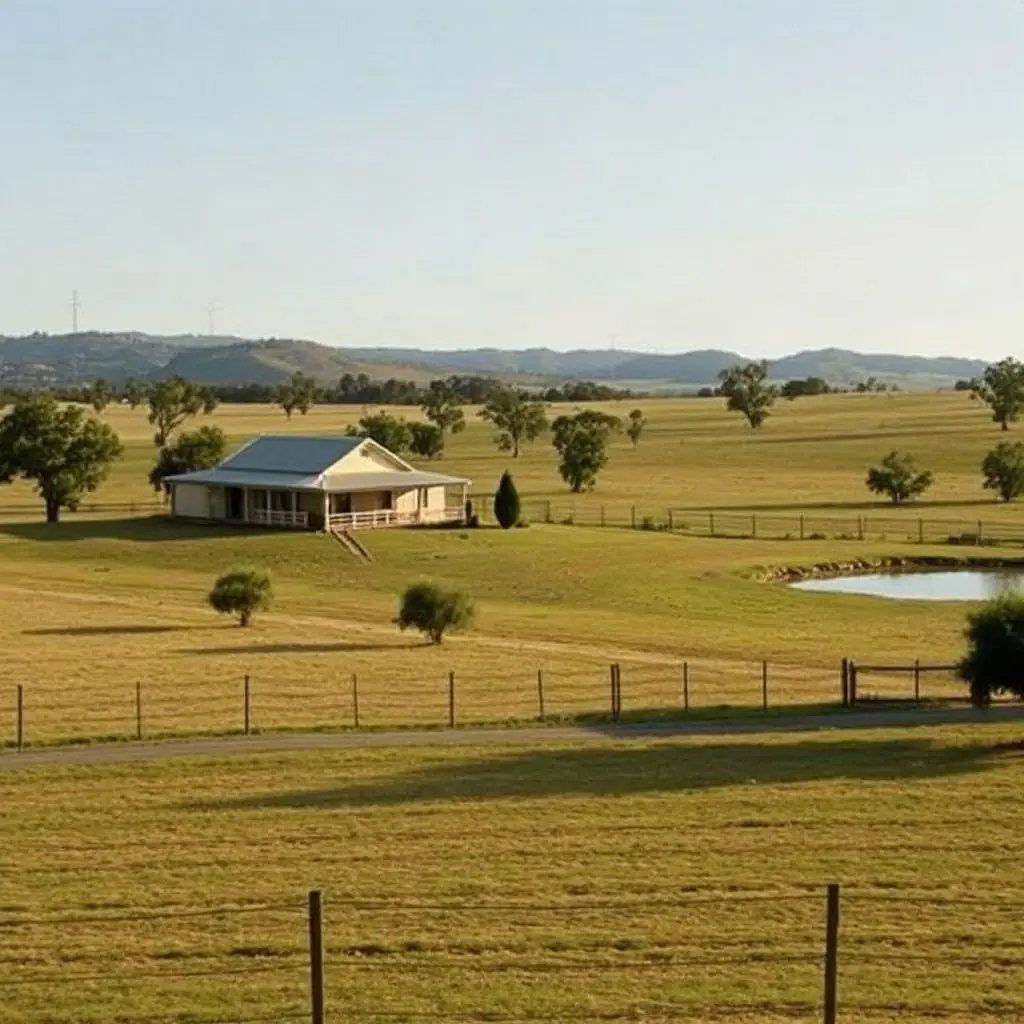
What Victorian rural acreage listings include
A listing may describe a rural lifestyle property, hobby farm, grazing property, cropping holding, vineyard, orchard, bush block or country home on acreage. The label does not by itself establish how the land can be used. A property marketed as a hobby farm may have sheds, fencing and dams, while a rural-residential holding may be primarily a home with open land and limited agricultural potential.
Most advertisements identify the land area in hectares, the dwelling's bedrooms and bathrooms, sheds or machinery storage, fencing, water sources and road access. They may also state whether the property is offered by private sale or auction, provide an asking price or price guide, and identify a selling agent. Some advertisements include soil descriptions, carrying-capacity estimates or crop information, but these claims require independent assessment because conditions vary across the holding.
Where country properties are found across Victoria
Victoria's regions offer noticeably different types of acreage. Gippsland includes dairy country, forested hills and coastal hinterland, while the Yarra Valley and parts of the Dandenong Ranges contain lifestyle holdings, vineyards and horticultural properties. The Macedon Ranges and Central Highlands are known for larger homes, grazing land, wooded blocks and cooler-climate conditions.
In the Goulburn Valley, listings can include irrigated horticultural and cropping land, although water arrangements are a major part of the assessment. The Wimmera and Mallee generally contain broader cropping properties and more open country. The Grampians, southwest Victoria and the Western District include grazing, cropping and mixed-farming holdings. Distance to Melbourne, regional towns, schools, hospitals, transport, agricultural services and reliable roads can influence both use and advertised value.
Land sizes and property types in 2026
Small rural-residential properties commonly range from about 1 to 5 hectares, although minimum lot sizes depend on the local planning scheme. Holdings of roughly 5 to 20 hectares are often marketed as lifestyle blocks or hobby farms. Larger properties may run from 20 to several hundred hectares, with the practical value depending on rainfall, soil, fencing, pasture, improvements and water rather than area alone.
- Lifestyle acreage: A house, gardens, sheds and paddocks, often near a regional town or commuter area.
- Hobby farms: Smaller holdings with fencing, yards, dams or sheds for horses, sheep, cattle or small-scale cultivation.
- Grazing properties: Pasture-based land where carrying capacity, shelter, water and stock infrastructure are central.
- Cropping and irrigation land: Holdings assessed through soil, rainfall, irrigation infrastructure, water entitlements and access to grain or produce services.
- Bush and conservation properties: Heavily treed land that may have steep terrain, bushfire exposure, environmental overlays or restrictions on clearing.
Acreage does not automatically mean that a second dwelling, subdivision, intensive agriculture, accommodation business or animal enterprise is permitted. Those possibilities are controlled by the relevant council planning scheme and property-specific overlays.
Indicative prices and sale methods in 2026
Advertised prices in Victoria vary substantially. As a broad, approximate guide, smaller or more remote rural-residential properties may appear below A$1 million, established lifestyle acreage in accessible districts often falls around A$1 million to A$3 million, and productive farms or tightly held areas can extend from A$3 million into several millions more. These are market ranges rather than a prediction or a price available from this article.
Land quality, dwelling condition, water security, proximity to Melbourne or a regional centre, zoning and the income potential of the property all affect the figure. Auction listings usually publish an indicative range before the auction, while private-sale listings may state an asking price or invite expressions of interest. In 2026, advertised supply can also change with seasonal farming cycles, interest-rate conditions, weather and local demand, so a listing's date and sale status matter.
Who publishes the listings and how the process works
Listings are generally prepared by licensed Victorian estate agents, specialist rural agencies, private vendors or property managers acting for an owner. Broad property portals such as realestate.com.au and Domain can carry rural listings, while specialist rural agencies and local offices may handle farms, vineyards and larger holdings. These channels display information supplied by the vendor or agent, not an independent assessment of the land.
The usual path involves comparing the advertised details, contacting the named agent, arranging an inspection, asking for the contract and reviewing the property information. A conveyancer or solicitor examines the contract, title, easements and included items. The buyer and seller negotiate a private sale, or bidders participate in an auction under the auction conditions. The vendor sets the asking price or reserve, while Victorian legislation, the contract and local council controls set many of the formal requirements. Settlement timing and contract terms are agreed between the parties, not by the listing portal.
Planning zones, water and rural services
Victoria uses planning zones such as the Farming Zone, Rural Living Zone, Rural Conservation Zone and Green Wedge Zone. The exact schedule and overlays differ between councils. A Farming Zone may support agricultural activities but restrict residential development or subdivision. Rural Living land may be intended for homes on larger lots, but minimum subdivision sizes, access and wastewater rules still apply.
Water deserves separate attention. A property may rely on a rainwater tank, dam, bore, creek, reticulated supply or an irrigation water entitlement, and these are not interchangeable. Irrigation rights can be subject to allocation, delivery arrangements and trading rules. Unsealed roads, limited mobile coverage, private power infrastructure and septic systems are also common. The cost of maintaining long driveways, fences, dams, pumps, tanks and fire-prevention measures can be significant even when the dwelling appears well maintained.
Risks and investigations specific to Victorian acreage
Bushfire risk is important in forested and grassland areas. Bushfire-prone areas, Bushfire Management Overlay controls, defendable-space requirements and the building's Bushfire Attack Level can affect construction, extensions and insurance availability. Flood, erosion and landslip overlays may also restrict building locations. These issues are property-specific and should be read with the planning certificate and council information.
- Review the title, easements, covenants, boundaries and legal road access.
- Determine whether dams, bores, tanks and irrigation rights are documented and usable.
- Ask for approvals and compliance information for homes, sheds, pools, septic systems and earthworks.
- Assess fencing, yards, laneways, drainage, soil, pasture condition and farm infrastructure in person.
- Obtain independent advice about contamination, mine subsidence, salinity, flooding or native vegetation where relevant.
Rural acreage listings in Victoria provide a starting description rather than a complete property assessment. In 2026, the most meaningful comparison is usually between the advertised land and its permitted use, reliable water, access to services, physical condition and long-term management demands.