
3-day Sydney to Melbourne rail-and-stay travel with train tickets included 2026: A Journalistic Analysis of Interstate Transit Infrastructure
Travelers researching 3-day Sydney to Melbourne rail-and-stay travel with train tickets included 2026 will find that the interstate corridor between Australia's two largest cities remains a focal point for regional transit development. The route offers a structured alternative to aviation, emphasizing a slower, more observational mode of transport that integrates the journey with the destination experience. This analysis explores how rail operators and accommodation providers coordinate to facilitate multi-day itineraries across the New South Wales and Victoria border 1.
The Structural Mechanics of Sydney to Melbourne Rail Travel in 2026
The primary rail service connecting Sydney and Melbourne is the XPT (Express Passenger Train), operated by NSW TrainLink. This long-distance fleet is designed to cover the approximately 960-kilometer journey through the Australian interior, moving from Sydney Central Station to Melbourne Southern Cross Station 1. For the 2026 travel season, the service remains a critical component of regional infrastructure, providing both daytime and overnight transit options for passengers seeking to avoid the logistical friction of airport security and highway congestion 2.
A typical rail journey on this corridor requires a significant time investment, with transit durations historically averaging between 11 and 12 hours 2. While these times do not compete with the speed of high-speed rail networks found in other global regions, the service is valued for its reliability and its ability to connect major metropolitan hubs with regional centers such as Albury and Goulburn 4. The operational framework for 2026 includes daily departures, though schedules are subject to periodic adjustments for track maintenance or seasonal demand fluctuations 13.
Financial Benchmarks and Service Tiers for Interstate Rail
Understanding the economic landscape of interstate rail is essential for travelers planning integrated itineraries. The market for rail tickets between Sydney and Melbourne in 2026 is categorized into several distinct service tiers, each offering different levels of amenity and privacy. Economy class seating represents the baseline for the route, with historical market prices typically ranging from $60 to $130 AUD per person 4. These fares vary based on booking windows and the specific time of travel, with peak periods often commanding higher rates 6.
| Service Category | Estimated Market Price (AUD) | Standard Onboard Inclusions |
|---|---|---|
| Economy Seating | $60 - $130 | Standard seating, luggage allowance, buffet access |
| First Class Seating | $130 - $150 | Increased legroom, adjustable seats, buffet access |
| Sleeper Cabin | $220 - $270 | Sleeping berth, linen, toiletries, breakfast |
First Class seating provides an intermediate option, usually priced between $130 and $150 AUD, offering additional legroom and enhanced comfort for the 12-hour haul 2. For those on overnight services, the sleeper cabin is the premium choice, requiring a First Class ticket plus an additional berth fee, totaling approximately $220 to $270 AUD 2. These cabins are equipped with bed linen and toiletries, and the fare generally includes a morning meal served before arrival 2.
Logistics and Composition of Integrated Rail-and-Stay Itineraries
Integrated travel packages, often termed rail-and-stay programs, are designed to streamline the transition from transit to metropolitan exploration. A 3-day itinerary in 2026 typically utilizes the rail journey as a foundational element, followed by two nights of accommodation in a central city location 13. These bundles are frequently managed by third-party operators who coordinate with hotels to ensure that the arrival and departure times of the train align with hotel check-in protocols 5. This structural alignment reduces the need for independent logistical planning by the traveler.
Market data suggests that these packages are most effective when booked 6 to 12 months in advance, especially for travel coinciding with major cultural or sporting events in Melbourne 13. While the core of the package is the transit and lodging, some expanded versions may also incorporate admission to local attractions or regional tours 3. However, the standard 3-day model focuses on the 960-kilometer rail link as the primary experience, allowing travelers to witness the changing Australian landscape before immersing themselves in the urban environment 1.
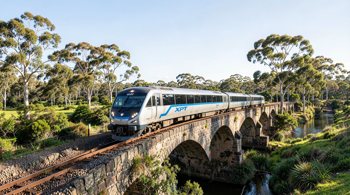
Geographical Highlights and Infrastructure of the 960-Kilometer Route
The rail corridor between Sydney and Melbourne passes through some of the most diverse agricultural and natural landscapes in southeastern Australia. After departing the historic Central Station in Sydney, the train traverses the Southern Highlands, an area known for its elevation and temperate climate 4. As the journey progresses, the landscape shifts toward the vast plains of the Riverina and the rolling hills of the Victorian border region, providing passengers with views of lush farmland and rural river systems 1.
A significant landmark on the route is the crossing of the Murray River near the twin cities of Albury and Wodonga 1. This bridge represents the transition between New South Wales and Victoria and serves as a major operational stop for the XPT service. The infrastructure along this route is maintained to support both freight and passenger traffic, though the older design of the rail beds limits the maximum speed of the trains 2. This results in a slower, more nostalgic travel rhythm that is often cited as a primary reason for choosing rail over other transport modes 21.
Metropolitan Infrastructure and Accommodation Trends in Melbourne
Upon arrival at Southern Cross Station, travelers are situated within one of Melbourne's most integrated transit hubs, which provides immediate access to the city's extensive tram network and regional V/Line services 6. The surrounding district is home to a high density of accommodation options that cater to various service expectations. For instance, the Atlantis Hotel Melbourne is often identified as a standard budget-conscious choice, while the Holiday Inn Express and Crowne Plaza provide mid-range and premium facilities respectively 2.
Modern itineraries in Melbourne frequently highlight the city's architectural and cultural landmarks. Common inclusions in 2026 packages involve admission to the Melbourne Skydeck, which offers a 360-degree view of the metropolitan area from one of the tallest structures in the Southern Hemisphere 3. Furthermore, many visitors utilize the 3-day stay to explore the historic lanes and arcades of the central business district, which are renowned for their street art and independent gastronomic establishments 3. These urban experiences are bolstered by a public transport system that facilitates efficient movement between the city center and peripheral cultural precincts.
Operational Realities, Market Friction, and Travel Risk Assessment
Prospective travelers must account for several operational realities and market frictions when planning a rail-based trip for 2026. Data from recent years indicates that the 12-hour journey is subject to occasional delays caused by various factors, including freight traffic priority and seasonal weather events that can impact track integrity 2. Travelers are advised to maintain flexibility in their arrival-day plans to accommodate these potential shifts in the schedule. Additionally, the availability of specific seating classes, particularly sleeper cabins, is finite and often reaches capacity during peak periods such as school holidays 4.
Regulatory oversight and service standards are managed by state transport authorities, which ensure that safety protocols are met across the interstate network. While rail travel is generally considered a lower-stress alternative to driving, it does involve a significant time commitment that may not be suitable for all professional or personal schedules 21. Furthermore, pricing for integrated packages is sensitive to broader economic trends, including fuel costs and labor market fluctuations within the hospitality sector 6. A balanced assessment of these factors suggests that while rail travel offers a unique perspective on the Australian landscape, it requires advanced planning and a willingness to embrace a slower pace of transit.
Sources
- bbmlive.com
- therovingbalys.com
- journeybeyondrail.com.au
- getfromto.com
- sydneyexpert.com
- smh.com.au
- transport.nsw.gov.au