
Best electric bikes in Canada: A comprehensive analysis of regulations, performance metrics, and market trends
Choosing an electric bike in Canada requires navigating both complex federal regulations and the practical demands of a challenging climate. As of August 2026, the Canadian market features a wide array of options, ranging from entry-level commuters to high-performance cargo and mountain e-bikes 1. Understanding the distinction between bikes that meet the federal power-assisted bicycle (PAB) definition and those intended for private property is the first step for any prospective rider 1. This guide evaluates current market trends, technical specifications, and the regulatory environment to provide a neutral overview for consumers.
The Canadian Regulatory Framework for Electric Bicycles
In Canada, the legal status of an electric bike is defined strictly by its motor capacity and maximum speed. To be classified as a power-assisted bicycle (PAB) and remain exempt from licensing, registration, and insurance requirements, an e-bike must feature a motor with a maximum output of 500W and a maximum assisted speed of 32 km/h 1, 5. Pedals must remain functional, allowing the rider to propel the machine manually 1. Bikes exceeding these parameters are considered motor vehicles and generally cannot be operated on public roads without meeting higher regulatory standards that are often impossible for standard consumer e-bikes to fulfill 1.
While federal guidelines provide the baseline, regional compliance can vary. For example, helmet requirements and age restrictions are subject to provincial and municipal laws, which riders must research based on their specific location 9. Buyers should verify these specifications against official manufacturer data, as some models are specifically engineered for private trail use where the 500W and 32 km/h limits do not apply 1. Purchasing an e-bike that conforms to federal standards ensures it remains a practical tool for commuting in public lanes across every province 1.
Battery Performance and Cold Weather Considerations
Battery capacity is measured in watt-hours (Wh), a metric that provides a more accurate assessment of potential range than manufacturer-claimed distance estimates 5. Lithium-ion batteries used in e-bikes are sensitive to temperature, with efficiency dropping significantly during Canadian winters 5. In temperatures below 0°C, these batteries can experience a capacity loss ranging from 20% to 40% 5. Consequently, a bike rated for a specific range in the summer months may provide drastically less utility during the winter, making battery size a critical consideration for year-round riders 2, 5.
To mitigate these losses, many riders opt for models with larger battery systems, including dual-battery setups that offer extended capacity 5. When evaluating models, such as those featuring 720 Wh to 3,120 Wh capacities, it is essential to consider the bike’s overall weight and the intended riding conditions 5. Additionally, the choice between cadence sensors and torque sensors impacts battery efficiency; torque sensors measure rider input and provide proportional assistance, which is often more efficient and provides a more natural riding feel than simple cadence-based systems 2, 3.
Categorizing E-Bike Utility
Electric bikes are generally categorized by their primary use case, ranging from urban commuting and cargo transport to off-road recreation. Commuter models, such as the 5TH WHEEL LB17 Mate or the iSinwheel M10s, are often designed for balance, storage, and reliability on paved city surfaces 1, 4. Meanwhile, cargo-oriented bikes like the Tern GSD are engineered to support heavy payloads, such as passengers or groceries, with reinforced frames and lower centers of gravity to maintain stability 4, 5.
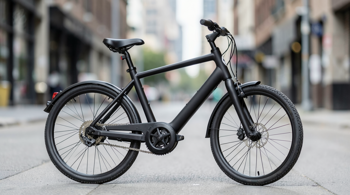
For those navigating mixed-terrain environments, mountain e-bikes like the Cube Reaction Hybrid ONE 800 offer robust components and high-torque motors, such as the Bosch Performance Line CX system, which provides up to 85 Nm of torque 6. The selection process should prioritize the intended application first, followed by a review of motor specifications, tire types, and the availability of local service networks 4. A bike that excels in a flat urban environment may not be the optimal choice for hilly, rural, or off-road conditions 4, 7.
Analyzing Key Technical Components
The distinction between hub motors and mid-drive motors is significant for long-term ownership. Hub motors, found in many value-oriented e-bikes, are generally less complex to maintain but can be less efficient on steep inclines 1, 5. Mid-drive motors, such as the Bosch Performance Series, leverage the bike’s mechanical gearing, providing superior performance on hills and a more balanced weight distribution 6, 7. Newer technologies, such as switchable dual torque-and-cadence sensors seen in models like the Taubik Blackburn 275T, offer riders the flexibility to adjust their riding experience based on current conditions, such as congested city pathways or open trails 2, 8.
| Feature | Consideration |
|---|---|
| Motor Type | Mid-drive for hilly terrain; Hub for general city use |
| Sensor | Torque sensors for natural, efficient pedal response |
| Battery | Higher Wh capacity to offset winter range degradation |
| Compliance | 500W limit for legal public road access in Canada |
Maintenance and Lifecycle Management
Owning an electric bike involves more than the initial acquisition; ongoing maintenance is essential for safety and longevity. This includes regular inspections of braking systems, tire pressure, and electrical connections. Because of the harsh Canadian climate, bikes with higher Ingress Protection (IP) ratings are generally better equipped to resist moisture and salt intrusion on winter roads 5. Retail networks and specialized service centers play a vital role in providing diagnostics and support for these sophisticated machines, and proximity to such services should be a factor for any buyer 5, 7.
For owners in regions with harsh winters, storage is a vital component of battery health. Storing lithium-ion batteries in temperature-controlled environments is recommended, even if the bike itself remains in a garage or shed. Furthermore, seeking out manufacturers or retailers that offer long-term support, remote diagnostics, or extended warranties can mitigate the risks associated with technical failures, particularly for systems with advanced software and proprietary motor components 5, 8.
Objective Selection Summary
The optimal electric bike for an individual in Canada is highly dependent on their personal riding profile. There is no single universal recommendation; instead, the selection must balance the federal legal constraints against the specific requirements of the rider’s local terrain and climate 4. Whether the priority is daily urban commuting, heavy cargo capacity, or weekend mountain trails, the most successful purchases are made after comparing motor torque, battery efficiency, and local maintenance availability 2, 5. Prospective riders are encouraged to review the full technical specifications of any model and confirm its compliance with provincial and federal regulations before finalization 1, 9.
Sources
- neobike.ca, Best Electric Bikes in Canada (2026)
- zeusebikes.ca, eBike Canada 2026: 38 Verified Picks
- electricbikereview.com, Aventon Level.2 Torque Sensor Review
- isinwheel.ca, Best Electric Bikes in Canada for Adults 2026
- zeusebikes.ca, Best Long-Range eBikes Canada 2026
- amegoev.com, Cube Reaction Hybrid ONE 800 Review
- scooteretti.com, Moustache Xroad ES Performance Series
- riderguide.com, Best Electric Bikes of 2026
- caa.ca, Canadian Electric Bike Laws