How to prepare your home for a new puppy: A comprehensive guide to safe arrivals
Understanding the Puppy Transition
Bringing home a new puppy is a significant milestone that marks the beginning of a long-term commitment 9. Puppies are essentially infants taken from the familiarity of their mother and siblings, arriving in an environment that may feel entirely foreign and occasionally frightening 1. Leading with empathy during this transition is critical, as it serves as the foundation for the lifelong relationship that develops between the owner and the animal 1. Expert guidance suggests that maintaining a consistent, calm approach helps puppies decompress and learn what is expected of them in their new surroundings 7.
Preparation is essential to minimize stress for both the pet and the household. Without adequate planning, owners may quickly find themselves overwhelmed by common puppy behaviors such as excessive chewing, sleep disruptions, and accidents 8. A structured approach that focuses on physical environment setup, health resource gathering, and routine development creates a predictable space where a puppy can thrive 9. By viewing the home from a puppy-eye perspective, owners can identify potential dangers before they become emergencies 2.
Essential Puppy-Proofing Measures
Puppies naturally explore their world using their mouths, which makes an un-scanned home a potential minefield of hazards 2. Owners should get down on the floor to identify anything within a puppy's reach, such as electrical cords, which should be encased in protective tubing or hidden behind furniture to prevent fatal electrocution 2. Small objects like coins, hair ties, and children’s toys act as significant choking hazards or potential causes of intestinal blockages, which may necessitate medical intervention 2.
Chemical and dietary safety is equally paramount. Medications, cleaning products, and various household plants must be secured behind locked cabinets or barriers to prevent accidental ingestion 1, 12. Table below highlights common home zones and necessary safety actions:
| Zone | Action | Reason |
|---|---|---|
| Living Area | Secure cords and small objects | Prevents chewing burns and choking |
| Kitchen | Store cleaners and food securely | Avoids chemical ingestion and toxicity |
| Entryways | Block stairs and doors | Prevents falls and accidental escapes |
| Storage | Place plants out of reach | Prevents poisoning from toxic foliage |
Building a Professional Support Team
Establishing a relationship with veterinary and training professionals before the puppy arrives is a vital part of responsible ownership 7. An AAHA-accredited practice is often recommended, as these facilities provide specialized support and follow evidence-based guidelines for preventative health 1, 7. A typical initial wellness exam often includes weight checks, parasite screening, nutritional guidance, and a tailored vaccination schedule based on the puppy’s lifestyle and regional disease risks 6, 14.
Because dog training is currently an unregulated field, owners must be diligent when selecting a professional 1. It is advisable to look for trainers who utilize evidence-based, humane methods and hold certifications from recognized organizations 1, 7. These professionals assist in navigating the nuances of socialization and relationship building, ensuring that owners use positive reinforcement rather than punitive measures that can increase fear and interfere with learning outcomes 7, 11.
Creating a Dedicated Puppy Space
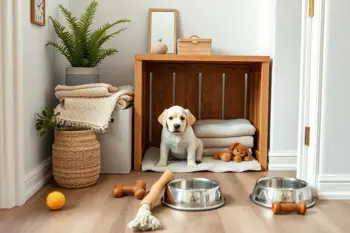
Setting up a specific puppy zone helps establish security and routine, allowing the animal to nap and eat in a low-traffic environment 10. This space should include a crate or exercise pen, which serves as a safe containment area when the puppy cannot be actively supervised 4. Ensuring this area is free from constant noise and activity is particularly important for the first few days, as it gives the puppy space to decompress after the transition from their previous home 10.
Consistency in this zone simplifies the early days of ownership. Essential items for this space generally include washable bedding, water and food bowls, and a selection of age-appropriate chew toys that satisfy the urge to chew and soothe teething gums 2, 4. By keeping the puppy-zone setup simple and predictable, owners provide the structure necessary for the puppy to learn boundaries and gain confidence in their new environment 10.
Establishing Routines and Socialization
Puppies benefit significantly from a consistent daily schedule, which helps them understand what to expect regarding feeding, play, and rest 4. Regular opportunities to eliminate are crucial, particularly after the puppy wakes up, eats, drinks, or finishes a play session 11. Utilizing enzymatic cleaners for any accidents ensures odors are completely removed, which helps prevent repeat incidents in the same locations 4.
Socialization is another critical developmental phase that typically occurs between 3 and 14 weeks of age 6. During this period, puppies should be exposed positively and gradually to new surfaces, sounds, and people 11. It is important to avoid overwhelming the puppy or introducing them to areas where they might encounter unvaccinated dogs until a veterinarian confirms their immunity is sufficient 11, 15. Balanced exposure builds long-term confidence and helps mitigate the development of future anxieties 4.
Regulatory and Administrative Responsibilities
Preparation also includes understanding the administrative requirements of pet ownership in your jurisdiction. This may include requirements for municipal dog licensing, mandatory rabies vaccinations, and local leash laws that govern how and where the dog can be exercised 11, 19. Ensuring that the puppy has proper identification, such as a collar with a current tag, is a mandatory step that increases the likelihood of a safe recovery should the animal become lost 4.
Finally, maintaining consistent communication among all household members is essential. A pre-arrival family meeting should be conducted to assign specific responsibilities, such as who will handle bathroom breaks and training sessions 7. Agreeing on household rules, including furniture access and quiet-time expectations, prevents inconsistent feedback that can confuse a puppy during their initial adjustment period 7. This alignment ensures that the entire household contributes to a stable and supportive environment 7.
Sources
- AAHA: What to do before you bring home a new puppy
- Hill's Pet: How to Prepare Your Home for Your New Puppy
- Banfield Pet Hospital: New puppy checklist
- PetMD: New Puppy Checklist
- PetSmart: Puppy's First 30 Days
- American Humane: What Every New Puppy Parent Should Know
- AAHA: New dog checklist
- The Complete Dog Guide: Preparing Your Home for a New Puppy
- PetGuide: How to Care for a Puppy
- Sage Puppies: Prepare Your Home for Puppy Delivery
- General Pet Care Guidelines (AVMA, ASPCA, CVMA, RSPCA, City of Toronto)
- Pet Poison Helpline: Puppy-proofing your home
- VCA Animal Hospitals: Puppy - Raising a Well-Adjusted Dog
- AAHA: Puppy Vaccination Guide
- BC SPCA: How do I socialize my puppy