Winter tires: price guide for 2026: A data-based cost analysis
Winter tires: price guide for 2026 is centered on a practical question: what should drivers expect to pay for winter traction? Available market data places the cost anywhere from several hundred dollars for a complete set to more than $2,000 for premium or high-performance applications, with vehicle size, tire construction, installation, and regional conditions creating the largest differences.
2026 price ranges for a complete winter tire set
A winter tire typically costs about $80 to $300 per tire in one published market review, while broader 2026 estimates place individual prices around $100 to $450 when larger vehicles, premium brands, and studded designs are included. 13 For four tires, the commonly reported range is approximately $400 to $1,800, although AAA describes a narrower typical range of $400 to $1,200 for many passenger vehicles. 34
| Cost category | Typical reported range | Main variables |
|---|---|---|
| Four winter tires | $400 to $1,800 | Size, brand, tire type, vehicle class |
| Mounting and balancing | $60 to $180 | Retailer, wheel condition, service package |
| Seasonal storage | $40 to $120 | Local storage provider and season |
| Valve hardware | $10 to $50 | Replacement requirement |
For many standard passenger vehicles, a complete first-season checkout can therefore fall near $550 to $1,100 after basic installation, before optional storage, sensors, alignment, taxes, or unusually large wheels. 3 A separate 2026 estimate identifies budget sets at $200 to $600 and premium or high-performance sets at as much as $2,000, showing why a single national average can be misleading. 2
Why vehicle size and tire dimensions affect the bill
Tire size is consistently identified as one of the strongest price variables. A compact car using a 15- or 16-inch tire generally requires less material than a large SUV, pickup, or performance vehicle using 19- or 20-inch equipment. The larger vehicle categories can also require higher load ratings, which contributes to higher retail pricing. 15 Width, speed rating, and wheel diameter also influence the final amount.
Canadian market estimates commonly place winter tires between $150 and $450 per tire, depending on vehicle type and rim size. 5 This range is not a universal tariff or regulated price. It is a planning reference affected by currency, imported materials, freight, manufacturing expenses, and local inventory. One Canadian market report described average retail prices as approximately 5% higher in 2026 than the previous year, citing tariffs, transportation, energy, and labor costs as contributing factors. 5
Studless, studded, and premium tire differences
Studless winter tires use flexible cold-weather rubber and dense siping to provide traction on snow, slush, and ice. Studded tires add metal studs for specific icy conditions, but their construction and legal use can affect cost and availability. The 2026 set-price range of $400 to $1,800 specifically includes non-studded through studded products, indicating that the tire category itself can materially change the total. 3
Premium brands such as Michelin, Bridgestone, and Nokian commonly carry a 20% to 30% price premium over budget or mid-range alternatives in Canadian market guidance. 5 Examples cited in 2026 product comparisons include Michelin X-Ice Snow at about $130 to $260 per tire, Bridgestone Blizzak WS90 at $120 to $240, and Nokian Hakkapeliitta 10 at $140 to $280. 7 These figures are product examples, not guaranteed retail quotations.
Installation, wheels, sensors, and storage
Mounting and balancing a four-tire set is commonly estimated at $60 to $180, while one installation-cost guide places the average near $100. 3 Additional charges can include tire disposal, valve stems, alignment checks, and tire-pressure monitoring system hardware. The reported range for valve stems and related hardware is $10 to $50, while storage can add $40 to $120 per season. 3
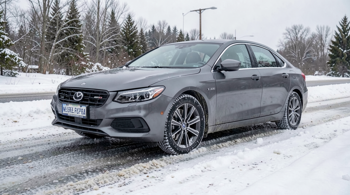
A dedicated winter wheel package creates a separate upfront expense but can reduce repeated mounting and balancing during seasonal changeovers. It also avoids moving tires on and off the same wheels each season, a practice that requires service labor and may increase wear on components. Tire storage remains an ongoing responsibility, and proper pressure monitoring and storage conditions are identified as important factors in extending the useful life of a winter set. 11
Canadian rules, insurance, and regional considerations
Quebec requires winter-rated tires bearing the three-peak mountain snowflake symbol from December 1 through March 15. 6 Requirements in other provinces and states can differ, while some jurisdictions regulate studded tires by permitted dates or road-use conditions. A buyer therefore has to distinguish between a tire that is technically suitable for winter and one that satisfies local legal requirements.
Insurance treatment also varies by provider and policy. Canadian insurance guidance states that insurers may offer premium reductions when drivers provide proof that winter tires are installed, but eligibility, documentation, and qualifying tire standards are determined by the individual insurer. 7 The potential insurance effect should therefore be treated as a policy-specific factor rather than a guaranteed offset to the purchase and installation cost.
How to assess value without relying on price alone
Winter-rated tires are designed for cold conditions, with flexible compounds and tread features intended to improve traction in snow, slush, and ice. Transport Canada guidance identifies winter tires as outperforming all-season tires below 7°C, while all-season tires marked only M+S are not generally equivalent to dedicated winter tires in ice, slush, or very cold conditions. 84
Cost comparisons should include tread life, storage, seasonal service, driving frequency, and local weather rather than the initial tire invoice alone. Consumer research indicates that mid-range tires can deliver comparable safety ratings to premium alternatives when properly maintained, although performance can vary by model and condition. 10 Proper inflation, rotation, storage, and replacement before excessive wear remain necessary regardless of the price category. The principal risks include buying an incorrect size, mixing unsuitable tire types, ignoring load requirements, or postponing replacement after tread deterioration.
Timing and market friction in 2026
Retail demand generally rises in late autumn, and Canadian automotive guidance reports that retailers commonly see price increases as seasonal demand peaks. 9 Early purchasing before the October rush has been associated with potential reductions of 10% to 15% in seasonal pricing, although availability, location, brand, and retailer policies determine whether such differences occur. 5 This is a market-timing observation, not a guaranteed price outcome.
Supply constraints can affect particular sizes even when the overall market appears well supplied. Transportation costs, imported materials, tariffs, manufacturing expenses, and regional weather all create friction between advertised tire prices and the final installed amount. A realistic 2026 assessment should therefore request the complete per-set calculation, verify the correct vehicle specification, account for installation and storage, and check local regulations before treating any quoted figure as comparable.
Sources
- Tire Advise, “How Much Do Winter Tires Cost and Are They Worth the Price”
- USA Today, “How much do snow tires cost and are they worth buying?”
- Cost Insider, “Winter Tire Set Price Guide 2026”
- AAA Western and Central New York, “How much do winter tires cost?”
- Forlander Tire, “2026 Canadian Winter Tire Market: Price Trends & Guide”
- CAA-Quebec, “Winter tires: Everything you need to know”
- Insurance Bureau of Canada, “Winter tires”
- Transport Canada, “Winter driving”
- AutoTrader Canada, “Winter Tires 101”
- Consumer Reports, “Winter and Snow Tires Buying Guide”
- Kal Tire, “Winter Tires”