
Mixed breed rescue dogs ready for adoption across Canada: A national profile guide
Mixed breed rescue dogs ready for adoption across Canada include puppies, adult dogs, and seniors with substantially different exercise, training, medical, and household requirements. Recent profiles describe dogs in Ontario, Manitoba, Yukon, British Columbia, and other regions, but an individual dog's status and suitability must be confirmed directly with the responsible organization before decisions are made. 1 2 3
What the current profiles show
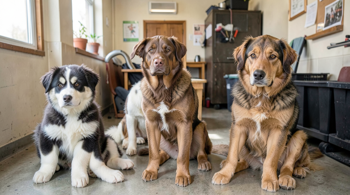
The reported dogs represent a broad range of mixed-breed backgrounds. Bandit is identified as a Husky/Shepherd cross, Lottie as a Husky mix, Gary as a mixed breed, Bella as a Shepherd mix, Savannah as a medium-sized mixed breed, and Kona as a Husky Akita mix. Delonghi is described as a large mixed breed weighing 49 pounds, while the HART profile records Gary at 44 pounds and still growing. 1 2 3 4 5 8 9
Geography is also varied. Lottie came from Manitoba and is fostered in Toronto, Delonghi is located within an Ontario adoption radius stated as five hours from Toronto, Savannah is featured by the Humane Society Yukon, and Kona was reported through the Nanaimo SPCA in British Columbia. These examples demonstrate that Canadian rescue arrangements can involve transport from one province to another, foster placement, or regional shelter adoption rather than a single national inventory. 2 5 8 9
Puppies require time and structured training
Bandit is described as an eight-week-old puppy who is gentle, food motivated, and cautious with unfamiliar experiences. He is being fostered with a littermate and a senior cat, is progressing with overnight crate training, and is still developing his personality. His profile lists dogs, cats, and children as acceptable household companions, while also recording an $850 adoption fee and neutering still to be completed. 1
Lottie, a three-month-old, 12-pound Husky mix, is described as curious, playful, affectionate, and independent in play. Her foster report states that she is potty trained and crate trained, enjoys puzzles and enrichment, and is still learning manners, confidence when alone, and appropriate chewing habits. She has not been tested with children or cats, so those household situations remain unresolved rather than confirmed. 2
Adult and senior dogs have different needs
Bella is a nine-year-old Shepherd mix whose reported strengths include a calm, easygoing temperament, affection for people, and comfort with familiar routines. She has age-related vision loss but has adapted to navigating known spaces. The profile indicates that she would be suited to a calm home as the only pet, with predictable surroundings and reassurance during adjustment. 4
Savannah is a four-year-old, medium-sized mixed breed described as cheerful, affectionate, and especially people-oriented. She reportedly does well in a home environment and enjoys extended games of fetch, but the Humane Society Yukon notes that her adoptive household would need to continue addressing leash reactivity. Ranata, an eight-year-old Nikita mix featured by the Sudbury SPCA, is described as active, people-loving, clingy, and appropriate for a home where she would be the only pet. 5 6
Household compatibility must be assessed individually
Gary's profile records a high-energy male mixed breed who is very social with dogs, curious about cats, gentle with children but untested with very young children, and not yet suited to long periods alone. He is house trained with routine, knows sit, and is learning wait. The recommended setting includes space to play, companionship during the day, and continued guidance as he matures. 3
Gracie, Gary's sibling, is described as a medium-energy female puppy who enjoys water, toys, people, and other dogs. Her profile states that house training, leash walking, and chewing habits remain in progress, and that she has no experience with cats or young children. Delonghi is reported as energetic, playful, affectionate, spayed, vaccinated as up to date, comfortable in an apartment, and good with dogs, while cat compatibility is uncertain. 7 9
Health, behaviour, and adoption screening
Gary and Gracie both tested positive for parvovirus after arriving from a spay and neuter clinic, received emergency veterinary treatment, and were reported to have fully recovered. Gary's profile lists DACPP, Bordetella, and rabies vaccinations, microchipping, and neutering; Gracie's lists the same vaccination coverage, microchipping, and spaying. The organization advises that other household dogs should be appropriately vaccinated when considering a parvo-recovered puppy. 3 7
Behaviour descriptions should be read as observations from a particular foster or shelter setting, not permanent guarantees. Puzzle, a Labrador-type dog in the PADS material, is described as treat motivated, active, well behaved on a loose leash and in a car, but also prone to overexcited greetings, distraction around dogs, stick collecting, and bossiness toward some male dogs. His stated requirements include an outdoors-oriented household, a large fenced yard, and someone home most of the day. 7
How Canadian adoption pathways generally work
Canadian adopters may encounter formal applications, interviews, home visits, virtual screening, reference checks, vaccination requirements, and province-specific transport arrangements. The BC SPCA is described as requiring an application process and a home visit or virtual screening, while the Ontario SPCA operates multiple animal centres and a provincial animal transport program. These procedures are intended to match a dog's needs with a household's capacity rather than function as a simple first-come process. 11 13
National search resources include Petfinder and Adopt-a-Pet, which connect prospective adopters with shelters and independent rescue groups across Canada. Regional organizations named in the research include the Montreal SPCA, Edmonton Humane Society, Winnipeg Humane Society, Calgary Humane Society, and Nova Scotia SPCA. Humane Canada provides guidance on ethical adoption and reputable rescue organizations. Listings can change quickly, and a profile may become inactive, as shown by HART's notice that Gracie's applications were no longer being accepted. 10 12 14 15 16 17 18 19
Practical responsibilities after adoption
Rescue adoption involves more than selecting a breed label or age category. Puppies may need frequent supervision, house training, crate training, socialization, chewing management, and gradual alone-time practice. Adult dogs may require leash work, structured exercise, or behavioural support. Senior dogs such as Bella may need environmental predictability and accommodation for reduced vision. These needs can affect schedules, housing, travel, other pets, and the availability of qualified veterinary care. 1 2 4 5
Adoption fees commonly contribute to veterinary preparation such as vaccination, sterilization, and microchipping, although the exact amount and included services differ by organization. Bandit's listed fee is $850, while several other profiles in the supplied research do not state a fee. Prospective households should verify medical records, sterilization status, known behaviour, transport conditions, return policies, and any restrictions involving children, cats, dogs, yards, apartment living, or time spent alone. 1 9 10 13
Sources
- Heart and Soul Dog and Cat Rescue, Bandit
- Fetch + Releash Dog Rescue, Lottie
- HART, Gary 2026-007
- OrilliaMatters and Ontario SPCA, Bella
- Yukon News and Humane Society Yukon, Savannah
- CTV News and Sudbury SPCA, Ranata
- PADS, Puzzle
- NanaimoNewsNOW and Nanaimo SPCA, Kona
- Redemption Paws, Delonghi
- Petfinder
- Ontario SPCA and Humane Society
- Adopt-a-Pet
- BC SPCA
- Montreal SPCA
- Edmonton Humane Society
- Winnipeg Humane Society
- Calgary Humane Society
- Nova Scotia SPCA
- Humane Canada