
Dental implant alternatives for missing teeth: bridgework in 2026 - A Clinical Data Review
Approximately 178 million Americans are missing at least one tooth, according to the American College of Prosthodontists, and millions more worldwide face the same decision: how to restore function, aesthetics, and long-term oral health after tooth loss. 1 Bridgework, a restoration category with over a century of clinical application, continues to serve patients in 2026 as both a standalone treatment and a component of implant-supported configurations. Understanding its mechanics, realistic lifespan, cost structure, and appropriate patient profile is essential before committing to any restorative pathway.
How Dental Bridgework Functions: Structure and Mechanics
A dental bridge is a fixed prosthetic device that replaces one or more missing teeth by suspending an artificial tooth, called a pontic, between two retainer crowns cemented onto the natural teeth adjacent to the gap. 2 The result is a single, permanently bonded unit that restores chewing function, speech, and smile appearance without implant surgery. Unlike removable partial dentures, a fixed bridge is cemented in place and is not taken out for daily cleaning, which many patients find preferable for comfort and confidence.
Traditional bridges require the preparation of the two adjacent abutment teeth, a process involving the irreversible removal of a significant portion of natural tooth structure to accommodate the retaining crowns. Research cited in clinical literature indicates this preparation can remove 60 to 70 percent of the adjacent tooth structure, and abutment teeth supporting bridges carry a 30 percent higher 20-year failure rate and an elevated risk of needing root canals compared to untouched natural teeth. 3 This irreversible alteration is a key clinical trade-off that distinguishes traditional bridges from implant-based solutions.
Types of Bridges Available in 2026 and Material Evolution
Modern bridgework encompasses several distinct designs suited to different anatomical and clinical conditions. Traditional bridges anchor between two crowned abutment teeth and are the most common configuration. Cantilever bridges, supported on only one side of the gap, are used when teeth exist on just one side, though they are less frequently recommended because of uneven occlusal force distribution. 4 Maryland resin-bonded bridges use minimal preparation and bond to the backs of adjacent teeth with metal or ceramic wings, making them a less invasive option particularly suited to replacing single front teeth.
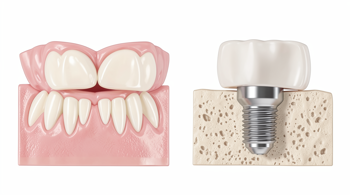
Material technology has advanced substantially. Modern bridge fabrication options include porcelain-fused-to-metal, all-ceramic, and zirconia configurations, each offering different balances of aesthetics and durability. 5 All-ceramic and zirconia bridges are now visually indistinguishable from natural teeth in most cases, resolving the aesthetic limitations associated with earlier metallic designs. Implant-supported bridges, a hybrid category, anchor to titanium implant posts rather than natural teeth, preserving adjacent dentition while still delivering a multi-tooth fixed restoration.
Survival Rates and Lifespan: What the Data Shows
A traditional three-unit bridge shows a 10-year survival rate of approximately 89 to 90 percent, according to the Pjetursson systematic review, while a single dental implant achieves a 10-year survival rate of roughly 95 to 97 percent under the same metric. 6 Over a 20-year horizon, clinical data reviewed by practicing dentists indicates that implants maintain approximately a 92 percent survival rate, whereas bridges typically require remaking once or twice within the same period. 7
In practical terms, a traditional bridge typically lasts between 10 and 15 years before requiring replacement, while a well-maintained implant can exceed 25 years of service. 8 Bridges generally fail as patients encounter difficulty flossing the fixed structure, which can lead to decay beneath the bridge, gum disease around the abutment teeth, and eventual loosening. 9 Clinicians at the American Academy of Implant Dentistry have described aging bridges as a maintenance concern, noting that root surface exposure and decay beneath the pontic area are common reasons for bridge failure after 5 to 10 years.
Cost Benchmarks: Bridges vs Implants in 2026
Cost is a primary driver in restoration decisions. A three-unit traditional bridge in the United States typically costs between $2,000 and $5,000, while a single dental implant ranges from approximately $3,500 to $4,500 per tooth, according to ADA and Healthcare Bluebook figures. 10 In the United Kingdom private sector, bridge costs range from approximately £500 to £2,000 per unit, compared to £1,500 to £6,000 for a single implant depending on whether bone grafting is required. 11
| Metric | Traditional 3-Unit Bridge | Single Dental Implant |
|---|---|---|
| Typical US Cost | $2,000 to $5,000 | $3,500 to $4,500 |
| Typical UK Cost (private) | £500 to £2,000 per unit | £1,500 to £6,000 |
| 10-Year Survival Rate | ~89 to 90% | ~95 to 97% |
| Expected Lifespan | 10 to 15 years | 25+ years with proper care |
| Procedure Duration | 2 to 3 weeks | 3 to 9 months |
| Affects Adjacent Teeth | Yes, irreversible preparation | No |
| Prevents Bone Loss | No | Yes |
Over a 20-year horizon, implants are often the lower total cost because bridges typically require remaking once or twice within that window, whereas a well-integrated implant rarely needs full replacement. 12 However, upfront affordability remains a genuine barrier for many patients, making bridges a clinically and financially rational choice in specific situations.
Six Clinical Scenarios Where Bridgework May Be the Better Option
Implants are widely regarded as the gold standard for single-tooth replacement, but clinical realities mean bridges remain the more appropriate treatment in a defined set of circumstances. Insufficient bone volume at the extraction site is a common limiting factor; if a tooth has been missing for several years or was lost due to severe periodontal disease, there may not be enough remaining bone to support an implant without first undergoing a bone graft procedure, adding cost, recovery time, and surgical risk. 13 In such cases, a bridge may deliver equivalent functional outcomes with less clinical complexity.
- Adjacent teeth already require crowns: A bridge adds functional restoration to teeth that would need crowning regardless, making the shared procedure clinically efficient.
- Medical contraindications to surgery: Uncontrolled diabetes, blood thinners, or active immunosuppression can increase implant surgical risk, making a bridge the safer pathway.
- Shorter treatment timeline required: A bridge is typically completed in 2 to 3 weeks compared to 3 to 9 months for an implant from placement to final crown. 14
- Limited bone volume without willingness to graft: Patients who decline bone grafting may find a bridge the only fixed option available.
- Pediatric or adolescent patients: Implants are generally contraindicated until jaw development is complete, whereas bridges can serve as an interim solution.
- Replacing multiple consecutive missing teeth using two implants: An implant-supported bridge can span up to four missing teeth using only two implant posts, avoiding alteration of additional natural teeth. 15
Bone Resorption, Long-Term Risks, and Maintenance Realities
One of the most clinically significant distinctions between bridges and implants involves jawbone health. After a tooth is lost, jawbone resorption begins within months, with research indicating that up to 25 percent of jawbone width can be lost within the first twelve months following tooth loss. 16 Implants stimulate the jawbone through osseointegration, slowing or preventing this resorption. Traditional bridges sit above the gum line and do not transmit mechanical force to the underlying bone, meaning bone loss beneath the pontic continues over time regardless of the bridge's functional success.
Long-term bridge maintenance requires specific flossing techniques, typically using floss threaders or interdental brushes to clean beneath the pontic. Patients who do not maintain this routine face elevated risk of decay and periodontal disease affecting the abutment teeth. A bridge that fails due to abutment tooth decay often requires a longer replacement bridge spanning a larger gap, compounding the original problem. Any patient considering a bridge as a long-term solution should receive a full assessment of gum health, bite mechanics, and the structural integrity of the intended abutment teeth before proceeding, as these factors directly determine the restoration's clinical lifespan.
Sources
- imaginedentalarts.com - How to Decide Between a Dental Implant and a Bridge for One Missing Tooth (2026)
- kristalclinic.com - What Is a Bridge for Teeth? Types and How Dental Bridges Work
- dentalimplantsdallastx.com - 6 Unit Bridge Front Teeth: Your 2026 Guide to Restoring Your Smile
- int.livhospital.com - What Is a Dental Bridge? Uses, Types and Benefits
- Cochrane Oral Health Reviews via LLM research - Modern Bridge Materials: Porcelain, All-Ceramic, and Zirconia
- dentalboise.com - Dental Implants vs Bridges 2026, Lamb Family Dental (citing Pjetursson systematic review)
- blog.novapremierdental.com - Dental Bridge vs Implant: A Specialist's Comparison for 2026
- Healthline via LLM research - Dental Bridge vs Implant: Lifespan Comparison
- convergentdentistry.com - Dental Implants Are The Preferred Option To Replace Aging Dental Bridges
- dentalboise.com - Dental Implants vs Bridges 2026, ADA and Healthcare Bluebook cost data
- urgentcaredental.co.uk - Missing Tooth Replacement Options: UK Cost Benchmarks
- rodin-dental.jp - Implants vs Bridge vs Denture: How to Choose (updated May 2026)
- serenitydentalclinic.com - 6 Reasons Dental Bridges Are Still Relevant in the Age of Implants
- dentalboise.com - Dental Implants vs Bridges 2026: Procedure Timeline Data
- theperfectsmile.co.uk - Implants or Bridgework: Weighing the Options
- carolinespringsdental.com.au - Dental Bridge vs Implant: Which Is the Best Choice for Your Smile in 2026?