
Timeless fashion tips: how to build an elegant wardrobe at any age | A Practical Editorial Guide
Timeless fashion tips for building an elegant wardrobe at any age begin with the same practical concern many people experience: a closet can be full of clothes yet still offer nothing suitable to wear. The most reliable response is an intentional wardrobe built around fit, fabric, function, and pieces that can be mixed, matched, and adapted across seasons and occasions. 1
Define timeless style around real life
Timeless style is not a fixed checklist of garments or an instruction to dress identically at every age. It is a wardrobe philosophy based on self-knowledge, proportion, comfort, and repeated usefulness. A rigid list of a white shirt, beige coat, pencil skirt, and formal pumps may overlook a person’s work pattern, mobility needs, climate, body shape, and social life. A personal uniform, built from preferred silhouettes and textures, is often more practical than copying a conventional formula. 3
- Identify the settings that dominate the week, such as work, travel, casual activities, and formal events.
- Choose three style descriptors, such as polished, relaxed, refined, or architectural, and use them as a purchasing filter.
- Remove garments that do not fit current routines, comfort needs, or personal identity.
Build the foundation with versatile staples
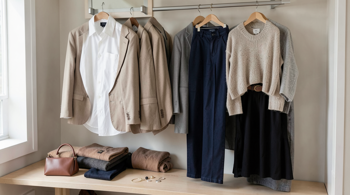
A capsule wardrobe uses a relatively focused selection of essential items as the foundation for many outfits. Common building blocks include a flattering white shirt, well-fitting trousers in black, navy, or beige, a neutral tailored blazer, dependable jeans, and a little black dress. These categories are useful because they can move between casual and formal settings through changes in shoes, knitwear, bags, jewelry, and layering. 1
| Wardrobe category | Practical role | Selection priority |
|---|---|---|
| Shirt | Layering and dressing up or down | Comfortable cut and durable cotton |
| Trousers | Polished everyday foundation | Movement, hem length, and tailoring |
| Blazer | Structure for casual or professional looks | Shoulder fit and versatile color |
| Jeans | Relaxed foundation | Confidence, comfort, and proportion |
| Dress | One-piece occasion solution | Adaptable shape and fabric |
Prioritize fit, proportion, and movement
Fit is one of the strongest determinants of whether a classic garment looks polished. British Vogue notes that capsule pieces need to fit well because they form the foundations of everyday outfits, and small alterations such as adjusting a trouser hem can materially improve the result. Proportion also gives clothing longevity: a clean shoulder, straight leg, defined waist, longer hem, or controlled volume can become part of a recognizable personal silhouette. 2
- Check shoulder seams, sleeve mobility, trouser breaks, and waist comfort while standing and sitting.
- Use contrast deliberately, such as a structured jacket with fluid trousers or a crisp shirt with a moving skirt.
- Do not treat a smaller size, tighter cut, or restrictive shape as evidence of elegance.
- Consider professional alterations when the garment is otherwise suitable.
Choose fabrics and colors for longevity
Fabric quality affects comfort, durability, drape, and the frequency with which a garment can be worn. The supplied wardrobe guidance identifies cotton, wool, silk, linen, cashmere, and other natural fibers as important options, while also emphasizing that fabric should be judged in relation to climate and care requirements. A neutral palette of navy, camel, black, white, and beige supports coordination, but personal colors can remain essential when they are worn regularly and work with the rest of the wardrobe. 1
- Use neutrals for high-rotation foundations when easy coordination is a priority.
- Keep distinctive colors or patterns that function as genuine personal staples rather than forcing uniformity.
- Inspect seams, lining, fabric recovery, transparency, and care instructions before deciding whether a piece merits long-term use.
- Remember that natural fibers can require careful laundering, pressing, storage, and protection from damage.
Adapt elegance to different ages and bodies
Elegant dressing does not require hiding age or following a prescribed “mature” uniform. Guidance for women over 40 emphasizes that bodies, necklines, waist-to-hip ratios, and comfort preferences can change, making reassessment more useful than loyalty to older sizes or silhouettes. Guidance for women over 50 similarly stresses fewer, coordinated garments that feel contemporary without being driven by trends. Relaxed tailoring and freedom of movement can look more current than rigid business classics. 6 7
- Reevaluate necklines, sleeve lengths, rises, and fabric weight when comfort or proportion changes.
- Use softer tailoring, fluid layers, and intentional ease instead of oversized clothing without structure.
- Retain familiar signatures, including a preferred color, jewelry style, trouser shape, or knitwear texture.
- Judge garments by how they support posture, movement, and confidence, not by age-based rules.
Use accessories, care, and wardrobe controls
Accessories can give a small group of garments different levels of formality and personality. A quality leather belt, structured handbag, classic watch, or restrained jewelry can finish a simple outfit without making the wardrobe trend dependent. Maintenance is equally important: steaming, appropriate laundering, careful storage, and timely repairs extend the useful life of garments. A one-in, one-out rule can limit accumulation, while seasonal rotation keeps the closet functional and makes wear patterns easier to assess. 10
- Store knitwear folded when appropriate, protect delicate fabrics, and follow garment-specific care instructions.
- Review unworn pieces periodically and record why they are not being used.
- Replace only when a garment no longer performs, fits, or integrates with existing outfits.
- Recognize ongoing maintenance as part of wardrobe ownership, not an optional finishing step.
Recognize the limits and risks of a capsule wardrobe
A curated wardrobe can reduce visual clutter and decision fatigue, but it is not automatically efficient, sustainable, or flattering. Overly strict capsule targets can produce unnecessary purchases, ignore climate and occupation, or pressure people into uncomfortable classics. The approach also has practical friction points: high-quality fabrics may require specialist care, tailoring adds time, and a small rotation can expose garments to heavier wear. Building gradually allows each item to be evaluated individually rather than acquired as a complete set. 2 4
- Avoid numerical rules that do not reflect lifestyle, laundry access, climate, or social obligations.
- Do not confuse a familiar classic with a universally flattering garment.
- Check whether an item works with at least several existing pieces before adding it.
- Accept that an elegant wardrobe is maintained over time and may take years to refine.
Sources
- Grand Magazine
- British Vogue
- MioLook
- The Fashion Conservateur
- Gielfi
- Capsule Wardrobe Style
- No Time for Style
- Luna Fashion House
- ele STYLED
- General wardrobe-care research summarized in the supplied research data