
7-day Italy journey with train travel and hotel included: An Analytical Review of Logistics and Costs
Executing a 7-day Italy journey with train travel and hotel included requires a precise understanding of the country's high-speed rail infrastructure and urban geography. For travelers navigating the quintessential trifecta of Rome, Florence, and Venice, the efficiency of the trip is predicated on the strategic use of high-speed rail carriers such as Trenitalia and Italo 3. This specific timeframe strikes a balance between cultural immersion and logistical movement, allowing for the exploration of iconic landmarks without the excessive transit times associated with automotive travel 4. By focusing on these three core cities, individuals can maximize their time in historic centers rather than in long-distance transit carriages 1.
The Logistics of High-Speed Rail Infrastructure
The primary advantage of a rail-centric Italian journey is the speed of the high-speed networks that connect major metropolitan hubs in nearly straight lines. Data indicates that the transit from Rome to Florence typically requires approximately 90 minutes, while the subsequent leg from Florence to Venice takes roughly two hours and five minutes 1. These durations are significantly shorter than traditional driving times, especially when factoring in the restricted traffic zones (ZTL) and parking challenges inherent in Italian city centers 8. High-speed trains, specifically the Frecciarossa and Italo services, operate at frequencies that allow for morning departures and arrival before lunch, preserving the bulk of the day for sightseeing 3.
Operational efficiency at the station level is critical for maintaining the 7-day schedule. Travelers are advised to arrive at major hubs like Roma Termini or Venezia Santa Lucia at least 30 minutes before departure, as platform assignments often appear shortly before the train arrives 3. Seat reservations are mandatory on these high-speed services and are typically included in the ticket price 11. For those utilizing a 7-day Italy rail pass, which provides unlimited travel, a separate supplement is often required to access the fastest train categories, such as the Frecciarossa 11. Advanced booking, ideally two to four weeks prior to departure, can reduce standard fares by approximately 20 to 30 percent 11.
Strategic Itinerary Planning: The 3-2-2 Night Split
A successful 7-day itinerary typically allocates three nights to Rome, followed by two nights in Florence and two nights in Venice 1. This distribution reflects the relative size and density of the historical assets in each city. Rome, with its layers of ancient, Vatican, and Renaissance history, demands the longest stay to accommodate sites like the Colosseum and the Vatican Museums 1. Florence serves as a more compact cultural hub, where two nights allow for an intensive exploration of the Renaissance core and potentially a half-day excursion to the Tuscan countryside 1. The final two nights in Venice provide sufficient time to experience the lagoon city after the primary influx of day-trippers has departed 1.
| City Destination | Recommended Duration | Core Highlights |
|---|---|---|
| Rome | 3 Nights | Colosseum, Roman Forum, Vatican Museums, Pantheon |
| Florence | 2 Nights | Uffizi Gallery, Accademia (David), Duomo, Ponte Vecchio |
| Venice | 2 Nights | St. Marks Basilica, Doges Palace, Grand Canal, Rialto |
Physical fitness is an often-overlooked factor in these urban itineraries, as Venice and Florence are largely pedestrianized. Travelers should expect to walk between six and twelve kilometers daily 1. Because vehicular traffic is restricted in many historical zones, selecting hotels located within a manageable distance of the central train stations can significantly reduce the physical burden of transporting luggage 3. Starting the journey in Rome or Milan is often suggested because these cities house the largest international airports, which are well-integrated into the high-speed rail network 8.
Accommodation Standards and Mandatory Local Costs
Accommodation in Italian city centers is varied, with mid-range 3-star and 4-star hotels averaging between £60 and £120 per night 11. Packages that integrate rail passes with hotel stays can offer savings of 10 to 15 percent compared to booking each component independently 11. It is essential to note that most Italian municipalities levy a local city tax, known as 'tassa di soggiorno', which is typically not included in the prepaid hotel or package price 11. This tax is generally paid on-site during check-out and varies based on the hotel's star rating and the specific city, often ranging from 3 to 7 Euros per person, per night 11.
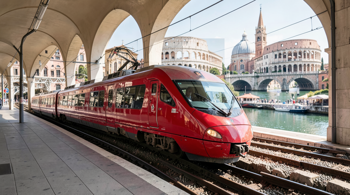
When selecting a hotel, proximity to the main railway stations-such as Firenze Santa Maria Novella or Venezia Santa Lucia-is a strategic priority for a 7-day trip 3. Staying near these hubs eliminates the need for expensive taxi transfers or complex navigation with heavy bags through cobblestone streets. While boutique stays in historical districts offer unique atmospheres, they may require more logistical planning for arrival and departure days 2. For those on a stricter budget, choosing hotels just outside the immediate city center but within a short transit ride can reduce nightly rates, though this adds time to the daily commute 2.
Financial Framework and Budget Expectations
The total expenditure for a 7-day Italy journey with train travel and hotel included depends heavily on the season and the level of service chosen. Comprehensive holiday packages that include rail passes and 3-star or 4-star accommodation typically range from £800 to £1,500 per person 11. Daily out-of-pocket expenses for food, local transport, and site entry fees are estimated between €80 and €150 per person 4. Pre-booking entry tickets for major attractions like the Colosseum or the Uffizi Gallery is mandatory during peak periods to avoid significant delays or total sell-outs 10.
For those seeking a more economical approach, regional trains offer a lower-cost alternative to high-speed services, though they involve longer travel times and lack the guaranteed seat reservations of the Frecciarossa 11. Dining costs can also be managed by avoiding establishments located directly on primary piazzas, where prices are often inflated for tourists 12. Utilizing local 'trattorias' or 'osterias' away from the main thoroughfares generally provides a more authentic culinary experience at a more sustainable price point 12. Credit and debit cards are widely accepted across Italy, but carrying small amounts of cash for minor purchases in local shops remains a functional necessity 4.
Seasonal Variations and Booking Windows
The timing of the journey significantly impacts both the cost and the quality of the experience. The shoulder seasons, encompassing April through June and September through October, are widely considered the optimal periods for travel 4. During these months, the weather is typically mild, ranging from 18 to 24 degrees Celsius, and the crowds at major landmarks are more manageable compared to the summer peak 10. Furthermore, hotel prices during the shoulder season can be 20 to 40 percent lower than in July or August 10.
In contrast, the peak summer months of July and August represent the highest costs and most intense crowding 10. During this period, it is standard practice to book both accommodation and high-speed rail tickets at least four to six weeks in advance 11. Many family-run establishments and restaurants may also close during the mid-August 'Ferragosto' holiday, which can limit dining options in certain neighborhoods 12. Winter travel, excluding the Christmas and New Year period, offers the lowest prices but comes with shorter daylight hours and cooler temperatures, particularly in northern cities like Venice 12.
Regulatory Compliance and Essential Traveler Data
Before initiating a 7-day journey, travelers must verify current entry requirements based on their nationality and passport type. For many Western passport holders, Italy allows visa-free entry for short stays of up to 90 days within a 180-day period 4. It is also recommended to review official travel advice from government agencies, such as the UK Foreign, Commonwealth and Development Office (FCDO), which provides updates on local security, strike actions affecting the rail network, and health regulations 11. While Italy is generally considered safe for tourists, maintaining awareness in crowded areas is advised to mitigate the risk of petty theft 4.
Travel insurance is another critical component of a multi-city rail trip. Policies typically cost between £15 and £30 per person and are highly recommended to cover potential cancellations of prepaid hotels or non-refundable train tickets 11. Additionally, travelers should be aware of the efficient but strict Italian rail ticketing rules: while high-speed tickets include reservations, regional train tickets purchased at the station must be validated at a green machine on the platform before boarding to avoid significant on-board fines 3. Understanding these nuances ensures that the 7-day journey remains a seamless and legally compliant experience 4.
Sources
- Globerove: Italy 7-Day Itinerary: Rome, Florence and Venice by Train
- Vacationotrips: 7-Day Classic Italy Essentials: Venice, Florence and Rome
- Builtsanantonio: 7 Days in Italy by Train: Rome, Florence, and Venice Without the Rush
- Wonderplan: Italy Itinerary 7 Days: The Ultimate Guide (2026)
- Tripstou: 7-Day Italy Itinerary: Rome, Florence and Venice Route
- Exploretripsguide: 7 Days in Italy Itinerary: Rome, Florence and Venice (2026)
- Eurail.com: Italy Rail Pass and Supplement Information
- Nenellie: 7 Day Trip to Italy Itinerary and Transport Advice
- GOV.UK: Foreign Travel Advice for Italy
- Foreign, Commonwealth and Development Office (FCDO): Safety and Security in Italy
- Trenitalia and Booking.com: Fare Types, Reservation Requirements, and Hotel Pricing Data
- Faroway Blog: How to Plan a Trip to Italy on a Budget (2026 Guide)