Are you eligible for NHS dental implants? Key checks and common requirements
Understanding your eligibility for NHS dental implants requires knowledge of the narrow criteria that govern this treatment, the referral pathway you must follow, and the realistic expectations around availability and timing in your region.
What NHS Dental Implants Actually Cover
The NHS does offer dental implants, but not as a routine treatment for missing teeth 2. Implants are listed alongside teeth whitening and veneers as treatments that fall outside standard NHS coverage in most circumstances 1. The key distinction is that NHS implants are available only in specific medical and clinical situations, not for routine tooth replacement due to decay or age-related tooth loss.
NHS dental implants are typically provided through hospital-based specialist services rather than high street dental practices 3. These services operate under different rules from general dental services and accept patients through formal referral pathways. The treatments provided at these hospital services are often free of charge to NHS-eligible patients, with charges applying only where cosmetic adjustments are provided or when items are lost or damaged 3.
Medical Conditions That May Qualify
NHS implants are reserved for patients with clear medical necessity. The most commonly cited qualifying conditions include tooth loss resulting from trauma or accident, congenital conditions affecting tooth development or jawbone structure, cancer treatment that has required tooth extraction or jaw reconstruction, severe developmental disorders affecting the teeth or supporting bone, and severe jawbone atrophy that cannot be adequately managed through other restorative methods 2. Each case requires specialist assessment to confirm that implant treatment is clinically necessary rather than simply preferred.
The distinction between medical necessity and preference is central to NHS eligibility. Many people with missing teeth would benefit from implants, but the NHS cannot fund treatment for all of them. Instead, the service prioritises patients according to their medical needs, recognising that demand is high and the budget available to supply implants is limited 2. This means that even if you have missing teeth, routine tooth loss from decay or extraction for other reasons does not automatically qualify you for NHS implant funding.
Jawbone Density and Bone Health Requirements
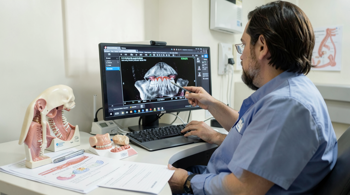
Successful implant placement depends on adequate jawbone volume, density, and quality. Before any implant is placed, a dentist must assess whether your jawbone can support the titanium post and withstand the forces of biting and chewing. This assessment typically involves radiographic imaging, including CBCT scans, which allow clinicians to evaluate bone structure in detail and determine the position and design of the planned implant 23.
Where jawbone has shrunk or deteriorated after tooth loss, bone grafting may be necessary to provide a foundation for the implant. In private practice, bone grafts cost between £250 and £1,500 17. On the NHS, bone grafting is rarely funded, which significantly limits the number of patients who can be treated. If your bone density is insufficient and a graft is required but not available through NHS funding, you may be advised to explore private treatment or accept alternative restorations such as dentures or bridges.
Oral Hygiene and Maintenance Requirements
All NHS implant patients must demonstrate excellent oral hygiene standards and a commitment to ongoing maintenance. This is not a one-time assessment but a practical requirement that must be maintained for the implant to remain healthy. Patients are typically required to be registered with an NHS dentist for ongoing care and to attend regular appointments for monitoring and professional cleaning 2.
Implant failure rates increase significantly without proper maintenance. Poor oral hygiene around an implant can lead to peri-implantitis, an inflammation of the tissues surrounding the implant that can ultimately result in implant loss. For this reason, NHS clinicians assess whether patients have the ability and commitment to maintain their implants over the long term. Patients with a history of poor compliance with dental care or those unlikely to maintain regular appointments may be considered unsuitable for treatment.
The Referral Pathway and Specialist Assessment
To access NHS implant treatment, you cannot simply request it from your dentist and receive it. Instead, your dentist must decide that a referral for specialist assessment is clinically appropriate and make that referral to a specialist implant service, typically located at an NHS dental hospital or specialist centre 3. The hospital will then arrange an assessment appointment, during which a consultant will review your clinical history, examine your mouth, and assess your suitability for treatment.
This referral process creates a gatekeeping system that ensures only genuinely eligible patients are assessed and treated. The waiting time from referral to surgery can be substantial. NHS implant patients typically wait between 12 and 24 months from referral to surgery, and in some cases, waits are even longer 2. Regional variation is significant, with some areas offering faster access than others depending on local funding and capacity. By comparison, private implant treatment can usually be arranged within 1 to 4 weeks from consultation 2.
Age Restrictions and Jawbone Maturity
Age is an important factor in implant eligibility. Dental implants should not be placed until the jawbone has fully stopped growing, which typically occurs around age 18 in young women and between 18 and 21 in young men, though individual development varies 24. The NHS generally does not provide implants to patients under 18 years old because the jawbone is still developing, and an implant placed in a growing jawbone may not remain in the correct position as the bone continues to change.
For patients over 18 with completed jaw growth, age alone is not a barrier to NHS implant treatment if other eligibility criteria are met. However, certain age-related medical conditions or medications may affect bone healing or overall suitability for surgery. Each patient's medical history and capacity to tolerate surgical treatment are assessed individually.
Regional Variation and Funding Availability
A critical reality of NHS implant access is that availability varies significantly by region. NHS commissioning decisions are made at the local integrated care board level, and some areas have more restrictive implant policies than others based on local funding and strategic priorities. This means that two patients with identical medical circumstances in different regions may have very different access to NHS implant treatment.
In some regions, only an estimated 5 to 10% of eligible individuals receive NHS-funded implants 2, and in one survey, 8% of patients who met the criteria still had their applications refused 2. Even if you meet the clinical criteria for NHS implant treatment, securing approval is not guaranteed. Some hospital or university dental departments may offer treatment as part of training programmes or research studies, but these opportunities are not accessible through general dental practices and are limited in availability.
What NHS Funding Does and Does Not Cover
If you are approved for NHS implant treatment, it is important to understand what is included and what is not. NHS funding typically covers the active implant treatment itself and associated hospital care, but generally does not cover ongoing maintenance or future repairs beyond approximately five years 2. This means that after the initial treatment and a period of follow-up care, any complications, repairs, or replacement of implant components may become your responsibility financially.
NHS implant treatment may also involve standard hospital-issue implant systems with limited choice of materials compared to private practice. The crown, abutment, and fixture are typically selected from a standard range rather than offering the full spectrum of premium implant brands available privately, such as Straumann, Nobel Biocare, MIS, Dentsply, and Megagen 2. Hospital clinical responsibility continues during the warranty period, but there is no commercial warranty in the private sense.
Alternative Options If NHS Treatment Is Not Available
For the vast majority of people with missing teeth, NHS implant treatment is not available. In these situations, alternative restorations may be considered. Bridges are fixed replacements for missing teeth made from metal and porcelain, fixed permanently in the mouth 1. Dentures are removable replacements that can be adjusted or replaced if needed. Both are available on the NHS and represent the main alternative to implants for routine tooth replacement.
If you wish to pursue dental implants outside the NHS, private treatment is available from General Dental Council-registered clinics. A single dental implant in the UK costs between £1,800 and £3,500 privately, depending on the clinic location, implant brand, and whether additional procedures like bone grafting are needed 7. Full mouth restorations using techniques such as All-on-4 range from £9,000 to £15,000 per arch 7. Many private clinics offer 0% APR finance plans across 24 to 60 months, bringing monthly costs into manageable ranges, though this remains a significant financial commitment for most patients.
Practical Next Steps for Assessment
If you believe you may be eligible for NHS implant treatment, the first step is to book an appointment with your NHS dentist and discuss your situation. Explain the circumstances of your tooth loss and ask whether your dentist thinks a referral to a specialist implant service would be appropriate. Your dentist will assess your clinical situation, review your oral health status, and decide whether to proceed with a referral. Be honest about your oral hygiene practices and your ability to attend regular appointments, as these factors directly influence whether a referral will be made.
Prepare for your initial dentist appointment by gathering information about any medical conditions that may have contributed to your tooth loss, collecting records from any previous dental treatment, and being realistic about your expectations regarding waiting times and treatment options. If your dentist does make a referral, clarify what the expected waiting time is in your area and what you should do while waiting. If NHS treatment is not available or you do not qualify, ask your dentist about the costs and timescales for private implant treatment as a comparison.
Sources
- NHS.uk - Dental treatments
- Dental Implant Quote - Are Dental Implants Free on the NHS? 2026 Eligibility Guide
- Newcastle Hospitals NHS Foundation Trust - Frequently asked questions
- The Perfect Smile - Can I Get Dental Implants Done on the NHS?
- NEYO Dental - Dental Implant Cost NHS
- Dentaly.org - NHS Dental Implants 2026: Costs, Eligibility Criteria
- Pearlie - How Much Do Dental Implants Cost in the UK?
- LDC Confederation - What is NHS Dentistry?
- MyDentalFly - Dental Implant Cost UK 2026
- NHS Essex - Dental services in Essex
- House of Commons Library - NHS charges
- Norfolk and Suffolk ICB - Dental services
- The Mirror - Everyone who qualifies for £332.10 free NHS dental treatment
- Pocket Dentistry - 6: Imaging
- LegalClarity - What Does the NHS Cover? Free Services and Charges
- Healthy and Sustainable Places Data Service - Open Wide: Gaps in NHS Dentistry
- Dental Implant Quote - How Much Do Dental Implants Really Cost in the UK in 2026?
- Dentist Cost UK - The True Cost of Dental Implants in the UK in 2026
- GOV.UK - Service use and barriers to accessing care
- NHS Networks - NHS dental quality and payment reforms guidance
- Institute of Dental Business - Understanding Your NHS Obligations
- Dental Clinic London - At What Age Can a Young Person Get Dental Implants?
- Dental Implant Quote - Zirconia vs Titanium Dental Implants: The 2026 UK Comparison
- Dental Implants London - Antibiotic Prophylaxis and Dental Implant Surgery Explained