
Supporting heart health for people over 70: 2026 strategies: A comprehensive overview of evidence-based clinical and lifestyle management
As the global population ages, cardiovascular health has become a primary focus for medical professionals and health systems in 2026. Managing heart health for individuals over 70 requires a shift toward patient-centered, evidence-based care that accounts for the complex interplay of biological aging, multimorbidity, and social factors 1. The prevalence of heart failure and coronary heart disease increases significantly after the age of 70, making proactive management and adherence to specialized guidelines essential for preserving independence and mobility 2, 5.
Evolution of Clinical Cardiovascular Guidelines in 2026
Modern geriatric cardiology focuses on optimizing guideline-directed medical therapy (GDMT) while navigating the risks of polypharmacy and frailty. Recent scientific statements from the American Heart Association emphasize a structured framework for therapeutic decisions based on a careful benefit-to-risk analysis 1, 9. Common pharmacological interventions now include SGLT2 inhibitors, mineralocorticoid receptor antagonists, and specialized heart failure therapies that have shown consistent safety profiles in older populations 9.
Despite these advancements, GDMT remains underutilized in patients over 75, often due to concerns regarding side effects and age-related physiological changes 3, 9. Clinicians are increasingly adopting shared decision-making models to balance the need for intensive blood pressure and lipid control against the potential for drug interactions or adverse reactions 1, 4.
Physiological Shifts and Heart Disease Risks
The aging heart undergoes distinct structural changes, including the stiffening of blood vessels, reduced cardiac output, and increased fibrosis of cardiac tissues 7. These developments contribute to the high prevalence of conditions such as hypertension, atrial fibrillation, and coronary artery disease among those aged 70 and older 4, 7. Managing these risks often involves multifactorial approaches to stabilize blood glucose, blood pressure, and cholesterol levels simultaneously 4.
Furthermore, systemic physiological alterations, such as oxidative stress and chronic low-grade inflammation, impact myocardial energy homeostasis 5. While these mechanisms are primary drivers of heart failure, current clinical practice aims to modulate these risks through personalized lifestyle interventions and regular screenings, particularly for rhythm abnormalities like atrial fibrillation which pose a significant stroke risk in this demographic 5.
Integrating Physical Activity for Heart Maintenance
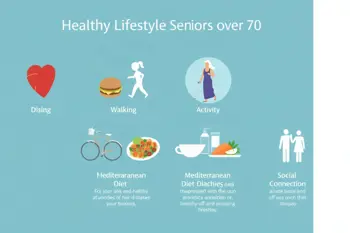
Physical activity remains a cornerstone of successful aging, with updated 2026 recommendations emphasizing that it is never too late to begin a routine 2. Guidelines for individuals over 70 typically suggest a combination of aerobic, muscle-strengthening, and balance exercises 10. The current standard recommends at least 150 minutes of moderate-intensity aerobic activity per week, such as brisk walking, to maintain cardiovascular integrity 10.
| Activity Type | Recommendation | Primary Benefit |
|---|---|---|
| Aerobic Activity | 150 min/week moderate or 75 min/week vigorous | Heart and lung capacity |
| Strength Training | 2 days/week targeting major muscle groups | Metabolic health and mobility |
| Balance Training | Performed as part of regular routine | Fall prevention and independence |
Incorporating balance and strength training is critical for seniors, as fall prevention is closely linked to the ability to remain physically active and independent 10. Experts note that any amount of activity is preferable to inactivity, and regimens should be tailored to individual physical capabilities and pre-existing chronic conditions 2, 10.
Metabolic and Lipid Management in Late Life
Cholesterol and blood pressure management for those over 75 remains a nuanced area of practice. For individuals with atherosclerotic cardiovascular disease, secondary prevention through lipid-lowering therapies is broadly supported, as the absolute benefit of these treatments often increases with age 6. Statins continue to serve as the primary intervention, with alternatives like ezetimibe and PCSK9 inhibitors used when statin intolerance occurs 6.
However, primary prevention in the oldest old requires a more individualized assessment. Clinicians are tasked with evaluating life expectancy and quality of life when determining whether to initiate, continue, or deprescribe therapies 6. The goal is to maximize cardiovascular protection while minimizing the burden of daily medication, especially when the patient is dealing with advanced comorbidities 1, 5.
Lifestyle Modification and Social Determinants
Lifestyle changes represent perhaps the most potent tool for reducing the burden of cardiovascular disease. Smoking cessation is universally recognized as the most impactful change, leading to rapid improvements in blood flow and vascular health regardless of age 8. Dietary patterns, such as the Mediterranean-style diet, are frequently cited in 2026 guidance due to their association with reduced cardiovascular event risk in older populations 8.
Beyond physical habits, health systems now recognize social isolation as a significant, modifiable risk factor for heart disease in the elderly 1. Community engagement and social support networks are increasingly integrated into heart care strategies, as loneliness can negatively impact stress levels, blood pressure, and adherence to medical regimens 1.
Future Directions in Geriatric Cardiovascular Care
The field is moving toward a more holistic view of heart failure, one that addresses cognitive and physical decline alongside cardiac function 1, 9. Ongoing clinical trials, such as the PREVENTABLE and STAREE studies, are expected to provide further clarity on primary prevention strategies for the oldest adults in the coming years 6. Research is also expanding into how to better support patients with advanced comorbidities who have historically been excluded from large-scale clinical trials 1.
As patient-centered care models mature, the focus remains on empowering seniors and their families to make informed decisions that optimize quality of life 7. By combining evidence-based medicine with consistent physical activity and proactive management of social and metabolic risk factors, healthcare providers aim to reduce the morbidity associated with heart failure and other cardiovascular conditions in the 70-plus demographic 1, 7.
Sources
- American Heart Association (Circulation Journal), 2026.
- Stanford Medicine, 2026.
- Drugs & Aging (Journal), 2026.
- Wong N, Tang K, Epidemiology and prevention of coronary heart disease in older adults, 2026.
- Erasmus University Rotterdam, Heart failure in the elderly research, 2026.
- Geriatrie a Gerontologie (Journal), 2026.
- All Seniors Foundation, 2026.
- UC Davis Health, Heart health lifestyle tips, 2026.
- The Cardiology Advisor, 2026.
- Centers for Disease Control and Prevention (CDC), 2025.