
Rimless glasses: the shape making a comeback
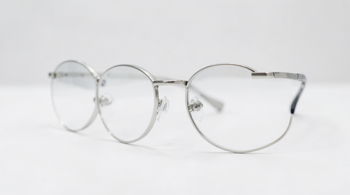
The barely-there frame has returned. Rimless glasses, once categorized as purely functional or quietly dated, are now appearing on fashion runways, in tech boardrooms, and across social media feeds as a deliberate style signal. The shape making a comeback is not the flimsy, forgettable design of two decades ago. It is a precision-engineered, culturally loaded accessory aligned with the dominant aesthetic mood of the mid-2020s, and understanding why it has returned requires looking at fashion, materials, and changing workplace dynamics simultaneously.
The Cultural Forces Driving the Rimless Revival
Two distinct fashion movements have converged to push rimless frames back into mainstream relevance. The first is the quiet luxury aesthetic, driven by houses such as The Row, Brunello Cucinelli, and Loro Piana, which has reshaped consumer priorities toward quality over logos and subtlety over spectacle. 1 Within this framework, rimless glasses are a logical endpoint: two lenses, a bridge, two arms, and nothing superfluous. The second force is the Y2K revival, which has reintroduced the clean-line, tech-optimistic silhouettes of the late 1990s and early 2000s under the label of cyber-minimalism. 2 Together, these movements have repositioned rimless frames from a corporate holdover into a high-fashion signal.
Cultural visibility has accelerated the trend considerably. Global figures including Jackson Wang and BLACKPINK's Jisoo have worn rimless frames alongside avant-garde tailoring and soft feminine silhouettes, effectively stripping the historical librarian or 1990s executive stigma from the style and rebranding it as a tool for versatile, sophisticated self-presentation. 3 Industry observers also note that the shift mirrors a broader move away from flashy logos, where the most confident style choices rarely announce themselves.
Material Engineering Behind the Modern Frame
Contemporary rimless glasses are structurally different from the fragile designs many consumers remember. In a traditional full-rim frame, the outer acetate or metal rim acts as a structural cage that absorbs mechanical stress. In a rimless design, the lenses themselves become the structural bridge, with temple arms and the nose bridge mounted through holes drilled directly into the lens. 4 This places enormous engineering demands on both the lens material and the frame hardware, demands that older monel or standard steel alloys could not reliably meet.
Beta-titanium has resolved this structural problem. Unlike pure titanium, which is relatively rigid, beta-titanium is an alloy typically mixed with vanadium, aluminum, or molybdenum that exhibits exceptional elasticity, allowing it to flex under stress and return to its original geometry rather than bending permanently or cracking the lens at the mounting point. 4 Memory-metal technology offers similar benefits, with frames that can be bent, sat upon, or compressed and still recover their original shape. Some current rimless designs weigh as little as 3.7 grams, with broader categories commonly falling under 15 grams in total frame weight. 5
Trending Silhouettes and Lens Aesthetics in 2026
The 2026 iteration of rimless eyewear has moved away from the purely oval or round shapes associated with earlier decades and toward what designers describe as refined geometry. The soft rectangle, featuring narrow lenses with slightly rounded corners, is widely cited as the most versatile silhouette, offering a Matrix-lite reference that transitions between professional and street-style contexts. 2 Geometric cuts including hexagons and soft squares are particularly popular within creative and technology communities, while micro-lens shapes and oval lenses appear prominently in minimalist and feminine styling contexts.
Lens tinting has become a notable secondary trend within the rimless category. Clear lenses remain the standard, but growing interest in what some trend analysts call digital tints, barely-there washes of cool blue, soft violet, or tech-gray, has produced a retro-futuristic sub-aesthetic that draws directly on Y2K visual language. 2 Rose pinks and pale yellows are also documented as popular tint choices, offering a cool nostalgia without the heaviness of a surrounding frame. Hardware finishes, particularly warm gold and brushed titanium at the bridge and temple ends, have elevated the category into accessories that stylists describe as functioning like precision jewelry on the face.
Face Shape Compatibility and Styling Guidance
Rimless frames are considered among the most adaptable silhouettes in eyewear because the absence of a colored or heavy outer rim reduces the risk of clashing with facial proportions. Optical professionals and style analysts broadly identify oval, heart, and diamond face shapes as the most naturally compatible with rimless designs, as the minimal frame complements symmetrical features without introducing additional visual weight. 6 Round faces benefit from angular or rectangular rimless lens shapes that add structure and definition, while square faces with strong jawlines tend to suit softer oval or teardrop lens geometries that counterbalance angular features.
Optician Hana Kong of Morgenthal Frederics in New York notes that rimless wearers tend to be shape connoisseurs, because when there is no frame to distract, every curve and angle in the lens itself matters. 7 Style pairing guidance consistently points to formal, minimal, and smart-casual wardrobes as the strongest contexts for rimless frames, though updated styling approaches have expanded the category into casual and evening settings as the quiet luxury aesthetic has permeated broader fashion culture.
Prescription Compatibility and Practical Limitations
Rimless glasses are not universally compatible with all prescriptions, and optical professionals are consistent on this point. The style works best with mild to moderate prescriptions because rimless construction leaves the lens edge completely exposed, meaning that high-minus prescriptions, which produce lenses that are thinnest at the center and thickest at the outer edges, display visible edge thickness from every angle. 8 Wearers with prescriptions above approximately minus four diopters are generally advised to use high-index lens materials to reduce this edge shelf and preserve the slim silhouette that defines the rimless aesthetic.
There are also structural durability considerations that prospective wearers should understand. Because all mechanical stress in rimless frames is transferred directly to the lens mounting points rather than distributed across a surrounding rim, these frames require more careful handling than full-rim alternatives. 7 Opticians routinely advise removing rimless glasses with both hands and avoiding the habit of pushing frames onto the head, which stresses the temple attachment points. The two primary construction methods, drill mount, which drills small holes into the lens, and numont or grooved rimless, which threads a nylon cord through a channel cut into the lens edge, each carry different stress distribution profiles, with numont generally considered structurally more forgiving for everyday use. 9
Market Context and Historical Lineage
Rimless eyewear carries a lineage that precedes modern fashion cycles by more than a century. The earliest rimless designs were pince-nez glasses, French for pinch-nose, which lacked temple arms entirely and balanced on the nose bridge alone. These were the dominant spectacle design through the Victorian and Edwardian eras before temple-arm frames displaced them for practical reasons. 10 By the early twentieth century, rimless designs with temple arms had become a symbol of status and intellect. Theodore Roosevelt's consistent use of rimless spectacles made them an iconic American look, and in more recent history, Steve Jobs's custom round rimless glasses cemented the style's association with innovation and forward-thinking simplicity. 11
The contemporary market reflects these associations. Demand signals reported from within the eyewear retail sector suggest the category is growing meaningfully, with some specialist retailers reporting rimless orders increasing by approximately 47 percent over a recent six-month period. 12 Premium materials including buffalo horn, engraved titanium, and 18-karat gold hardware have emerged at the high end of the market, reinforcing the stealth luxury positioning that makes rimless frames legible as a considered, high-value accessory rather than a default or neutral choice. 7 The trend's momentum across both luxury boutiques and accessible optical retail channels indicates a broad rather than niche resurgence, though the core appeal remains rooted in the same principle that has sustained rimless eyewear across multiple fashion cycles: the most sophisticated frame is often the one the wearer hardly notices is there.
Sources
- The Upcoming – Less frame, more face: Why rimless glasses are the quiet luxury trend worth knowing about (theupcoming.co.uk)
- Zenottic Eyewear – Cyber-Minimalism: The Return of Y2K Rimless Glasses (zenottic.com)
- Time News – 2026 Eyewear Trends: Best Rimless and Retro Glasses for Asian Faces (time.news)
- Hermitin Optical – The Return of Rimless: Sourcing Ultralight Beta-Titanium Frames for the Executive Market (hermitin.com)
- WhatsNewHub – Why Rimless Glasses Are Making a Stylish Comeback in 2026 (whatsnewhub.com)
- Eluno – Are Rimless Glasses Still in Fashion in 2026? (eluno.co)
- Style Savants – 9 Rimless Eyewear Styles to Covet, from Classic to Cat-Eye (stylesavants.co.uk)
- Zenottic Eyewear – Y2K Rimless Glasses With High Prescriptions: What Actually Works (zenottic.com)
- Free In Stander – Are Rimless Glasses Worth It for a Clean Minimal Look Now? (freeinstanderapk.com)
- Bling Optical – Pince Nez Glasses Making a Comeback in 2026 (blingoptical.com)
- Zhantai World – Rimless Eyeglasses Guide: Benefits, History and Style Tips 2026 (zhantaiworld.com)
- Titanium Optix – Are Rimless Glasses Trending in 2026? The Ultimate Style Guide (titaniumoptix.com)