
Dental implant options after tooth loss in the United Kingdom: A Clinical Overview
Understanding Tooth Loss and Functional Restoration
Losing a tooth is a common clinical concern that triggers various physiological changes within the oral environment. Beyond the immediate impact on aesthetics, the absence of a tooth root can lead to jawbone resorption, where the bone tissue begins to shrink due to a lack of mechanical stimulation 2. Clinical observations indicate that bone loss frequently becomes noticeable within three to six months of tooth loss 2. Furthermore, the remaining teeth may drift into the available space, potentially creating difficulties with chewing, speech, and long-term bite alignment 7.
Modern dentistry utilizes several restorative approaches to address these challenges, including removable dentures, fixed bridges, and dental implants 1. Each option carries distinct clinical trade-offs regarding durability, invasiveness, and the preservation of adjacent dental structures. While implants are often cited for their ability to integrate with the jawbone-a process known as osseointegration-the choice of treatment depends heavily on the patient's existing bone density, oral hygiene, and overall systemic health 4.
The Clinical Role of Dental Implants
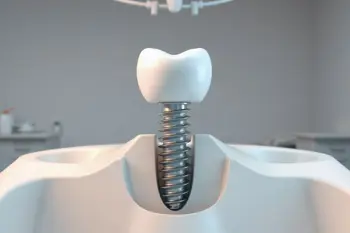
A dental implant functions as a titanium or ceramic artificial tooth root surgically placed into the jawbone to support a crown, bridge, or denture 1. Because the implant anchors directly into the bone, it mimics the function of a natural tooth root, which helps maintain jawbone density and facial structure 4. Clinical data suggests that success rates for these procedures typically range from 90 to 95 percent, provided the patient meets the necessary health criteria and maintains rigorous oral hygiene 4.
The treatment journey for an implant is significantly longer than other restorative methods, often spanning three to nine months or more if bone grafting is required 2. The procedure involves an initial assessment, potentially including CBCT scans to evaluate bone volume, the surgical placement of the implant, a healing phase for integration, and finally the placement of an abutment and crown 1. Unlike bridges, which may require the filing down of healthy adjacent teeth, single implants are designed to restore the gap without impacting neighboring structures 3.
Comparative Analysis: Implants, Bridges, and Dentures
When selecting a replacement method, patients typically weigh factors such as treatment duration, functional performance, and cost. Conventional dental bridges involve anchoring an artificial tooth to adjacent natural teeth, making them a common choice for those seeking a fixed solution with a faster completion time of two to four weeks 2. However, bridges generally do not prevent jawbone resorption, and their lifespan typically ranges from 10 to 15 years, compared to the 20 to 30-year expected longevity of dental implants 2.
| Factor | Dental Implants | Dental Bridges | Dentures |
|---|---|---|---|
| NHS Availability | Rarely | Band 3 | Band 3 |
| Treatment Time | 3-9 months | 2-4 weeks | 4-6 weeks |
| Lifespan | 20-30+ years | 10-15 years | 7-10 years |
| Bone Preservation | Yes | No | No |
Dentures serve as a removable option that can replace one or several teeth, often utilized when patients are not suitable candidates for surgery or when budget is a primary consideration 6. While dentures are effective for full-arch replacement, they offer lower chewing efficiency-estimated at 25 to 30 percent-compared to the 95 percent restoration often achieved with implants 2.
NHS Eligibility and Financial Realities
In the United Kingdom, dental implants are rarely covered by the National Health Service (NHS). NHS funding for implants is generally restricted to specific clinical circumstances, such as severe congenital absence of teeth or reconstruction following head and neck cancer treatment 1. Consequently, the majority of routine implant treatments are provided through private dental practices, where costs can vary significantly based on the clinician’s seniority, clinic location, and the specific brand of hardware utilized 1.
Private pricing for a single implant and crown typically ranges from £2,000 to £3,500, though this does not include potential additional costs for bone grafts, which can add £300 to £1,000 to the total 1. Patients are encouraged to request a comprehensive, written treatment plan from their dentist that explicitly details all costs, alternatives, and potential clinical risks before proceeding 1. It is essential for patients to confirm that their chosen dental professional is registered with the General Dental Council (GDC) to ensure they adhere to mandatory safety and professional standards 4.
Specialized Implant Solutions for Severe Tooth Loss
For patients suffering from total or near-total tooth loss, full-arch restorative options such as All-on-4, All-on-6, or All-on-8 systems are available 9. These systems involve a fixed bridge supported by multiple implant posts, which are screwed into place rather than removed like traditional dentures 9. The choice between these systems depends on the patient's individual anatomy, such as bone volume and bite force requirements 9.
While All-on-4 systems are often designed to allow for angled implant placement to avoid the need for bone grafting, more complex cases might require Zygomatic implants or a higher number of posts to provide maximum stability 9. Managing such complex cases requires careful occlusal planning to ensure the upper and lower arches function harmoniously, especially when a mix of natural and implant-supported teeth remains in the mouth 9.
Long-term Maintenance and Clinical Risks
Dental implants are not an entirely maintenance-free solution. Because they are susceptible to peri-implant disease-a condition similar to gum disease that causes inflammation and bone loss-patients must commit to daily cleaning and regular professional dental reviews 1. Smoking, uncontrolled diabetes, and poor oral hygiene are recognized factors that can compromise the integration of the implant and increase the risk of long-term failure 1.
Before undergoing any surgical intervention, it is standard practice for clinicians to evaluate the patient's overall health and the condition of their gum tissue. If a patient is deemed unsuitable for a primary implant due to existing health or bone density issues, alternative solutions like partial dentures or bridges remain highly effective for restoring oral function 5. Professional guidance from a GDC-registered dentist remains the most appropriate path for determining which long-term restoration aligns with a patient's specific clinical needs and health status 4.
Sources
- finddentist.co.uk: Dental implants UK: cost, NHS eligibility and what to expect
- dentistscloseby.com: Missing Tooth Options UK: Implants vs Bridge vs Dentures
- zental.uk: Different Types of Dental Implants
- expertdentalcare.co.uk: The Complete Guide to Dental Implants in the UK
- southkenmd.co.uk: Implant for Every Missing Tooth: Myth or Reality?
- dentistscloseby.com: Dental Implants vs Dentures UK 2026
- hammersmithdentalcare.com: Implants vs Dentures vs Bridges: Which Is Best for You?
- dentistscloseby.com: Dental Bridge vs Implant: UK Cost Comparison
- ukdentalguide.co.uk: Full Arch Dental Implants UK 2026
- NHS.uk: Dental treatments - NHS