Aqua fitness classes for active seniors in United Kingdom: A UK evidence-based guide
For active seniors seeking a low-impact, full-body workout that is gentle on the joints, aqua fitness classes combine water resistance with guided movement in a pool setting. UK examples describe sessions involving warm-ups, cardio, resistance work, core and balance exercises, followed by cooling-down stretches, with adaptations for different abilities. 1
What aqua fitness involves
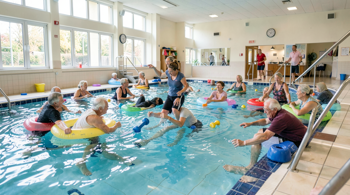
Aqua fitness is a group exercise format performed in water, usually combining aerobic movements with resistance exercises. The water supports body weight and creates resistance as participants move, allowing exercises to challenge muscles without relying entirely on loaded land-based movement. A typical session may include a water warm-up, low-impact cardio, resistance exercises, core and balance work, instructor-led modifications and gentle stretching. 1
- Shallow-water classes may focus on walking, leg movements, arm patterns and resistance equipment.
- Some sessions use floats or aqua dumbbells supplied by the venue. 1
- Swimming ability requirements vary, so the venue's safety policy should be checked before participation.
Why the format may suit older adults
Buoyancy reduces pressure on joints, while water resistance can support muscular endurance and controlled movement. This combination may be relevant to older adults managing stiffness, arthritis or reduced mobility, although personal medical advice may be appropriate where pain or a diagnosed condition is involved. Warm-water therapy and water-based movement are also described as ways to improve mobility, strength, flexibility, balance and confidence. 4
The wider value of exercise in later life extends beyond physical conditioning. Age UK identifies weight management, muscle strength, fall-risk reduction, thinking skills, mood, energy and social connection as potential benefits of regular activity. A class environment can therefore support both movement and routine, while allowing intensity to be adjusted for participants who are returning to exercise or already accustomed to regular activity. 3
Class formats and intensity levels
Not every pool class has the same training demand. A gentle mobility or recovery session may prioritise range of movement, balance and comfort, whereas a cardio class may use intervals, running-style movements, jumps and strength exercises to raise cardiovascular demand. Hydrohex examples distinguish MOVE, described as adaptable from low-intensity recovery to a more challenging workout, from CARDIO and POWER formats focused respectively on endurance and whole-body strength. 6
| Format | Typical emphasis | Relevant consideration |
|---|---|---|
| Gentle aqua or mobility | Movement, flexibility, balance | May suit people restarting activity |
| Aqua cardio | Intervals and cardiovascular endurance | Intensity may be higher |
| Aqua strength | Resistance and muscular endurance | Movement speed can affect challenge |
Examples of UK provision
Provision is distributed across leisure centres, health hubs, gyms and community programmes rather than through one national timetable. The supplied examples include aqua fitness at igym in Carshalton, Hydrohex at Palatine Leisure Centre in Blackpool, women-only aqua aerobics at a Golders Green venue, and physiotherapy-led aqua therapy at Ledian Gardens. Major operators including Better, Everyone Active, Places Leisure, Nuffield Health and David Lloyd Clubs also list aqua-based classes at selected facilities, with local schedules and access rules differing by site. 1 6 7 8 10
Community provision can have a distinct purpose. Good Boost sessions at Cascades Leisure Centre in Gravesend are described as tablet-guided, personalised water-based activities for people managing pain, recovering from injury or seeking low-impact movement. The programme highlights progression at an individual pace and a welcoming social setting, illustrating how some pool sessions are designed around confidence and mobility rather than athletic performance. 5
What to check before attending
Eligibility and practical arrangements vary substantially between venues. An older adult should establish whether the session is shallow-water or deep-water, whether independent swimming is required, how warm the pool is, and whether the class is instructor-led or screen-led. Accessibility questions should include step-free pool entry, handrails, changing-room layout, seating, lockers, showers and the availability of flotation or mobility aids. These details can affect whether a class is comfortable and safe, even when the advertised intensity appears suitable.
- Ask whether the instructor can provide lower-impact alternatives.
- Check the footwear, swimwear, towel and equipment requirements.
- Tell the instructor about relevant health conditions, pain, surgery or mobility limitations.
- Confirm booking rules, class duration, cancellation arrangements and age or membership eligibility.
Safety, limitations and training balance
Water exercise is not risk-free. Slippery pool surrounds, difficulty entering or leaving the water, fatigue, overheating, inadequate supervision or an unsuitable intensity can create hazards. People recovering from surgery, living with significant pain, or managing a long-term musculoskeletal condition may need advice from a healthcare professional or physiotherapist before joining a general class. Ledian Gardens describes physiotherapy-led sessions for surgery recovery, arthritis, chronic pain, osteoporosis and falls prevention, but such specialist provision should not be assumed at every leisure centre. 7
Aqua fitness should also be viewed as one part of an active-living routine. NHS guidance for adults aged 65 and over recommends regular moderate activity together with strength, balance and flexibility work. A water class can contribute to aerobic conditioning, muscular endurance and social engagement, but it may not independently cover every element of that guidance. Land-based strength or balance work may still be needed, adapted to individual ability and professional advice where necessary. 2
Social participation and long-term adherence
Attendance is often influenced by whether a class feels welcoming and manageable, not solely by its exercise content. Bluecoat Sports describes senior programmes including aqua aerobics, falls prevention, Pilates and senior fitness as settings where participants can build friendships, confidence and a sense of belonging. A supportive group may help reduce apprehension about returning to exercise and make regular participation more realistic, although experiences differ between instructors, venues and class groups. 9
For active seniors comparing local options, the most useful distinction is between a class aimed at general fitness and one designed for rehabilitation or supported mobility. General aqua fitness may suit people who can follow group instructions and regulate effort, while personalised or physiotherapy-led sessions may be more appropriate where pain, injury, surgery or balance concerns are central. Timetables, facilities and eligibility should be verified directly with each venue because UK availability is locally determined.
Sources
- igym, Aqua Fitness
- NHS, Physical activity guidelines for older adults
- Age UK, Exercise and physical activity classes
- Versus Arthritis, Exercising with arthritis
- Everyday Active Kent, Good Boost water-based exercise class
- Active Blackpool, Introducing Hydrohex
- The Health Hub, Aqua Therapy
- Art of Swimming London, Women’s Only Aqua Aerobics
- Bluecoat Sports, The social benefits of fitness classes for seniors
- David Lloyd Clubs, Aqua classes