Health checks: Vitamin D deficiency symptoms to watch for in 2026: A clinical snapshot for symptom tracking and when to consider evaluation
Recent health-check guidance and clinical references repeatedly frame vitamin D deficiency as a condition that can be missed because symptoms overlap with many common illnesses and tend to appear slowly. This article treats “symptoms to watch for” as the starting point for symptom tracking, while also reflecting the guideline position that routine vitamin D testing in healthy people has not shown proven benefit.
Why symptoms matter in 2026 health checks
Vitamin D deficiency is described across clinical references as impairing bone mineralization, with rickets in children and osteomalacia in adults. In adults, osteomalacia involves impaired hardening of bone, which can produce dull aching pain and functional decline, rather than dramatic or immediate warning signs. Because vitamin D deficiency can be caused by low dietary intake, reduced absorption, inadequate sunlight exposure, or abnormalities in metabolism, symptoms can emerge from multiple pathways rather than a single predictable trigger.
Merck Manual notes that deficiency can progress to osteomalacia and possibly contribute to osteoporosis, and it explains the calcium-phosphate physiology that connects low vitamin D to altered mineral handling and impaired mineralization. This mechanistic link matters for health checks because many symptom patterns in practice cluster around muscles, bones, and fatigue. It also shapes how clinicians interpret non-specific complaints during seasonal risk periods, including winter months when sunlight exposure is reduced.
Core symptoms that commonly surface
Several 2026-era clinical overviews converge on a core set of symptoms that frequently appear in vitamin D deficiency: fatigue or exhaustion, muscle weakness, bone pain, and sometimes mood changes such as depression. The consistency across sources is clinically useful for health checks because it supports symptom pattern recognition even when a single lab value is not yet available. For tracking purposes, symptoms that persist despite adequate sleep and that limit routine activity often receive particular attention in practice-based guidance.
Osteomalacia-specific descriptions add symptom granularity for adult health checks. Penn Medicine lists dull, aching pain in hips, lower back, legs, or ribs; muscle weakness especially in thighs or shoulders; bone fractures with little or no injury; and difficulty walking or a waddling gait. When calcium levels are also low, additional neurologic and muscular symptoms such as tingling or numbness around the mouth, muscle cramps or spasms in hands and feet, and numbness or tingling in arms or legs can occur, which changes the urgency of evaluation.
Less obvious or “indirect” signals
Some symptom descriptions extend beyond pain and weakness into infection risk and mood regulation. Harvard Health summarizes findings from a large long-term study of more than 36,000 adults ages 40 to 69, reporting that over 15 or more years people with the lowest vitamin D levels were 33% more likely to be admitted to the hospital for respiratory infections than those with the highest levels. This signal supports why some health-check workflows include vitamin D considerations when respiratory infections are recurrent, particularly in individuals with low baseline vitamin D.
Consensus-level scientific discussions also frame vitamin D as a pleiotropic hormone with roles in immune regulation and infection susceptibility. A 2026 international consensus statement on vitamin D, gut homeostasis, and infections emphasizes that while observational studies show consistent associations, interventional trial outcomes vary and are influenced by baseline 25(OH)D status and disease context. For symptom tracking in 2026, this means infection frequency can be a relevant clue but is not diagnostic on its own, and it should be weighed alongside musculoskeletal findings and risk factors.
Adult risk contexts that raise the likelihood of symptoms
Risk contexts influence whether symptoms should trigger laboratory evaluation, but they also shape the interpretation of symptoms. The NICE-based summary in the provided material emphasizes that vitamin D insufficiency and deficiency are common in the UK, particularly in winter months, and highlights risk factors such as darker skin, limited sun exposure, obesity, or housebound status. The same executive summary states that serum 25-hydroxyvitamin D (25-OHD) is the correct test, and it warns against routine testing of 1,25-dihydroxyvitamin D because it does not reflect stores and can be misleadingly normal.
A clinical guideline summary from American Family Physician (AFP) adds a different but complementary lens for health checks: it reports that the Endocrine Society found evidence of limited benefit for routine testing and that no evidence-based target levels exist for certain prevention scenarios. AFP states that routine testing for vitamin D levels in healthy children and adults is not recommended because there is no proven benefit. Instead, it discusses considering empiric supplementation for specific groups, including pregnant adults, children aged 1 to 18 years, individuals with prediabetes, and adults 75 years and older for illness prevention without measuring or targeting vitamin D levels.
How evaluation is typically approached: tests and interpretation limits
The most consistently referenced diagnostic method in the provided sources is measurement of serum 25-hydroxyvitamin D. Merck Manual describes diagnosis involving measurement of serum 25(OH)D, and the NICE PH56-based summary reiterates that serum 25-OHD is the correct test while 1,25-dihydroxyvitamin D should not be used routinely for assessment. This matters for health checks because symptom-based screening without objective measurement can delay identification of deficiency when symptoms are subtle.
Interpretation also has boundaries. The AFP guideline summary notes that there are no evidence-based target levels established for routine prevention testing, and it discourages routine testing for vitamin D levels in healthy populations. Separately, Merck Manual explains that deficiency can lead to hypocalcemia stimulating parathyroid hormone, and it describes a scenario where serum calcium may be normal while hypophosphatemia impairs bone mineralization. This physiological nuance highlights why single symptoms can be misleading and why clinician-directed interpretation of labs and symptoms is essential.
Symptom tracking for 2026: practical pattern recognition
In symptom tracking terms, the most actionable health-check approach in 2026 is pattern recognition of persistent musculoskeletal symptoms plus functional limitations. Penn Medicine describes osteomalacia symptoms that can develop slowly, which can be mistaken for other conditions, including dull aching pain in hips and lower back, muscle weakness in thighs or shoulders, fractures with little or no injury, and altered walking patterns. When calcium-related neurologic symptoms appear, such as tingling around the mouth and cramps or spasms, the symptom pattern supports clinician attention for timely evaluation.
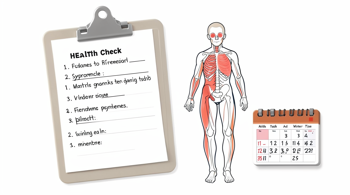
Because deficiency symptoms can overlap with other conditions, a structured symptom log can help separate evolving features from single-day fluctuations. The following table organizes commonly described symptom domains and links them to the types of clinical descriptions in the provided 2026 sources. It does not replace medical assessment, but it supports consistency in health-check documentation and improves the clarity of what is changing over time.
| Symptom domain in health checks | How symptoms are described in provided sources | Reason it may prompt evaluation |
|---|---|---|
| Fatigue and exhaustion | Fatigue/exhaustion appears in multiple summaries of low vitamin D symptoms. | Non-specific but persistent symptoms align with gradual deficiency progression. |
| Muscle weakness | Osteomalacia descriptions include muscle weakness, especially thighs or shoulders. | Functional impairment can indicate mineralization problems. |
| Bone pain | Dull, aching pain in hips, lower back, legs, or ribs is listed for osteomalacia. | Supports possible impaired bone mineralization. |
| Mobility changes | Difficulty walking or waddling gait appears in osteomalacia descriptions. | Suggests progression beyond mild discomfort. |
| Fracture pattern | Bone fractures with little or no injury are described in osteomalacia. | Raises concern for bone integrity problems. |
| Calcium-related neurologic signs (when low) | Tingling or numbness around mouth, cramps or spasms in hands and feet. | Indicates combined mineral disturbance, not just musculoskeletal aches. |
| Respiratory infection burden | Lower vitamin D levels are associated with higher odds of hospital admission for respiratory infections. | Relevant in people with recurrent infections and low baseline vitamin D. |
Risks, balance, and why routine screening has limits
An objective 360-degree view requires acknowledging both the possible benefits and the limitations of health checks. The Endocrine Society-related AFP guidance summarized in the provided material emphasizes avoiding routine vitamin D testing in healthy people because there is no proven benefit and no evidence-based target levels for prevention testing. This is a practical market friction point in routine primary care workflows, where vitamin D testing can become habitual even when guidelines advise against it. Symptom-based evaluation instead has clearer clinical rationale.
Over-reliance on symptoms alone also carries risks. Symptoms such as fatigue, aches, and mood changes can arise from many conditions, and Merck Manual stresses that vitamin D deficiency can overlap with other causes of bone and mineral problems, including chronic kidney disease, renal tubular disorders, metabolic acidosis, hyperparathyroidism or hypoparathyroidism, inadequate dietary calcium, and medications affecting bone mineralization. Therefore, symptom tracking in 2026 is best treated as a signal to guide clinician assessment and appropriate testing, not as a self-diagnosis system.
Sources
- https://my.clevelandclinic.org/health/diseases/15050-vitamin-d-vitamin-d-deficiency?136960c5_page=3%2C136960c5_page=2
- https://www.goodrx.com/conditions/vitamin-d-deficiency
- https://www.merckmanuals.com/professional/nutritional-disorders/vitamin-deficiency-dependency-and-toxicity/vitamin-d-deficiency-and-dependency
- https://www.health.harvard.edu/respiratory-health/low-vitamin-d-may-raise-risk-for-respiratory-infections
- https://www.aafp.org/afp/2026/0300/practice-guidelines-vitamin-d-disease-prevention
- https://health.usnews.com/wellness/food/articles/signs-of-vitamin-d-deficiency
- https://www.pennmedicine.org/conditions/osteomalacia
- https://www.iatrox.com/guidelines/vitamin-d-deficiency