
4-dagers tur til Hamburg med fly og hotell: typisk innhold i en byreise: An independent travel guide to routes, costs and planning
Key facts
- Hamburg Airport connects with the city centre by S-Bahn line S1, taking about 25 minutes.
- Published 2026 estimates put Hamburg accommodation at roughly €70 to €180 per night, depending on category and season. 1
- A four-day visit can combine Speicherstadt, the harbour, Miniatur Wunderland, the Alster and one museum district.
- May to September generally brings 18 to 23°C highs, while winter is cooler, windier and associated with seasonal markets. 2
A four-day trip to Hamburg with flights and a hotel generally means a short city break built around air travel, three nights of accommodation and a compact sightseeing plan. Hamburg combines the Elbe waterfront, historic warehouse streets, central lakes, museums and nightlife districts, so the usual structure balances major attractions with time for meals, local transport and weather changes.
What a four-day Hamburg city break usually covers
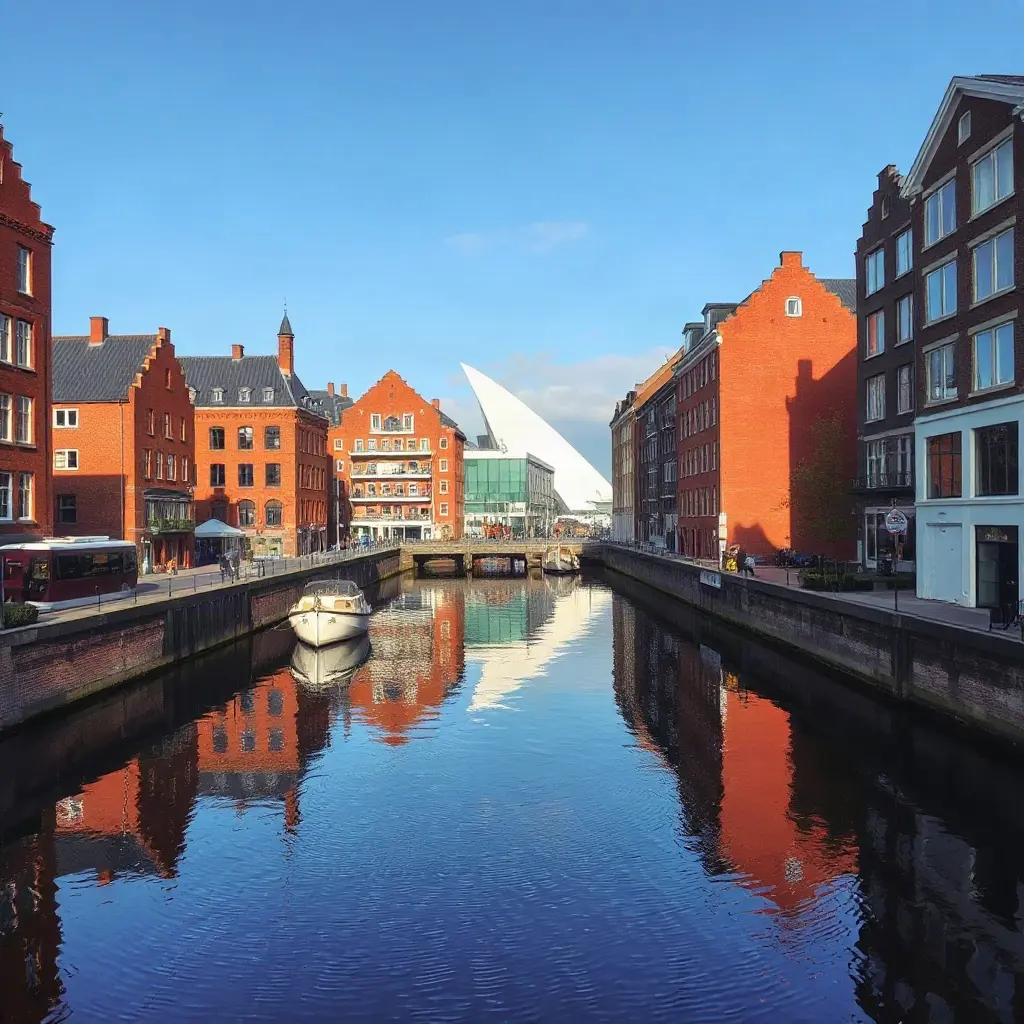
Hamburg is Germany’s second-largest city and a major port, but many first-time visitors concentrate on a manageable area between the Rathaus, Alster lakes, Speicherstadt, HafenCity and the Elbe. Speicherstadt and the Kontorhaus District with Chilehaus form Hamburg’s UNESCO World Heritage entry, while the harbour provides the city’s maritime setting. A four-day schedule is long enough for the central highlights without requiring a distant day trip.
Typical city-break arrangements combine return air travel, a hotel room and independent sightseeing. The exact inclusions vary: some arrangements include checked luggage, airport transfers, breakfast or attraction tickets, while others leave these as separate costs. The practical comparison is therefore not only the headline amount, but also room location, cancellation terms, baggage rules, taxes, breakfast and the time required to reach the main sights.
Flights, airport arrival and local transport
Most international visitors arrive at Hamburg Airport, known by the code HAM. The airport is linked to central Hamburg by the S1 suburban railway, with a journey of about 25 minutes to the main station. This makes rail transport practical for accommodation near St Georg, the central station, Altstadt or Neustadt. Travellers arriving late should check the operating pattern and the walking distance from the station to the hotel.
Within the city, the integrated public transport network includes U-Bahn, S-Bahn, buses and harbour ferries. A transport pass can be useful when several journeys are planned, while ferry route 62 can provide a harbour-oriented ride on a normal local transport ticket, according to a Hamburg itinerary guide. 3 A separate narrated harbour cruise is a different product and is described at approximately €12.50 to €30. 3
Hotels, neighbourhoods and typical costs
Central accommodation is commonly considered in Altstadt or Neustadt, where the Rathaus, Alster, St Michael’s Church and Speicherstadt are relatively convenient to reach. St Georg near the main station is practical for airport and rail connections, while St Pauli and Sternschanze suit visitors prioritising restaurants, music and evening activity. Each area involves a trade-off between convenience, nightlife, noise and room rates.
Published 2025 and 2026 travel-cost guides place budget hotels at about €70 to €120 per night, mid-range hotels at roughly €100 to €180, and private hostel rooms around €60 to €90. 1 Another 2026 guide lists mid-range hotel rooms at approximately €80 to €140 per night and luxury rooms at €180 to €350. 4 These are market ranges rather than fixed package prices, and dates, room type, major events and Christmas markets can materially change the total.
| Cost category | Published typical range | Context |
|---|---|---|
| Budget hotel | €70 to €120 per night | Usually simpler facilities or less central positioning |
| Mid-range hotel | €100 to €180 per night | Often includes a more central or higher-standard room |
| Luxury hotel | €180 to €350 per night | Higher service level and stronger location variation |
A practical four-day sightseeing structure
Day one can focus on the city centre and eastern waterfront: the Rathaus and Binnenalster, followed by the red-brick Speicherstadt, HafenCity and the exterior of the Elbphilharmonie. The route keeps several major sights within a compact area and leaves the evening for restaurants around the harbour or St Pauli. The Elbphilharmonie Plaza uses timed entry arrangements, so opening conditions should be checked before travelling.
Day two can combine Miniatur Wunderland with Landungsbrücken, the Old Elbe Tunnel and a harbour experience. Miniatur Wunderland is listed at approximately €22 for an adult entrance and uses timed admission. 3 Day three can be assigned to one museum, such as the Hamburger Kunsthalle or International Maritime Museum, each reported at about €18, followed by the Alster or Planten un Blomen. 3 Day four allows a slower morning, Blankenese or Övelgönne, and time for the return journey.
Tickets, food and the realistic trip budget
The most predictable extra costs are local transport, museum admission, meals and optional tours. A 2026 travel guide lists a one-day Hamburg AB transport ticket at €8.20, although ticket products and fares can change. 5 A separate cost guide estimates daily spending excluding accommodation at €45 to €75 for a lower-cost pattern, €90 to €140 for a mid-range pattern and €180 to €280 for a luxury pattern. 4
For a four-day package, the hotel portion can therefore vary substantially before flights and activities are added. A simple calculation based on three nights places the published hotel ranges at roughly €210 to €1,050 for the room component, but this is not a package quotation and excludes air travel. Flight prices depend on Norwegian departure city, baggage, weekday, season and connection pattern. Christmas markets, port events and summer demand can increase both accommodation and transport costs.
Season, entry rules and practical considerations
May to September is generally the most comfortable period for long walks and waterfront activities, with typical highs of about 18 to 23°C. 2 Spring and early autumn can offer a balance between outdoor conditions and city sightseeing, while winter is often grey and windy, with reported highs around 4 to 5°C. 2 Rain protection and layered clothing are sensible throughout the year because maritime conditions can change quickly.
Norwegian citizens can generally travel to Germany under Schengen arrangements using a valid travel document, while visitors from outside the Schengen area must verify passport validity, visa rules and any current border requirements with the relevant authorities. Shops and supermarkets are commonly closed on Sundays, although restaurants and cafés usually operate. 6 Some attractions have weekly closures: the Hamburger Kunsthalle is reported as closed on Mondays, and seasonal attractions outside Hamburg may close during winter. 3
Sources
- Is Hamburg Expensive to Visit? A Complete Budget Guide for 2025: https://eurovistatrips.com/is-hamburg-expensive-to-visit/
- Things to Do in Hamburg: Day Trips & Travel Guide - TravelerCenter: https://travelercenter.com/germany/hamburg/
- 4 Days in Hamburg: First-Timer Plan | TravelerMania: https://travelermania.com/itinaries/hamburg-4-day-itinerary/
- Hamburg Budget Guide 2026: Complete Cost Breakdown for Germany's Maritime City: https://www.machupicchu.org/hamburg-budget-guide-2026-complete-cost-breakdown-for-germanys-maritime-city.htm
- Hamburg in 2 Days: Itinerary, Port & Budget: https://www.lowcostwings.com/en/guide/hamburg-in-2-days-itinerary-where-to-stay-port-budget
- Den ultimate guiden for første gang i Hamburg: https://www.getyourguide.com/no-no/explorer/hamburg-ttd23/first-time-in-hamburg/