
7-day stay in cottage by the lake with balcony view and Wi-Fi access: An Analysis of Booking Requirements and Regional Amenities
Arranging a 7-day stay in cottage by the lake with balcony view and Wi-Fi access represents a major travel trend for guests seeking a balance between natural serenity and digital connectivity. This configuration allows individuals to maintain professional obligations while residing in tranquil natural landscapes. Globally, property managers have adapted their booking structures to accommodate these requirements, resulting in dedicated stay minimums and standardized high-speed communication systems.
Understanding the Standard Seven-Day Rental Mandate
A review of rental operations reveals that a seven-night minimum stay is standard during peak periods. For instance, the historic Cottage #255 on Lake Muskoka in Ontario enforces a strict seven-night minimum stay requirement from Friday to Friday during the high season, accommodating up to six guests 1. Similarly, Cottage #363 on Echo Lake near Baysville maintains a seven-night minimum throughout the summer months 2. These structured windows allow operators to optimize seasonal revenue in high-demand lakeside regions.
Other properties also align with this weekly structure to ensure operational efficiency. The Keeler Lakehouse on Lake Muskoka, which accommodates twelve guests, mandates a similar weekly stay structure during peak windows 1. These multi-day intervals provide a consistent framework for property maintenance and local resource management. Organizing guest rotations around weekly blocks reduces the overhead costs associated with shorter stays, making it a prevailing industry standard for major recreational lakes.
Financial Structures and Pricing Trends of Lakefront Properties
The financial metrics for lakefront cottage accommodations fluctuate substantially based on geographic location, seasonal demand, and internal amenities. Typically, a weekly rental in the United States ranges between $1,200 and $3,500, with nightly equivalents ranging from $150 to $500 3. Peak summer rates, particularly from June through August, often exceed off-season rates by 30% to 50% 4 5. Standard rental frameworks also involve additional operational fees, including cleaning charges and service fees 6.
| Cottage Characteristic | Typical Cost Metric | Associated Variable |
|---|---|---|
| Weekly Base Rate | $1,200 to $3,500 3 | Regional demand and capacity |
| Peak Season Increase | 30% to 50% 4 | Summer months (June-August) |
| Standard Cleaning Fee | $150 to $400 6 | Property size and cleaning level |
The Technical Integration of Wi-Fi Access in Rural Landscapes
While remote settings offer escape, modern travelers increasingly prioritize reliable internet connectivity. For example, Savannah Lakes RV Resort cottages feature free Wi-Fi as a core amenity alongside fully equipped kitchens to accommodate telecommuters and traveling professionals 7. Similarly, standard lakeside properties in Burlington, Wisconsin integrate smart TVs and high-speed Wi-Fi, allowing guests to work remotely while remaining directly on the lake 3. This integration reflects a broader shift where high-speed connection is viewed as an essential utility.
Securing reliable internet in rural lake basins presents distinct technological challenges. Rural properties frequently depend on satellite connections or fixed wireless, which can be vulnerable to signal interference from topography and heavy foliage. In mountainous areas, such as the Adirondacks, tree cover can impact signal stability, causing fluctuations in upload speeds. Despite these challenges, major booking databases indicate that properties listing verified Wi-Fi secure higher occupancy rates, prompting many rural owners to upgrade their networks.
Architectural Profiles: Lakefront Balconies, Decks, and Overlooks
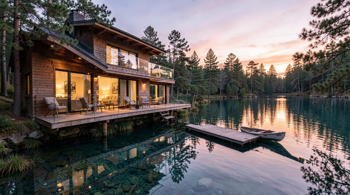
Architectural designs of modern lakeside cottages frequently emphasize outdoor living spaces to maximize natural vistas. For instance, the Cottage on Sammamish on Lake Sammamish in Washington provides two sunny decks facing the water, creating an expansive exterior lounge space 8. In Finland, the ONNI Village cottages on Lake Saimaa feature lake-facing terraces paired with private saunas and individual step access to the water 9. These outdoor features serve as key elements that extend the interior living area.
Similarly, the North Shores Cottage on Lake Noquebay in Wisconsin uses expansive wall-to-wall windows and a spacious deck to bring the outdoors inside, facilitating scenic viewing 10. At Seventh Lake in Inlet, New York, the Lakeside Lodge features wood interiors that open directly to views of the water 11. These configurations are highly sought after by travelers, as private balconies and elevated decks allow guests to relax without leaving the immediate cottage perimeter.
Regional Variations in Lakeside Accommodations
Lakeside properties vary significantly by region, reflecting local geography and regional tourism patterns. In the Northwoods of Wisconsin, properties such as the Enterprise Lake Cottage focus on rustic designs with large private docks, fire pits, and kayaks to foster outdoor recreation 12. Also in Wisconsin, the eco-friendly Lily Pad cabin on Shawano Lake offers 200 feet of swimmable beach and a private dock located in a famous fishing hotspot 13. These Midwestern cottages emphasize physical access to the water.
In contrast, southern properties, such as the cottages at Savannah Lakes RV Resort, often blend resort-style amenities with regional aesthetics, providing quick access to regional attractions like Hilton Head 7. Meanwhile, mountainous regions like Highlands, North Carolina host retreats like the Lake Sequoyah Cottage, which features open porches, hot tubs, and private canoe access in a densely forested setting 14. These geographic variations demonstrate how regional context shapes the design of lakeside rental properties.
Operational Risks, Regulatory Policies, and Market Friction Points
The operation of short-term lakefront rentals involves various regulatory compliance standards, environmental responsibilities, and structural risks. Municipalities are increasingly enacting strict zoning ordinances, noise limitations, and occupancy caps to prevent overcrowding in fragile shoreline ecosystems. Additionally, safety is a key factor; properties like the Lakeside Lodge on Seventh Lake require smoke detectors, while properties near active train lines, such as Cottage #251 on Lake Muskoka, require clear risk disclosures for guests 11 1.
From a maintenance perspective, lakefront structures face elevated risks of wood rot and moisture damage, requiring constant upkeep. The seasonal nature of lakeside tourism also presents financial risks for owners who must generate income during narrow seasonal windows. Guests must also navigate various booking requirements, such as security deposits and pet restrictions. Understanding these administrative and ecological realities helps travelers manage expectations when booking, ensuring a safe, compliant, and sustainable relationship with the surrounding natural environment.
Sources
- CottageVacations - Lake Muskoka
- CottageVacations - Echo Lake
- Vrbo
- Airbnb
- Booking.com
- Travel + Leisure
- Savannah Lakes RV Resort
- Only In Your State - Lake Sammamish
- ONNI Village - Lake Saimaa
- Vacation Cottage - Lake Noquebay
- ByOwner - Seventh Lake
- Hotala - Enterprise Lake
- Vacation Cottage - Shawano Lake
- Highlands Mountain Rentals - Lake Sequoyah