
Browse adoptable dogs and puppies waiting for homes nearby: A location-based reporting guide
Browse adoptable dogs and puppies waiting for homes nearby is a location-sensitive search task, because shelters and rescues publish animals through separate regional websites rather than one universal local inventory. The examples below show how listings identify age, size, breed estimates, sex, temperament notes, foster status, application rules, and geographic limits. Availability can change after a page is captured, so each profile should be treated as an informational snapshot rather than a guarantee that a particular dog remains available. 1
How nearby adoption searches are organized
Local adoption information is commonly published by municipal shelters, humane societies, and independent rescue organizations. CARA Animal Rescue identifies its service area as Sanford, North Carolina, while Montgomery County SPCA describes campuses in Conshohocken and Perkiomenville, Pennsylvania. Humane Fort Wayne publishes dogs through its own shelter website and advises that online updates can lag by about 30 minutes, making the shelter telephone line the more current source for a specific animal during business hours. 1 2 3
Geographic eligibility may be narrower than the apparent reach of an online listing. Save The Animals Foundation states that its dog adoptions are within 30 miles of Cincinnati, may require a physical fence, prohibit invisible fences, and require adopters to be at least 21. Lost Dog and Cat Rescue Foundation listings are associated with Northern Virginia adoption events, including locations in Tysons Corner, Seven Corners, and Fair Lakes. These policies mean that distance, housing, transportation, and household conditions can matter as much as a dog’s appearance. 4 5
Examples of dogs and puppies reported by CARA
The Sanford, North Carolina, listings include dogs across a wide age and size range. Examples include Cubby, a one-month-old male weighing 3.14 pounds; Fred, a two-month-old male described as a Dachshund and Jack Russell Terrier mix; Stanley Steamer, a six-month-old male weighing 28 pounds; and Poppyseed, a seven-month-old female weighing 19 pounds. Adult examples include Barn Door, a four-year-old male weighing 65 pounds, and Carrot, a four-year-old female weighing 45 pounds. 1
The same CARA page records social information for some animals, but not all profiles contain the same level of detail. Alfalfa is described as good with dogs, Barn Door as good with children, and Cupid as good with both dogs and cats. Bear is identified as being in a foster-to-adopt home, while Cubby and Mojo Jojo are associated with foster care. Senior dogs also appear, including Mooshu at 11 years and 8 months and Whopper at 11 years and 7 months. 1
| Listing example | Reported information | Household note |
|---|---|---|
| Fred | Two months, male, Dachshund and Jack Russell Terrier mix | Good with dogs and cats |
| Cupid | Seven months, male, 43 pounds | Good with dogs and cats |
| Mooshu | 11 years, 8 months, male, 12 pounds | Story-specific profile |
What listings reveal about age, breed, and temperament
Adoption pages use different standards for describing animals. Humane Fort Wayne lists Jack as a four-year-seven-month-old Retriever mix and Teddy as an eight-month-old Labrador Retriever mix weighing 43 pounds. Jack is described as playful and energetic, with pulling at the beginning of walks, while Teddy is characterized as somewhat timid with unfamiliar people but intelligent and eager to learn. The page recommends meet-and-greet evaluations where dog, cat, or child compatibility is unknown. 6
Breed and age labels should be interpreted as estimates rather than certified records. DoggieRescue states that veterinarians estimate ages using general health and teeth, and that most rescued dogs arrive without documented histories. It also explains that breed descriptions are informed guesses and that dogs should be assumed to be cross-breeds. Pups Without Borders similarly says it does not DNA test dogs and that breed and age are estimates based on experience and veterinary input. 7 8
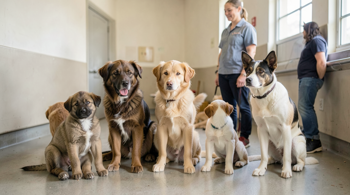
Application rules and adoption eligibility
Organizations can impose materially different eligibility standards. Save The Animals Foundation reports that applicants must be at least 21, live within 30 miles of Cincinnati, return for at least one visit, and may need a physical fence. Humane Fort Wayne states that adoptions are first come, first served for pre-approved adopters and that an approved application remains valid for six months. These rules can exclude otherwise interested households if the residence, age, timing, or travel requirements do not match. 4 6
Pups Without Borders describes a multi-step process involving an application, review, phone interview, an in-person meeting, a contract, payment, and transfer of medical records through its AnimalsFirst platform. The organization says a submitted application does not guarantee adoption because matching decisions consider the dog’s needs and the household’s suitability. Out-of-state adopters must meet the dog in person. These conditions illustrate why online interest is only one stage of an adoption decision. 8
Medical preparation and ongoing responsibilities
Save The Animals Foundation states that its dogs receive a veterinary check, vaccines, a microchip, and spay or neuter care, while CARA says every pet in its care is spayed or neutered, vaccinated, and prepared for adoption. Such statements describe organizational practices, not a substitute for reviewing an individual animal’s records. A prospective household should confirm vaccination dates, sterilization status, medications, known conditions, and follow-up veterinary needs directly with the responsible shelter or rescue. 1 4
Ongoing care also includes behavioral management, exercise, training, supervision, and adjustment time, particularly for puppies, energetic adults, fearful dogs, or seniors. Humane Fort Wayne describes Jack as needing routine and leash guidance, while Teddy is presented as a dog who may develop confidence with patience and learning opportunities. A household’s work schedule, living space, other animals, children, fencing, and ability to manage long-term veterinary care should be assessed before an application is submitted. 6
Broader search sources and practical cautions
National databases can expand geographic research beyond individual shelter pages. Petfinder aggregates listings from thousands of shelters and rescue groups, and Adopt-a-Pet.com provides filters for breed, age, size, gender, and proximity to a ZIP code. The ASPCA offers shelter directories and adoption resources, while the AKC Rescue Network connects users with breed-specific rescue organizations. These services can improve discovery, but the originating shelter remains the appropriate source for current status and policy details. 9 10 11 12
Fostering is presented by Lost Dog and Cat Rescue Foundation as an alternative for households not prepared for permanent adoption, allowing a dog to receive temporary care while awaiting a lasting home. Dog Star Rescue in Bloomfield, Connecticut, reports that new dogs arrive weekly, and Life Savers Animal Rescue in Montana says its dogs live in foster homes and offers general pre-approval for consideration of future dogs. Searchers should account for changing status, incomplete histories, travel limits, screening, fees, and the possibility that a dog’s behavior differs between shelter, foster, and home settings. 5 13 14
Sources
- CARA Animal Rescue, Adoptable Dogs in Sanford, North Carolina: https://cara-nc.org/dogs/
- Montgomery County SPCA, Adoptable Dogs: https://montgomerycountyspca.org/adopt/dogs/
- Humane Fort Wayne, Adoptable Dogs: https://humanefw.org/adopt/adoptable-dogs/
- Save The Animals Foundation, Adoptable Dogs: https://www.staf.org/adopt/adoptable-animals/adoptable-dogs/
- Lost Dog and Cat Rescue Foundation, Available Dogs: https://www.lostdogrescue.org/adopt/available-dogs/
- Humane Fort Wayne, Adoptable Dogs: https://humanefw.org/adopt/adoptable-dogs/
- DoggieRescue, Individual Dogs: https://www.doggierescue.com/search-pets/individual-dogs/
- Pups Without Borders, Dog and Puppy Adoption: https://pupswithoutborders.org/adopt/
- Petfinder: https://www.petfinder.com
- Adopt-a-Pet: https://www.adoptapet.com
- ASPCA: https://www.aspca.org
- American Kennel Club Rescue Network: https://www.akc.org
- Dog Star Rescue: https://dogstarrescue.org/adopt/adoptable-dogs/
- Life Savers Animal Rescue: https://lsar.org/available-dogs/