
7-night Fiji luxury resort escape with flights from Sydney: Comparing typical itinerary inclusions | An independent planning analysis
Key facts
- Fiji has more than 300 islands, with Nadi serving as the main international gateway for resort itineraries.
- Published 2026 luxury-villa guides report nightly rates from about $4,500 to $84,000, showing how widely high-end stays vary. 1
- Luxury accommodation may include private villas, meals, marine activities, airport transfers or island transport, but inclusions differ by property.
- Fiji's dry season generally runs from May through October, while July and August are especially popular travel months. 1
A seven-night Fiji luxury resort escape with flights from Sydney is best understood as a travel structure rather than one uniform product. The itinerary normally combines an international flight to Nadi, several nights in a high-end resort, and a transfer by road, boat, seaplane or domestic aircraft. Comparing the inclusions line by line is more useful than treating every resort package as equivalent.
What a seven-night itinerary usually looks like
A week in Fiji commonly allocates the first and final days partly to international travel and transfers. A direct Sydney to Nadi flight generally takes about four to five hours, followed by a road journey on Viti Levu or a connection to an island resort. The practical result is often five to six full days at the property, even though the accommodation is sold as seven nights.
Geography drives the schedule. Mainland resorts on the Coral Coast can be reached by vehicle, while properties in the Mamanuca and Yasawa groups require boat or air transfers. Fiji has more than 300 islands and several distinct resort regions, so a remote private island may provide greater seclusion but also add transfer time and cost. 2
| Itinerary element | Typical role |
|---|---|
| International flight | Sydney to Nadi, usually the main long-distance movement |
| Arrival transfer | Road, boat, seaplane or domestic aircraft, depending on location |
| Resort stay | Seven nights, often with one room or villa category |
| Activities | Marine, cultural, wellness or family programming, subject to plan |
Where luxury resorts are concentrated
Nadi is the practical starting point because it handles Fiji's international arrivals and connects visitors with mainland and island resorts. The Mamanuca Islands are close to Nadi and are known for beach resorts, lagoon activities and relatively straightforward boat access. The Yasawas extend farther north and tend to emphasize privacy, beaches and smaller-scale resort settings.
The Coral Coast offers a different format, with beachfront accommodation along Viti Levu, road access and easier links to mainland sights. More remote choices include private-island resorts and properties near Vanua Levu or the Kadavu region. Recent luxury guides describe Fiji's upper-end market as ranging from family-oriented resorts to adults-only retreats, wellness properties and highly private island compounds. 2 3
- Mamanucas: convenient island access and lagoon-based activities.
- Yasawas: greater remoteness, beaches and intimate resort settings.
- Coral Coast: mainland road access and a broader choice of excursions.
- Private islands: higher seclusion, but more complicated transfers and potentially higher costs.
Comparing the main inclusions
The word luxury does not automatically mean all-inclusive. Some properties bundle breakfast, lunch, dinner and selected drinks, while others use a la carte dining. A high-end room may include a private pool, outdoor space, beach access, a personal host or spa facilities, but meals and treatments can remain separate charges.
Activities also need careful classification. Standard kayaks, snorkeling equipment, cultural demonstrations, fitness facilities and non-motorised water sports may be included in some plans, while diving, fishing, helicopter flights, premium alcohol and private excursions are commonly treated as extras. Resort descriptions in Fiji show a wide range, from extensive family programming to specialist wellness and dining experiences. 2 4
| Possible inclusion | What to verify |
|---|---|
| Meals | Whether the plan covers all meals, selected restaurants, drinks and service charges |
| Transfers | Whether Nadi transport, boat fares, baggage handling and return travel are included |
| Water activities | Whether equipment hire is included and whether motorised activities cost extra |
| Spa or wellness | Whether access only is included or whether treatments carry separate charges |
Costs and how to interpret published figures
There is no single reliable price for a seven-night luxury package because airfare, season, villa type, meal plan and island transfers can change the total substantially. A 2026 luxury-villa market guide reports peak nightly rates from about $4,500 to $84,000, with the figures covering resort-villa stays and exclusive-use island compounds rather than standard flight-inclusive packages. 1
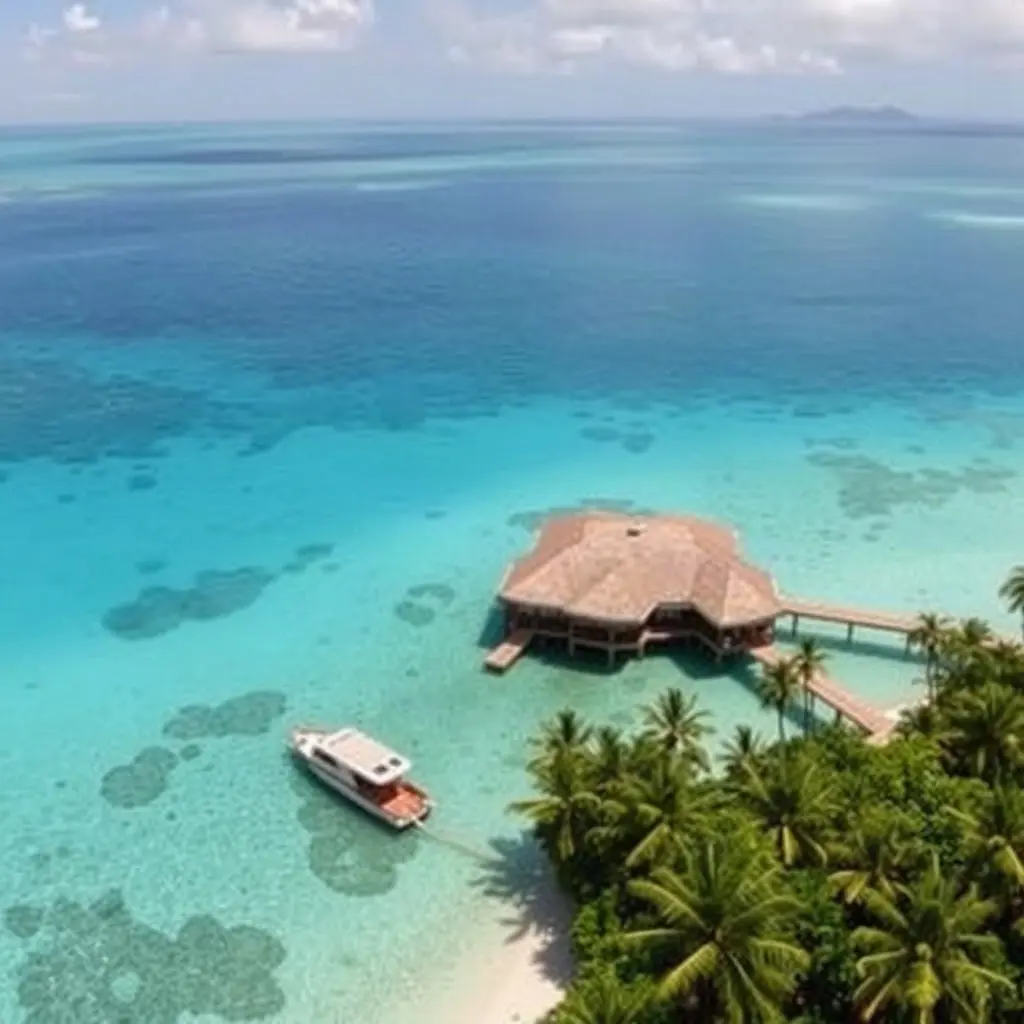
That range illustrates the difference between a conventional luxury resort and an ultra-exclusive buyout. Another 2026 hotel guide describes Fiji properties spanning ordinary resort accommodation through stays costing about $6,000 per night, again demonstrating that a headline room figure cannot be treated as the cost of a typical Sydney package. 3 Airfare, taxes, meals, transfers and activities should therefore be listed separately when comparing itineraries.
| Cost category | Main variables |
|---|---|
| Flights | Travel month, fare class, baggage and routing from Sydney |
| Accommodation | Island, villa category, occupancy and season |
| Food and drinks | Meal plan, restaurant choice, alcohol and dietary requirements |
| Transfers | Road distance, boat route, aircraft type and luggage limits |
| Activities | Equipment, guides, diving, fishing and private excursions |
Flights, transfers and practical friction points
International arrival normally means flying from Sydney to Nadi International Airport. Fiji Airways is among the carriers associated with direct international access to Nadi, which is described as Fiji's principal arrival hub. 1 Flight time is relatively short by international standards, but an island resort may still require several additional hours of road, boat or air travel.
Transfer terms are a frequent source of unexpected costs. A package may include a private vehicle but exclude a launch ticket, or include a boat transfer only on scheduled sailing times. Seaplane and domestic-air connections can also have baggage restrictions. A comparison should record the exact arrival point, transfer method, operating schedule, luggage allowance and whether the return journey is included.
- Check whether the itinerary ends at Nadi or at a separate domestic airport.
- Separate resort transfers from the international airfare.
- Confirm whether boat or aircraft tickets cover both directions.
- Allow for weather-related changes to marine or air transfers.
Season, entry rules and responsible planning
Fiji's dry season is generally identified as May 1 through October 31, with July and August aligning with popular Australian and Northern Hemisphere school-holiday periods. These months can bring stronger demand for resorts and transport, while wetter-season travel may involve greater rainfall and disruption risk. 1 Weather, sea conditions and cyclone-related advisories should be checked close to departure.
Australian passport holders should check current Fiji entry rules and ensure the passport remains valid beyond the intended departure from Fiji. Requirements can change, and the relevant government travel advice should be reviewed before finalising an itinerary. Practical checks also include travel insurance, medical needs, cancellation terms, baggage rules and resort sustainability policies. Fiji's luxury sector increasingly highlights conservation and community connections, but responsible claims should be assessed by looking for specific environmental or local-program details rather than relying on labels alone. 2
How to compare two luxury itineraries fairly
The fairest comparison uses the same travel dates, room occupancy and currency. It should show the flight component, seven-night accommodation, meal basis, taxes, airport transfers, island transport and planned activities in separate lines. A lower room figure may become more expensive after adding meals and boat travel, while a higher published figure may include extensive dining and activities.
Luxury also has different meanings. Couples may prioritise privacy, overwater accommodation and spa access, while families may value supervised children's programs, calm lagoons and flexible dining. Guides identify Fiji properties suited to romance, families, wellness, golf and private-island stays, confirming that service style matters as much as the room itself. 2 The strongest comparison is therefore not the one with the highest rating, but the one that makes exclusions, transfer risks and recurring on-island costs visible.
| Comparison question | Why it matters |
|---|---|
| Is the plan all-inclusive? | Meal and drink exclusions can materially change the daily spend |
| Is Nadi transport included? | Remote resorts may require costly additional movement |
| Are activities scheduled or private? | Private guides and motorised sports usually have different pricing |
| What happens during disruption? | Weather can affect boats, flights and island access |
Sources
- The 10 Best Luxury Villas in Fiji (Ranked, 2026 Dry Season): https://villasforkings.com/best/villas-fiji/
- Best Luxury Resorts in Fiji 2026: 12 Five-Star Hotels, Reviewed: https://www.gourmettraveller.com.au/travel/accomodation/best-resorts-fiji-20675/
- Best Hotels in Fiji (2026): 10 Luxury Resorts Worth It: https://theboujist.com/articles/the-best-hotels-in-fiji
- Best Fiji Hotels and Resorts | Luxury Escapes: https://luxuryescapes.com/inspiration/best-fiji-hotels-resorts/