
Dental Implant vs. Bridge: Which Is the Right Choice for a Missing Tooth?
When you have a missing tooth, two of the most common restorative options are a dental implant and a dental bridge. Both can effectively fill the gap and restore your smile, but they work in fundamentally different ways. Understanding the key distinctions between them, including the procedure, long-term maintenance, and effects on surrounding teeth, is crucial for making an informed decision with your dental professional.
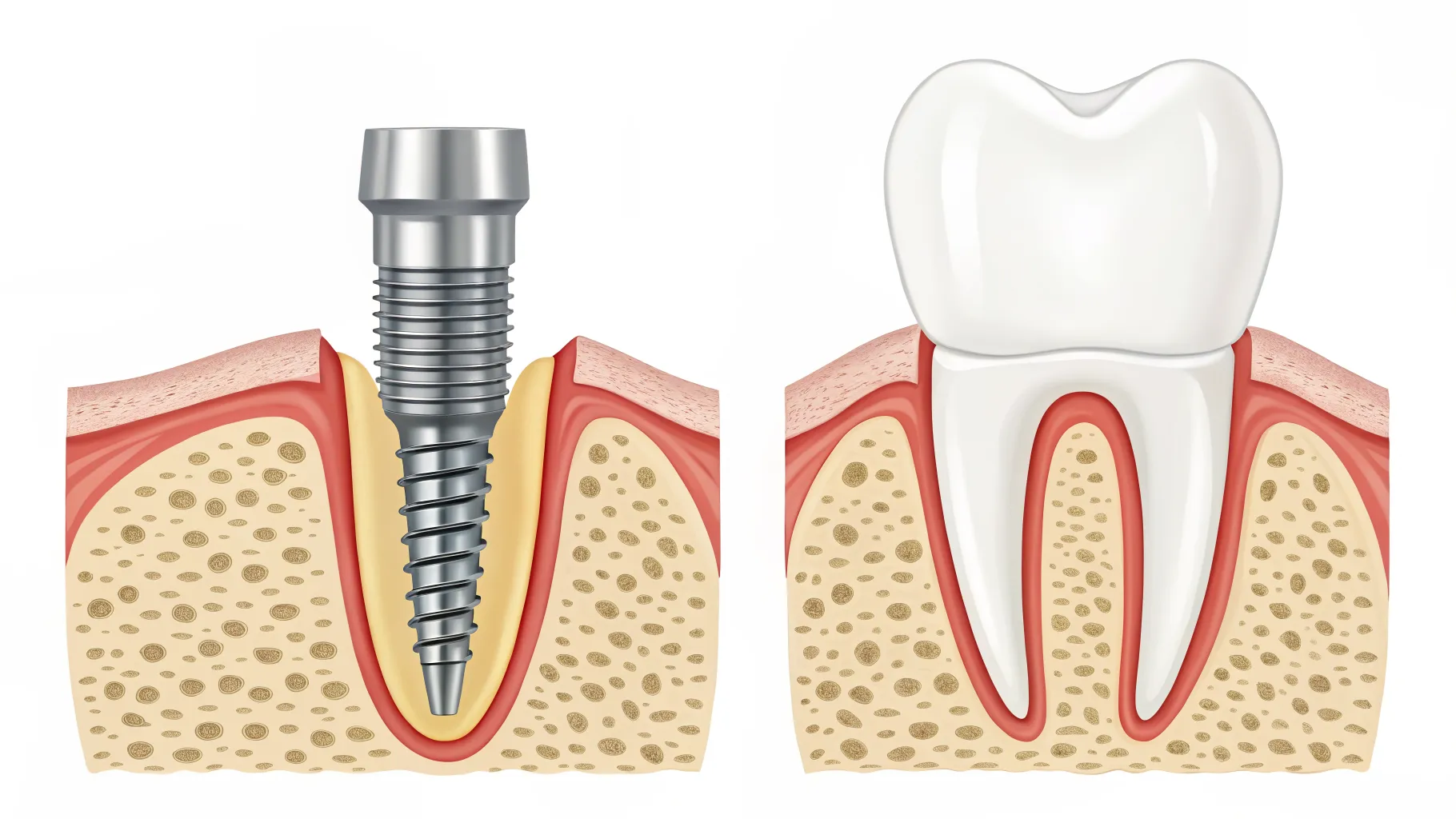
What Is a Dental Implant?
A dental implant is a surgical fixture that replaces the root of a missing tooth. It's typically made of titanium, a biocompatible material that fuses with the jawbone over time in a process called osseointegration. This fusion creates a strong and stable foundation for a replacement tooth.
The complete implant consists of three parts: the implant post that goes into the jawbone, an abutment that connects the post to the crown, and the crown itself, which is the visible, tooth-shaped cap. Because it replaces the tooth root, an implant stimulates the jawbone, preventing the bone loss that often occurs when a tooth is lost. The procedure is typically performed in stages over several months to allow for proper healing and integration.
What Is a Dental Bridge?
A dental bridge, as its name suggests, bridges the gap created by one or more missing teeth. A traditional bridge consists of one or more artificial teeth, called pontics, held in place by dental crowns that are cemented onto the natural teeth on either side of the gap. These anchoring teeth are known as abutment teeth.
To place a traditional bridge, the dentist must prepare the abutment teeth by removing a significant portion of their enamel to make room for the crowns. Other types of bridges exist, such as cantilever bridges (used when there are adjacent teeth on only one side of the gap) and Maryland bridges (which use a metal or porcelain framework bonded to the backs of adjacent teeth), but the traditional fixed bridge is the most common.
Comparing the Procedures
The process for getting a dental implant is more invasive and time-consuming than for a bridge. It begins with a surgical procedure to place the titanium post into the jawbone. This is followed by a healing period of several months, during which the implant fuses with the bone. Once healed, another minor procedure may be needed to place the abutment, followed by the attachment of the final crown.
Getting a dental bridge is a much faster process, typically completed in just two or three visits. During the first visit, the abutment teeth are prepared by reshaping them, and impressions are taken to create the bridge, pontic, and crowns. A temporary bridge is placed to protect the exposed teeth. On the second visit, the permanent bridge is checked for fit and then cemented into place.
Durability and Longevity
One of the most significant advantages of a dental implant is its longevity. With proper care and good oral hygiene, an implant post can last a lifetime. The crown attached to it may need to be replaced due to normal wear and tear, typically every 10 to 15 years, but the underlying structure remains intact.
A dental bridge generally has a shorter lifespan. On average, a well-maintained bridge can last between 5 and 15 years before it may need replacement. The longevity of a bridge often depends on the health of the supporting abutment teeth. If these teeth develop decay or gum disease, the entire bridge's stability can be compromised.
Impact on Oral Health
Dental implants offer several benefits for overall oral health. Since they are standalone units, they do not require altering or placing stress on adjacent healthy teeth. More importantly, because the implant post integrates with the jawbone, it provides the necessary stimulation to prevent bone deterioration, which helps maintain the natural shape of your face and jaw.
A dental bridge, on the other hand, requires the permanent alteration of healthy adjacent teeth to support the crowns. This process removes healthy enamel and can make these teeth more susceptible to decay and nerve issues in the future. Furthermore, a bridge does not stimulate the jawbone underneath the missing tooth, so bone loss can still occur over time.
Cost and Maintenance Considerations
Initially, the upfront cost of a single dental implant is generally higher than that of a dental bridge. This is due to the surgical nature of the procedure and the materials involved. However, because of their durability and longevity, implants can sometimes be more cost-effective in the long run, as they are less likely to need replacement.
Dental bridges typically have a lower initial cost, making them a more accessible option for some. It's important to factor in potential future costs, as the bridge may need to be replaced one or more times over a lifetime. Maintenance for both is similar and requires diligent oral hygiene, but cleaning under a bridge can be more challenging. Special tools like floss threaders are often needed to clean beneath the pontic to prevent plaque buildup and gum disease.