
Dental Implant vs. Bridge: Which Tooth Replacement Is Right for You?
Losing a tooth can affect your smile, your ability to chew, and your overall oral health. Fortunately, modern dentistry offers excellent solutions for tooth replacement. Two of the most common and effective options are dental implants and dental bridges. While both can restore function and aesthetics, they work in very different ways, and choosing between them involves considering various factors like your health, budget, and long-term goals.
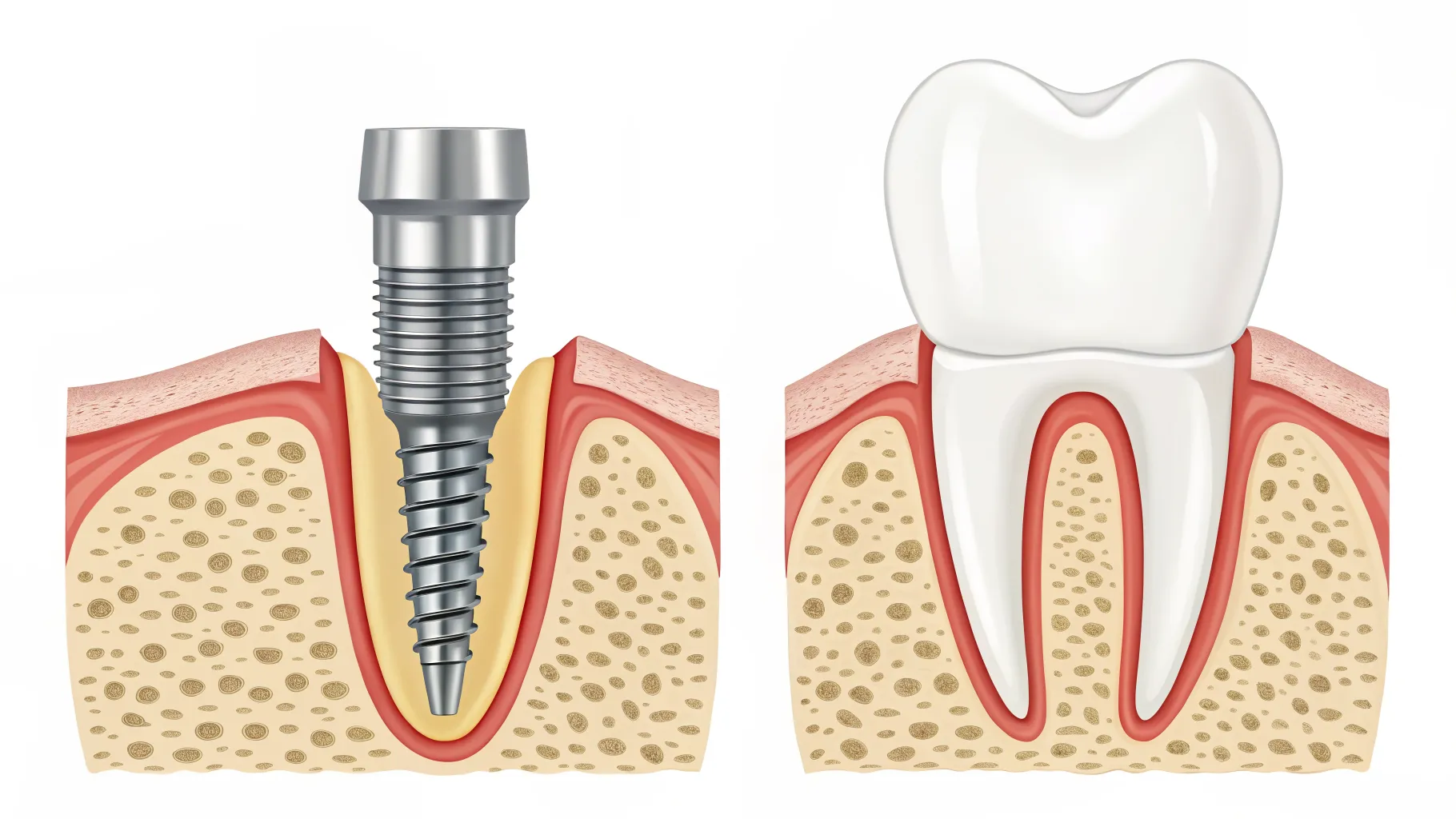
What Is a Dental Implant?
A dental implant is a permanent solution designed to replicate a natural tooth from root to crown. The core of the implant is a small, screw-like post, typically made of biocompatible titanium, which is surgically placed into the jawbone where the original tooth was. This post acts as a new tooth root, providing a stable foundation.
Once the post is in place, a process called osseointegration occurs, where the jawbone fuses with the titanium post over several months. This fusion creates an incredibly strong and stable base. After healing is complete, a connector piece called an abutment is attached to the post, and a custom-made crown is secured on top, perfectly matching the color and shape of your surrounding teeth.
What Is a Dental Bridge?
A dental bridge, as the name suggests, literally bridges the gap created by one or more missing teeth. A traditional bridge consists of two main parts: the crowns and the pontic. The pontic is the artificial tooth that fills the empty space. It is anchored in place by crowns that are cemented onto the healthy teeth on either side of the gap. These anchoring teeth are known as abutment teeth.
To prepare for a bridge, the dentist must reshape the abutment teeth by removing a significant portion of their enamel to make room for the crowns. This preparation is an irreversible process. Besides traditional bridges, there are other types, such as cantilever bridges (used when there's an adjacent tooth on only one side) and Maryland bridges, which use a metal or porcelain framework bonded to the backs of adjacent teeth.
Comparing the Procedure and Timeline
The processes for getting an implant versus a bridge differ significantly in terms of time and invasiveness. The dental implant procedure is a multi-stage process that can take anywhere from three to nine months, or even longer. This extended timeline is primarily due to the healing period required for the implant to fuse with the jawbone. It involves an initial surgery to place the post, a healing period, and then subsequent appointments to place the abutment and crown.
In contrast, receiving a dental bridge is a much faster process, often completed in just two or three dental visits over a few weeks. The first visit involves preparing the abutment teeth and taking impressions to create the custom bridge. A temporary bridge may be placed while the permanent one is fabricated in a dental lab. At the second visit, the permanent bridge is fitted, adjusted, and cemented into place.
Durability and Long-Term Performance
When it comes to longevity, dental implants generally have the advantage. Because the implant post is fused directly with the jawbone, it becomes a permanent part of your mouth. With excellent oral hygiene and regular dental checkups, the implant itself can last a lifetime. The crown attached to it may need replacement due to normal wear and tear, but this is often only necessary every 10 to 20 years.
A dental bridge typically has a shorter lifespan, usually lasting between 5 and 15 years before needing replacement. Its durability depends heavily on the health of the supporting abutment teeth and the quality of oral hygiene. The abutment teeth are more vulnerable to decay and gum disease, which can compromise the entire structure and require the bridge to be replaced.
Impact on Oral Health and Surrounding Teeth
One of the most significant differences between these two options is their impact on the rest of your mouth. A dental implant is a standalone unit that does not rely on adjacent teeth for support. This means that healthy teeth do not need to be altered or ground down. Furthermore, because the implant post acts as an artificial root, it stimulates the jawbone, preventing the bone loss that naturally occurs when a tooth is missing.
A dental bridge, on the other hand, requires the permanent alteration of healthy teeth. The removal of enamel from the abutment teeth can increase their risk of sensitivity and future decay. A bridge also does not address the issue of bone loss in the jaw underneath the pontic. Over time, this bone resorption can lead to changes in facial structure and may create a gap under the bridge that can trap food particles.
Cost and Financial Considerations
Cost is often a major factor in the decision-making process. Generally, a dental implant has a higher upfront cost than a dental bridge. The price for a single implant, including the surgery, abutment, and crown, can range from $3,000 to $6,000. This cost can increase if additional procedures, such as a bone graft or sinus lift, are necessary to prepare the jawbone.
A traditional three-unit bridge typically costs less initially, with prices ranging from $2,000 to $5,000. However, it is important to consider the long-term costs. Because a bridge may need to be replaced every 5 to 15 years, the lifetime cost can eventually exceed that of a single implant. Dental insurance coverage varies widely for both procedures, so it is essential to check with your provider to understand what portion of the cost they may cover.