Exploring the Perception of Areola Size in Beauty Standards
The concept of beauty is complex, shaped by a multitude of factors that vary across cultures and eras. When it comes to physical attributes, certain preferences often emerge and become embedded in the collective consciousness. One such specific detail is areola size, a topic that intersects with art, biology, and media. Understanding why smaller areolas are often considered attractive requires a look into these diverse influences and how they construct our aesthetic ideals.
The Historical Lens of Art and Media
For centuries, the idealized female form in Western art has influenced beauty standards. Many classical and Renaissance sculptures and paintings depict women with breasts that feature small, subtly colored areolas. This artistic choice, whether for aesthetic reasons or based on the models of the time, created a visual precedent. These images were not just art; they were the primary visual media of their day, establishing a benchmark for beauty that has lingered for generations.
In the 20th and 21st centuries, mass media took over this role with even greater influence. From print magazines to film and the internet, the portrayal of nudity has often been curated and edited. Models and actresses featured in mainstream media frequently fit a narrow set of physical criteria, which often included smaller areolas. The advent of photo editing software further standardized this look, creating an unrealistic and homogenized ideal that many people internalized as the norm.
Evolutionary and Biological Perspectives
Some theories from evolutionary psychology offer potential explanations for this preference. From a biological standpoint, a woman's areolas naturally darken and can increase in size during pregnancy and breastfeeding. These changes signal a state of maternity. Consequently, some theorists propose that smaller, lighter-colored areolas may be subconsciously associated with youth and nulliparity, or the state of not having borne children. In evolutionary terms, these traits are often linked with peak fertility, making them potentially more attractive to mates.
It is crucial to approach these theories as one piece of a much larger puzzle. Human attraction is incredibly complex and cannot be reduced to simple biological imperatives. While these ideas provide a potential framework for understanding certain preferences, they do not account for the vast diversity in human desire or cultural ideals. Social and cultural conditioning often play a much more significant and immediate role in shaping what we find beautiful.
The Importance of Proportion and Symmetry
Aesthetic appeal is often less about the absolute size of a feature and more about how it relates to the whole. The principle of proportion is a cornerstone of what many people perceive as beauty. In this context, the perceived attractiveness of an areola may have more to do with its size relative to the overall size and shape of the breast. An areola that appears balanced and proportional to the breast mound is often considered more aesthetically pleasing than one that is perceived as disproportionately large or small.
Plastic surgeons, for example, often use principles of proportion when consulting with patients. They may speak of an ideal ratio between the diameter of the areola and the volume or width of the breast. This suggests that the preference is not strictly for 'smallness' in isolation, but for a sense of harmony and balance in the body's overall composition.
Cultural Variations in Beauty Ideals
The preference for smaller areolas is far from universal; it is largely a product of Western-centric beauty standards. Different cultures around the world have diverse and sometimes opposing ideals regarding breast appearance. In some societies, larger areolas are not viewed negatively and may even be seen as a sign of femininity, maturity, and motherhood, which are celebrated traits.
This cultural variance highlights the subjective nature of beauty. What is considered ideal in one part of the world may be viewed neutrally or differently in another. Recognizing this diversity is key to understanding that there is no single, correct standard for how a body should look. It challenges the idea that one particular trait is inherently more attractive than another, shifting the focus to the cultural context that creates these preferences.
Psychological Underpinnings of Attraction
Psychology also offers insights into why certain physical traits are favored. One relevant concept is neoteny, which is the retention of juvenile features in the adult animal. In humans, features like large eyes, a small nose, and smooth skin are considered neotenous and are often perceived as attractive. A preference for smaller areolas could potentially fit into this framework, as they might be subconsciously interpreted as a more youthful or delicate feature.
This perception can be reinforced by social learning. When we are consistently exposed to images that pair certain traits with positive concepts like beauty, health, and desirability, we learn to prefer those traits. This conditioning starts at a young age and is solidified by continuous exposure to media, creating a powerful psychological bias that can be difficult to recognize or overcome.
The Rise of Body Positivity and Acceptance
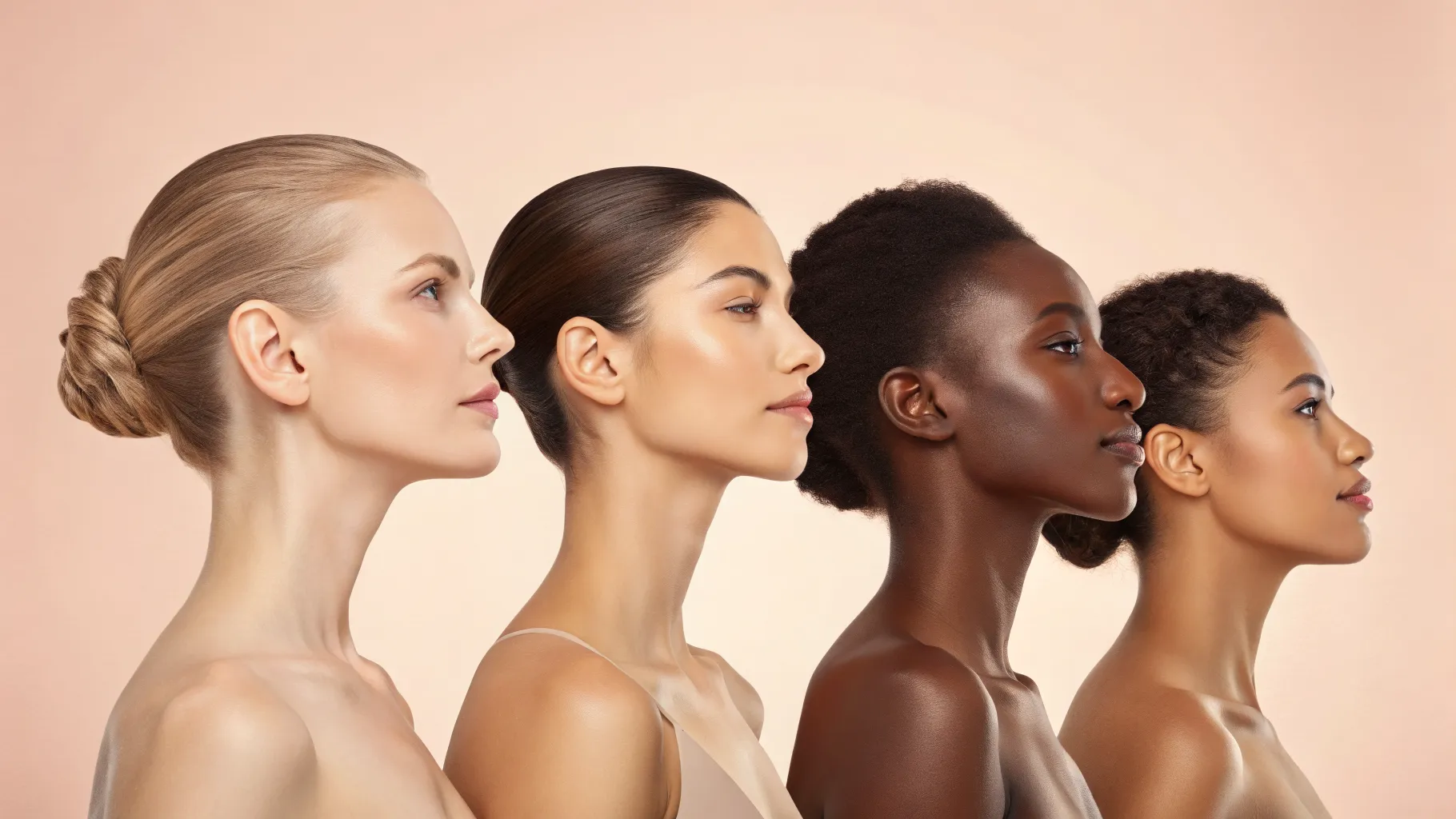
In recent years, there has been a significant cultural shift towards body positivity and the acceptance of diverse body types. This movement actively challenges the narrow, often unattainable beauty standards that have long dominated media. It advocates for the celebration of all bodies, regardless of their shape, size, color, or features. The focus is shifting from conforming to an external ideal to embracing one's own unique and natural appearance.
Social media has been a powerful tool in this movement, allowing people to share unedited, realistic images of their bodies. This exposure to diversity helps to normalize features like larger areolas, stretch marks, and cellulite, dismantling the myth of the 'perfect' body. As representation in media becomes more inclusive, rigid beauty standards begin to lose their power, paving the way for a broader and more accepting definition of beauty.