
Exploring Transcranial Magnetic Stimulation: A Guide to Advanced Depression Treatment
Facts:
- TMS offers hope for chronic conditions.
- Growing interest in non-invasive brain stimulation for mental health treatment.
Unveiling the Science Behind Transcranial Magnetic Stimulation
Transcranial magnetic stimulation (TMS) represents a significant advancement in the field of neuromodulation, offering a non-invasive approach to treating various neurological and psychiatric conditions. This innovative technique, often referred to as rTMS when applied repetitively, utilizes magnetic fields to stimulate nerve cells in the brain, aiming to improve symptoms of conditions like major depression treatment. As a cutting-edge form of brain stimulation, TMS is increasingly recognized for its potential to provide relief where traditional therapies may have fallen short, offering a beacon of hope for individuals seeking effective mental health therapy solutions.
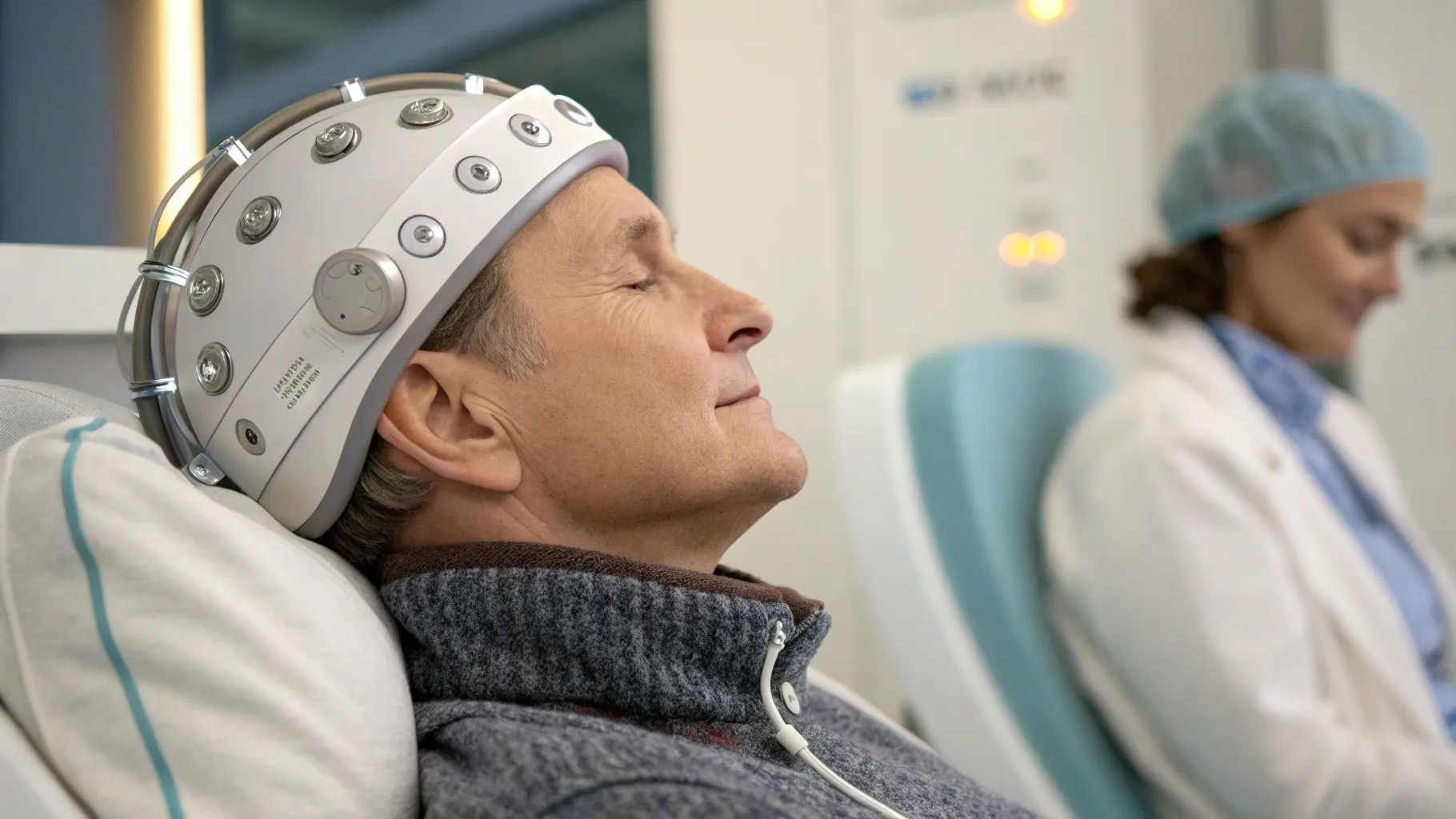
Understanding the Mechanisms of Transcranial Magnetic Stimulation
At its core, Transcranial magnetic stimulation operates on the principle of electromagnetic induction. A specialized coil, placed near the patient's scalp, generates brief but powerful magnetic pulses. These magnetic fields can painlessly pass through the skull and induce small electrical currents in specific regions of the brain. When these pulses are applied rapidly and repeatedly—a process known as rTMS—they can modulate neural activity. Depending on the frequency and intensity of the magnetic pulses, brain stimulation can either excite or inhibit brain cells. For example, high-frequency rTMS is often used to activate areas of the brain that are underactive in conditions like depression treatment, while low-frequency rTMS might be used to quiet overactive regions. This targeted neuromodulation allows clinicians to precisely influence brain circuitry, gradually restoring balanced brain function and alleviating symptoms.
The precise targeting is crucial for effective mental health therapy. Advanced imaging techniques, such as MRI, are often used to identify the exact brain regions to be stimulated, ensuring that the magnetic pulses are delivered with optimal accuracy. The non-invasive nature of Transcranial magnetic stimulation makes it an attractive alternative or augmentation to pharmacological treatments, particularly for patients who haven't responded well to antidepressants or who experience intolerable side effects. The cumulative effect of multiple rTMS sessions leads to lasting changes in brain activity, supporting long-term symptom improvement. Researchers continue to explore the full potential of this neuromodulation technique across a broader spectrum of neurological and psychiatric disorders.
Conditions Treated with rTMS: Beyond Depression
While Transcranial magnetic stimulation is most widely recognized and FDA-approved for depression treatment, its applications extend to a growing list of other conditions, showcasing the versatility of neuromodulation. Studies and clinical trials are actively exploring the efficacy of rTMS for obsessive-compulsive disorder (OCD), migraine headaches, and even chronic pain. For OCD, specific protocols of brain stimulation are used to target different brain circuits associated with compulsive behaviors and intrusive thoughts. Similarly, in migraine treatment, rTMS aims to modulate brain excitability to reduce the frequency and severity of headache episodes. The targeted nature of this mental health therapy allows for precise intervention, minimizing systemic side effects often associated with oral medications.
Ongoing research is also investigating the potential of Transcranial magnetic stimulation for conditions such as anxiety disorders, post-traumatic stress disorder (PTSD), and even neurological conditions like Parkinson's disease and stroke rehabilitation. The ability of rTMS to induce plasticity and reorganize brain networks holds promise for functional recovery in these complex disorders. As understanding of brain connectivity and specific disease pathophysiology grows, so too does the potential for tailored neuromodulation protocols. Patients and clinicians alike are increasingly optimistic about the role of brain stimulation in addressing unmet medical needs across various specialties, solidifying TMS as a powerful tool in modern medicine.
The TMS Treatment Experience: What to Expect
Undergoing Transcranial magnetic stimulation therapy involves a series of outpatient sessions, typically lasting several weeks. Each session is relatively short, usually ranging from 20 to 40 minutes, depending on the specific rTMS protocol prescribed. Patients remain awake and alert throughout the procedure, comfortably seated in a reclined chair. The technician carefully positions the magnetic coil against the scalp, typically over the prefrontal cortex for depression treatment. During the session, patients will hear a clicking sound and feel a tapping sensation on their scalp, which is generally well-tolerated. Most individuals can immediately resume their normal activities, including driving, after a session, as there is no sedation or systemic side effects.
Before beginning brain stimulation therapy, a mapping session is conducted to determine the optimal coil placement and stimulation intensity. This involves identifying the patient's motor threshold – the minimum amount of magnetic energy required to make their thumb twitch. This personalized approach ensures the neuromodulation is both safe and effective. While mild scalp discomfort or headache might occur during the initial sessions, these side effects typically diminish over the course of treatment. The cumulative nature of Transcranial magnetic stimulation means that benefits are often observed after several weeks of consistent therapy, reinforcing its role as a sustained mental health therapy intervention rather than an immediate fix.
Comparing TMS with Traditional Mental Health Therapies
When considering treatment options for conditions like depression, it's essential to compare Transcranial magnetic stimulation with more traditional approaches such as medication and psychotherapy. While antidepressants can be highly effective for many, they often come with systemic side effects, including weight gain, sexual dysfunction, or gastrointestinal issues, and may take weeks to show an effect. Furthermore, a significant percentage of patients do not achieve remission with medication alone, leading to the challenge of treatment-resistant depression treatment. Psychotherapy, particularly cognitive-behavioral therapy (CBT), is another cornerstone of mental health therapy, providing coping strategies and insight, but it may not always be sufficient for severe or biologically-driven forms of depression.
rTMS, as a form of brain stimulation, offers a distinct advantage by targeting specific brain regions implicated in mood regulation without systemic drug exposure. This localized neuromodulation results in a more favorable side effect profile compared to oral medications, with the most common side effects being mild scalp discomfort or headache at the site of stimulation, which usually subsides after the first few sessions. Unlike electroconvulsive therapy (ECT), which involves induced seizures and general anesthesia, Transcranial magnetic stimulation is non-invasive and does not require recovery time, allowing patients to maintain their daily routines. For those seeking an alternative when other methods have failed, rTMS represents a powerful, often highly effective, adjunctive or standalone depression treatment option that bridges the gap between medication and more invasive procedures.
Future Directions and Accessibility in Transcranial Magnetic Stimulation
The field of Transcranial magnetic stimulation is continuously evolving, with exciting advancements on the horizon aimed at improving efficacy, expanding applications, and increasing accessibility. Researchers are exploring novel rTMS protocols, such as theta burst stimulation (TBS), which can deliver therapeutic effects in significantly shorter sessions, potentially reducing treatment time from 40 minutes to just 3 minutes. This innovation could dramatically enhance convenience and patient adherence. Further exploration into personalized neuromodulation is underway, utilizing advanced brain imaging and AI algorithms to predict individual responses and optimize treatment parameters for each patient, making brain stimulation even more precise and effective for depression treatment and other conditions.
Enhancing the accessibility of Transcranial magnetic stimulation is also a key focus. Efforts include developing more portable and user-friendly TMS devices, potentially enabling wider adoption in various clinical settings, including smaller clinics and even home-based care under medical supervision. Increased awareness among healthcare providers and the public, along with improved insurance coverage, will play a crucial role in making this advanced mental health therapy available to more individuals who could benefit. As our understanding of brain function deepens, rTMS is poised to become an even more integral and transformative component of comprehensive neurological and psychiatric care, continually offering new pathways to recovery and improved quality of life.
Frequently Asked Questions
Is Transcranial magnetic stimulation painful?
Most patients describe Transcranial magnetic stimulation as well-tolerated, reporting a tapping sensation or mild discomfort on the scalp during the procedure. Any discomfort is typically transient and tends to decrease over the course of treatment. Unlike some other forms of brain stimulation, it does not require anesthesia or sedation.
How long does a course of rTMS therapy last?
A typical course of rTMS therapy for depression treatment usually involves daily sessions, five days a week, for four to six weeks. The exact duration and number of sessions can vary based on the individual's condition and the specific neuromodulation protocol prescribed by their clinician.
Are there any serious side effects of Transcranial magnetic stimulation?
Serious side effects from Transcranial magnetic stimulation are rare. The most common side effects are mild to moderate scalp discomfort or headache at the site of stimulation, which usually resolve within the first few sessions. In very rare instances, seizures have been reported, but the risk is extremely low, especially when protocols are followed carefully by trained professionals. It is considered a very safe mental health therapy.
Can I combine TMS with other depression treatments?
Yes, Transcranial magnetic stimulation can often be used in conjunction with other depression treatment modalities, such as psychotherapy and medication. In many cases, combining treatments can lead to better outcomes. However, it is crucial to discuss all current treatments with your healthcare provider to ensure a coordinated and safe treatment plan.
References
- National Institute of Mental Health. (2023). Brain Stimulation Therapies.
- Mayo Clinic. (2024). Transcranial Magnetic Stimulation (TMS).
- Journal of Clinical Psychiatry. (2022). Efficacy of Repetitive Transcranial Magnetic Stimulation for Depression.
- World Federation of Societies of Biological Psychiatry. (2021). Guidelines for the Use of Transcranial Magnetic Stimulation.
- Clinical TMS Society. (2024). Patient Information on Transcranial Magnetic Stimulation.