
Brilliant Ideas for Organizing Winter Clothing at Home: A Complete Guide
Fast Facts:
- Space Saving: Vacuum bags can reduce clothing volume by up to 80%.
- Seasonal rotation is a key trend for homeowners.
Key Information & Options
As the temperature drops, the challenge of managing bulky winter wear becomes a reality. Proper organizing winter clothes not only saves space but also protects your garments for seasons to come. From heavy coats to chunky knits, implementing a smart system can transform your closet from chaotic to calm. These effective seasonal wardrobe tips will guide you through the process, making it easier than ever to find what you need without the stress.
Key Benefits
- Maximizes Space: Efficiently using under-bed storage and vertical space frees up your main closet area.
- Protects Clothing: Proper storage prevents damage from moths, dust, and mildew, extending the life of your garments.
- Saves Time: A well-organized system means you can find your favorite sweater or scarf instantly.
- Reduces Stress: Good home organization winter practices contribute to a more serene and functional living environment.
Storage Solutions: Bins vs. Vacuum Bags
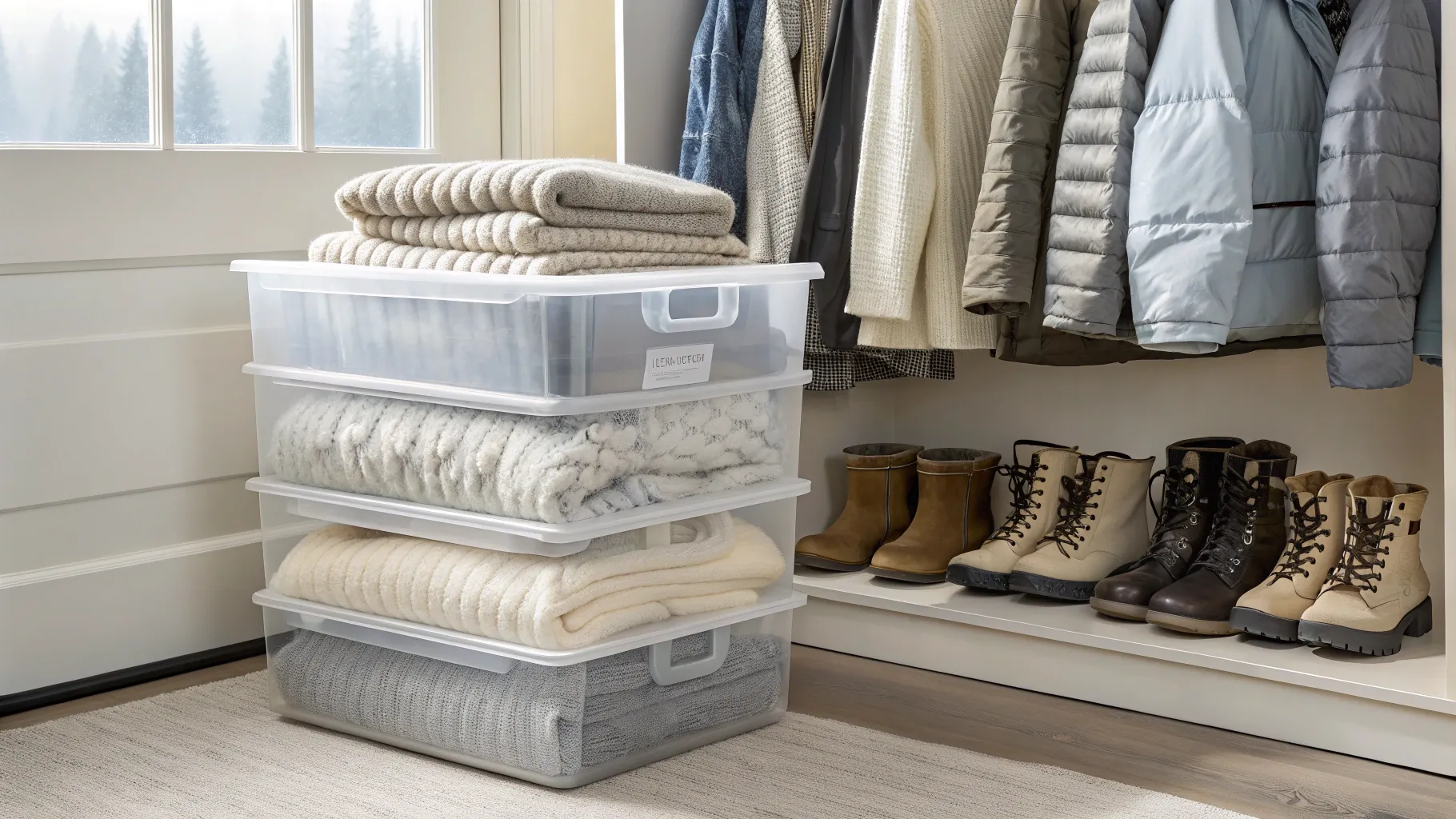
When considering storage ideas for winter wear, two popular choices emerge: plastic bins and vacuum-sealed bags. Clear plastic bins are excellent for items you might need to access occasionally, like lighter sweaters or accessories, as you can see the contents easily. They offer rigid protection against crushing. On the other hand, vacuum bags are unbeatable for maximizing space, especially for bulky items like puffer jackets and duvets. However, they can cause wrinkles and are not ideal for delicate natural fibers that need to breathe.
Essential Winter Clothing Organization Checklist
- Declutter First: Sort through all items. Donate or discard anything you haven't worn in the last season. This is one of the most crucial clothing decluttering tips.
- Clean Everything: Launder or dry-clean all items before storing to prevent stains from setting and to deter pests.
- Categorize Items: Group similar items together (e.g., sweaters, scarves, hats, gloves).
- Choose Appropriate Storage: Use clear bins, under-bed containers, or vacuum bags based on the item type.
- Label Everything: Clearly label each box or bag with its contents for easy identification next year.
- Store Strategically: Place less-used items in harder-to-reach areas, keeping a few transitional pieces accessible.
Frequently Asked Questions
How should I store winter coats to keep their shape?
The best way to store winter coats is to hang them on sturdy, wide-shouldered hangers in a breathable garment bag. Avoid cramming them into a tight space, as this can crush the insulation and fabric.
Is it safe to use vacuum bags for all winter clothes?
Vacuum bags are great for synthetic materials and durable items like ski jackets. However, avoid using them for natural fibers like wool, cashmere, or down, as the compression can damage the fibers and reduce their loft and insulating properties over time.
What's the best spot to store seasonal clothing?
A cool, dark, and dry place is ideal. Think of a guest room closet, under a bed, or on a high shelf in your wardrobe. Avoid attics or basements where temperature and humidity fluctuations can damage fabrics.
References
- Home organization blogs and expert interviews on seasonal storage.
- Studies on the psychological benefits of decluttering.