
Identifying Sciatica: A Guide to Its Common Symptoms
Many people experience lower back pain at some point, but when that pain travels down into your leg, it may be a sign of sciatica. Understanding the specific symptoms associated with this condition is the first step toward finding appropriate ways to manage it. Sciatica refers to pain that radiates along the path of the sciatic nerve, which branches from your lower back through your hips and buttocks and down each leg.
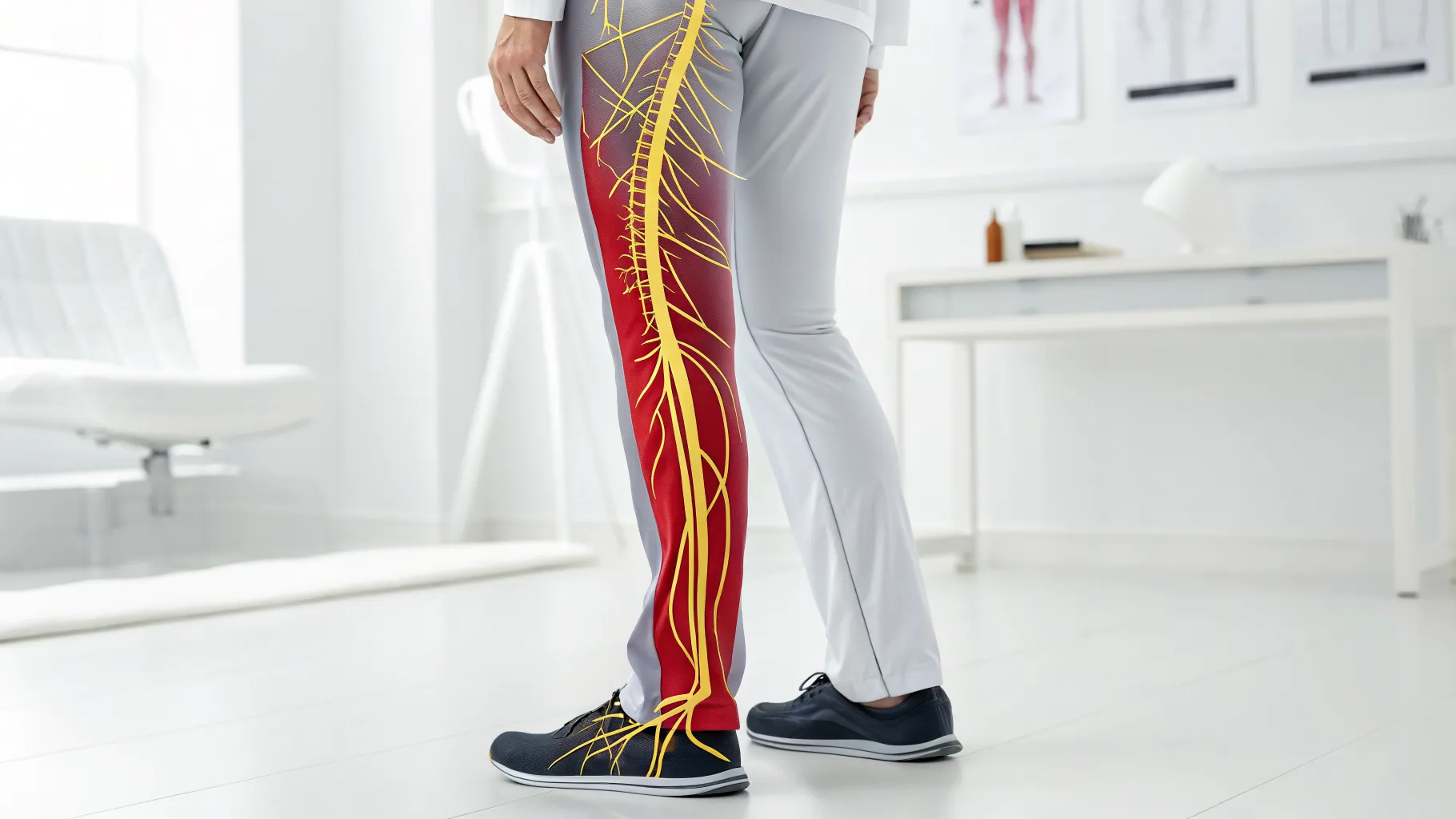
What Is Sciatica?
It's important to clarify that sciatica is not a medical diagnosis in itself but rather a symptom of an underlying medical problem. It occurs when the sciatic nerve, the longest nerve in the body, becomes pinched or compressed. The most frequent cause is a herniated or slipped disk in the spine that presses on the nerve root. Other causes include spinal stenosis (a narrowing of the spinal canal), bone spurs on the vertebrae, or, less commonly, a tumor or nerve damage from a condition like diabetes.
The sciatic nerve controls muscles in the back of your knee and lower leg and provides sensation to the back of your thigh, part of your lower leg, and the sole of your foot. When it is compressed, it can cause a range of uncomfortable and sometimes debilitating symptoms that typically affect only one side of the body.
The Primary Symptom: Pain Along the Sciatic Nerve Pathway
The hallmark symptom of sciatica is pain that originates in the lower back or buttock and travels down the back of one leg. The character of this pain can vary widely among individuals. For some, it may feel like a mild, dull ache. For others, it can be a sharp, searing, or burning sensation. Many people describe the pain as an electric jolt or shock that shoots down the leg.
This pain can be constant or it may come and go. It often affects just one side, from the lower back to the thigh and calf, and can sometimes extend all the way to the foot and toes. While pain may also be present in the lower back, the leg pain is typically much more severe than the back pain.
Numbness, Tingling, and Weakness
In addition to pain, many people with sciatica experience other neurological symptoms in the affected leg and foot. Numbness is a common complaint, where parts of the leg or foot lose sensation. This can be accompanied by a tingling sensation, often described as 'pins and needles'. These sensations occur because the nerve compression interferes with the normal signal transmission along the nerve fibers.
Muscle weakness in the affected leg or foot is another significant symptom. You might find it difficult to move your leg or foot, or you may experience a feeling of heaviness. In some cases, this can lead to 'foot drop,' a condition where you have trouble lifting the front part of your foot, causing you to drag your toes when you walk.
How Symptoms Can Vary Based on Location
The specific location of your symptoms often corresponds to which part of the sciatic nerve is being compressed. The sciatic nerve is formed by the joining of five nerve roots from the lower spine. Compression at different levels can lead to distinct patterns of symptoms.
- L4 Nerve Root: If the L4 nerve root is affected, pain and numbness may be felt in the thigh. You might also experience weakness in the large muscle that straightens the knee.
- L5 Nerve Root: Compression of the L5 root often leads to pain or numbness on the top of the foot, particularly in the space between the big toe and the second toe. Weakness might affect the ankle and big toe.
- S1 Nerve Root: An issue with the S1 nerve root typically causes pain or numbness on the outer part of the foot, which may radiate to the little toe. It can also cause weakness that makes it difficult to raise your heel off the ground or walk on your tiptoes.
Symptoms Worsened by Specific Actions
Certain movements, positions, and even involuntary actions can exacerbate sciatica symptoms by increasing the pressure on the sciatic nerve. Many people find their pain worsens after standing or sitting for long periods. The transition from sitting to standing can also be particularly painful.
Actions that cause a sudden increase in pressure within the spinal column are also common triggers. For instance, a forceful and abrupt movement like a cough or a sneeze can send a jolt of pain down the affected leg. Bending forward or lifting heavy objects incorrectly can also significantly increase the pain by further compressing the nerve root.
When to Seek Professional Guidance
While many cases of sciatica resolve with self-care measures over a few weeks, some symptoms warrant immediate medical attention. It is important to distinguish between typical discomfort and signs of a more serious condition. Consulting a healthcare provider is recommended if your pain is severe, persistent, or progressively worsening.
You should seek emergency medical care if you experience any of the following 'red flag' symptoms, as they could indicate a serious condition like cauda equina syndrome:
- Sudden, excruciating pain in your low back or leg accompanied by numbness or muscle weakness in the same leg.
- Symptoms that affect both legs.
- Loss of bladder or bowel control.
- Pain that follows a severe injury, such as a traffic accident.