Best hospitals for stroke care: An analysis of clinical standards and institutional performance
When identifying the best hospitals for stroke care, medical professionals and quality-assessment organizations prioritize facilities that demonstrate exceptional adherence to evidence-based treatment protocols. A stroke represents a critical medical emergency, where the rapid restoration of blood flow to the brain is essential to minimize permanent neurological damage 7. National and international health bodies emphasize that institutional performance is largely determined by the integration of hyper-acute, acute, and rehabilitation services within a single, cohesive clinical environment 11. High-performing centers are characterized by their ability to maintain 24/7 access to advanced diagnostic imaging and specialized interventional procedures 2.
Criteria for Comprehensive Stroke Certification
In the United States, The Joint Commission, in collaboration with the American Heart Association and American Stroke Association, awards the designation of Comprehensive Stroke Center to institutions that meet the most rigorous standards of clinical care 2. These facilities are evaluated on their capacity to provide complex neurosurgical and endovascular interventions at any hour, ensuring that patients receive timely treatment regardless of the time of day 8. Certification reflects a commitment to a multidisciplinary approach, requiring a team of specialized neurologists, neurosurgeons, and radiologists to coordinate care plans rapidly 1.
Hospitals operating under this designation often report high volumes of complex procedures, such as mechanical thrombectomy, which is essential for treating large vessel occlusions 1, 9. The infrastructure required for this level of care includes advanced research facilities and neurocritical care units designed specifically for patients recovering from neurovascular events 1, 5. Achieving this level of accreditation is often synonymous with consistent adherence to national quality metrics, such as the prompt administration of IV tPA or equivalent thrombolytic therapies 4.
The Importance of Rapid Intervention Protocols
Data consistently demonstrates that the speed of assessment is a primary driver of survival and long-term recovery following a stroke 7. Institutions identified as leaders in the field utilize the B.E. F.A.S.T. (Balance, Eyes, Face, Arms, Speech, Time) protocol to streamline the transition from emergency department arrival to definitive treatment 4, 7. Research indicates that hospitals aiming for high performance often set internal goals to initiate mechanical thrombectomy within 60 minutes of patient arrival, a standard that reflects the critical nature of time in preventing irreversible brain injury 4.
Advanced tele-stroke programs further extend the reach of specialized stroke centers by allowing rapid consultation with expert neurologists at smaller or rural facilities 1. This integration ensures that even in remote regions, patients may benefit from the diagnostic expertise of high-volume centers. Virtual health initiatives have also expanded, enabling follow-up consultations and stroke prevention counseling to be conducted efficiently, which helps patients manage risk factors after they have been discharged from the acute care setting 3.
Clinical Outcomes and Performance Metrics
Performance in stroke care is frequently assessed through risk-adjusted mortality and complication rates 6. Organizations like Healthgrades conduct large-scale evaluations of thousands of hospitals to identify top-tier facilities based on these outcomes 6. Hospitals that consistently rank in the top 5% or 10% nationwide often maintain rigorous clinical governance, participating in programs such as the American Heart Association's 'Get With The Guidelines' initiative 4, 6, 9. Such programs foster a culture of continuous quality improvement by mandating adherence to evidence-based practice 9.
| Metric Category | Performance Focus |
|---|---|
| Reperfusion Time | Speed of IV tPA and thrombectomy delivery |
| Certification Level | Joint Commission Comprehensive Status |
| Multidisciplinary Team | Inclusion of neurologists, physiatrists, and neurosurgeons |
| Outcome Tracking | Risk-adjusted mortality and disability rates |
Furthermore, the presence of specialized neuro-rehabilitation services is a critical component of high-quality stroke care 11. After the acute phase, patients often require intensive physical, occupational, and speech therapy to regain functionality 8. Centers that co-locate these rehabilitation units with their acute neurological services report better continuity of care and improved patient outcomes during the transition from hospital stay to long-term recovery 5, 8.
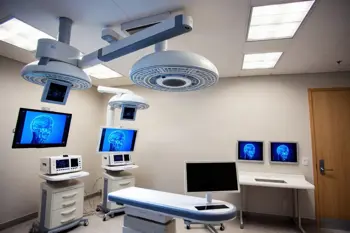
Multidisciplinary Collaboration in Neurovascular Care
Effective stroke care relies on the seamless integration of various clinical disciplines. A patient’s care team may include cerebrovascular neurologists, endovascular surgical neuroradiologists, and vascular neurosurgeons who collaborate on a single patient's case to determine the most effective surgical or medical intervention 1. This team-based structure prevents fragmented care and ensures that the most sophisticated diagnostic imaging, such as advanced neuro-vascular scans, is utilized to pinpoint the exact cause of symptoms 1, 5.
Physiatrists also play a vital role in this continuum, particularly during the inpatient stay, as they design rehabilitation strategies that start as soon as a patient is medically stable 1. This early intervention approach is increasingly standard in major medical centers that operate comprehensive stroke clinics or neuro-recovery units, where the focus remains on regaining independence through a combination of precision medicine and aggressive therapeutic rehabilitation 2, 5.
Regulatory Oversight and Standardized Auditing
Beyond internal quality monitoring, standardized audits serve as an external benchmark for excellence in stroke care. In regions such as the United Kingdom, the Sentinel Stroke National Audit Programme (SSNAP) provides an official assessment of stroke services across the National Health Service, ensuring that institutions remain accountable to established clinical benchmarks 11, 12. These audits track data points such as the time from admission to brain scanning and the proportion of patients receiving specialized stroke unit care 11.
In the United States, similar oversight is provided by accrediting bodies and healthcare platforms that evaluate hundreds of hospitals annually 6. These evaluations look beyond simple survival metrics, incorporating factors such as the availability of advanced neurovascular technology and the depth of expertise within the neurology department 6. Understanding these regulatory mechanisms is helpful for patients or families when evaluating a hospital's capability to handle complex stroke cases effectively over the long term 13.
Risk Mitigation and Future Trends
While specialized hospitals deliver high levels of care, the management of stroke remains a significant public health challenge 3, 9. Future trends in stroke care are shifting toward more individualized, precision-medicine approaches that utilize genetic and demographic data to customize treatment paradigms for ischemic and hemorrhagic strokes 5. As techniques for minimally invasive neurosurgery continue to evolve, high-volume centers are expected to further refine these procedures to minimize recovery time for patients 1.
Access to these facilities remains a primary hurdle in rural areas, leading to continued investment in mobile stroke units and advanced telemedicine technology 1. As awareness campaigns continue to emphasize the importance of early detection and the 911 response protocol, the focus remains on ensuring that patients are transported to the highest level of care possible within the critical window for intervention 4, 7.
Sources
- Mayo Clinic: Stroke Care and Research
- UCSF Health: Comprehensive Stroke Center Overview
- GW Hospital: Stroke Center Services
- OU Health: Comprehensive Stroke Center Standards
- Montefiore Einstein: Neurovascular Disorders and Stroke
- Stony Brook Medicine: Healthgrades Recognition
- UF Health: Stroke Diagnosis and Treatment
- Loma Linda University Health: Comprehensive Stroke Center Designation
- University Hospitals: Excellence in Stroke Care
- Montage Health: Community Hospital Performance
- Sentinel Stroke National Audit Programme (SSNAP)
- Getting It Right First Time (GIRFT) Stroke Reports
- National Institute for Health and Care Excellence (NICE) Guidelines