
Train tours through the Japanese countryside: A factual guide to scenic routes, onboard culture, and practical planning
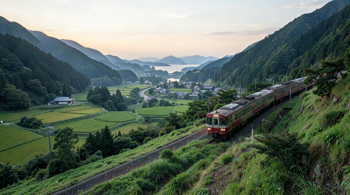
Train tours through the Japanese countryside connect mountain valleys, coastal villages, hot-spring towns, rice fields, and historic settlements through journeys designed around the scenery rather than speed. The category includes ordinary regional rail lines, themed sightseeing trains, steam services, dining trains, and luxury cruise trains, each with different schedules, reservation rules, and levels of onboard service.
What defines a Japanese countryside train tour
A countryside train tour is generally distinguished by the route and experience rather than by one uniform ticket type. Some services use panoramic windows, observation areas, vintage interiors, or open-air carriages, while others add local food, regional storytelling, craft demonstrations, or scheduled cultural stops. The Sagano Scenic Railway follows the Hozugawa River through forested gorges near Kyoto, while the Oigawa Railway is associated with historic steam locomotives traveling through Shizuoka tea plantations. 6 7
Scenic rail travel also varies considerably in duration. The SL Banetsu Monogatari runs between Niitsu in Niigata Prefecture and Aizu-Wakamatsu in Fukushima Prefecture, with a full journey lasting about three and a half hours. It uses the C57-180 steam locomotive and includes an observation car, a children’s play area, a shop, and a commemorative stamp space. These features make the train itself part of the destination rather than merely a way to reach one. 14
Coastal and mountain routes with regional character
Several routes combine dramatic geography with local identity. JR East’s Kairi operates between Niigata and Sakata along the Sea of Japan coast, passing through Murakami and Tsuruoka. Its name combines characters associated with the sea and countryside, reflecting a route where coastal views and rural villages appear on opposite sides of the train. This makes the service a useful example of how Japanese sightseeing trains interpret a region through both landscape and naming. 12
Niigata’s Koshino Shu*Kura places sake and regional cuisine at the center of the journey. The train operates on three routes from March through November and stops at Omigawa Station, described in the supplied research as Japan’s closest railway station to the sea. Its experience includes rotating sake tastings, seasonal food, brewery-inspired interiors, and views of rice-growing country and the Sea of Japan. Weather, operating months, and route selection therefore matter as much as the destination. 13
Kyushu’s themed sightseeing trains
Kyushu has a particularly concentrated network of themed sightseeing services. The Yufuin no Mori connects Hakata with Yufuin and Beppu, traveling through forests, river valleys, and mountain scenery. Its deep-green exterior, warm wooden interior, raised seating, panoramic windows, and front and rear observation areas are designed to evoke a moving highland resort. Some formations also include lounge areas, while groups may encounter semi-private booth seating subject to availability and booking conditions. 11
A three-day Kyushu rail itinerary described in the research links Hakata, Yufuin, Beppu, Kumamoto, and Aso, using Yufuin no Mori, Aso Boy, and a Kyushu Crossing Limited Express. Aso Boy is identified as a blue, family-themed train with a children’s playroom and panoramic seats. The same research describes JR Kyushu as operating 12 Design and Story trains, each organized around its own carriage design, narrative, food service, and merchandise. 8
Luxury journeys and overnight travel
Luxury rail journeys treat the train as accommodation, dining venue, and cultural itinerary. Seven Stars in Kyushu travels through the island’s volcanic landscapes and coastal scenery, while Train Suite Shiki-shima operates multi-day journeys from Ueno Station through eastern Japan. Shiki-shima is a 10-car cruise train focused on seasonal scenery, traditional crafts, destination-linked experiences, and cuisine prepared by onboard and regional chefs. 1 2
JR West’s Twilight Express Mizukaze covers western Honshu between Kyoto and Shimonoseki through five course variations. The supplied route analysis identifies one-night, two-day courses and a longest format of two nights and three days, with itineraries involving the Seto Inland Sea and Sea of Japan. A separate 2026 travel package paired a two-night, three-day Shiki-shima journey with Hotel New Otani Tokyo accommodation and used a lottery application system, illustrating that luxury rail access can involve eligibility or participation restrictions. 3 18
Reservations, rail passes, and scheduling
Reservation requirements are a central practical issue. The Japan Rail Pass provides travel on most JR lines, but sightseeing trains can require reserved seats, supplemental charges, or separate arrangements. The SL Banetsu Monogatari is described as usually operating on weekends and national holidays from spring through autumn, with fewer winter services because of weather. Checking the specific operating date, route direction, seat inventory, and pass conditions is necessary before building a countryside itinerary. 10 14
Schedules can also be constrained by the character of the route. The Koshino Shu*Kura operates during a defined March-to-November period, while the Yufuin no Mori uses different four- and five-car formations on some services. A private Tsugaru tour described in the research lasts approximately five to seven hours and depends heavily on winter conditions. Its stove-train component includes dried squid cooked onboard, but snow and cold can affect the schedule. 13 11 15
How to compare routes objectively
Landscape should be the first comparison point, because routes offer different visual experiences. The Tadami Line is noted for photogenic bridge crossings over river valleys, particularly in autumn and winter snow. Resort Shirakami follows the Gono Line between Aomori and Akita, emphasizing the Sea of Japan coastline and Shirakami-Sanchi wilderness. Resort 21, known as the Black Ship train, uses forward-facing and window-facing seating to emphasize Izu Peninsula coastal views. 4 5 9
The second comparison point is the balance between transport and activity. A short scenic service may emphasize observation and photography, while a dining train adds regional ingredients and tastings. A seven-day itinerary linking Tokyo, the Kiso Valley, Matsumoto, Nagano, Karuizawa, and historic Nakasendo settlements combines rail travel with the Japan Ukiyo-e Museum, Hokusai-kan, lacquerware painting, the Rokumon sightseeing train, and a Kabuki performance. Its listed group pricing ranges from JPY 330,000 to JPY 460,000 per person, depending on group size. 16
Operational risks and travel friction
Scenic rail travel carries more operational uncertainty than a simple point-to-point train ride. Weather can reduce or alter services, especially on mountain, coastal, and winter routes. Limited operating days can conflict with a fixed itinerary, and reserved seating may be unavailable even when a rail pass covers the underlying network. Luxury services add further constraints, including limited departures, application procedures, route-specific prices, and accommodation requirements. These conditions are operational realities rather than indications of service quality.
Travelers evaluating a route should therefore verify the operator, timetable, boarding station, reservation channel, supplemental fees, luggage expectations, accessibility information, and disruption policy. Regional trains may serve small stations with fewer onward connections, and a scenic route can take longer than a direct express. The most reliable comparison considers scenery, season, cultural content, dining, duration, and contingency options together. Official railway operators and tourism authorities remain the relevant sources for current schedules and operating conditions. 2 3 10
Sources
- JR Kyushu, Seven Stars in Kyushu
- JR East, Train Suite Shiki-shima
- JR West, Twilight Express Mizukaze
- Japan National Tourism Organization, Tadami Line
- Japan Guide, Resort Shirakami
- Sagano Scenic Railway
- Oigawa Railway
- Hisatsu Orange Railway
- Izukyu Corporation, Resort 21
- Japan Rail Pass
- GaijinPot Travel, Yufuin no Mori
- TS Japan Rail, Kairi Niigata to Sakata
- Travel + Leisure via Yahoo Travel, Koshino Shu*Kura
- Japan Today, SL Banetsu Monogatari
- TouristTube, Tsugaru Stove-Train Tour
- Enjyu Japan, Seven-Day Ukiyo-e Scenic Rail Tour
- Rough Guides, Rail Tour in Japan
- Holiday Travel, Train Suite Shiki-shima package