
itinerary travel to Greece: A Report on Routes, Timing, and Transit
The phrase itinerary travel to Greece usually describes a route that combines Athens with one or more islands, while balancing archaeological visits, beaches, villages, and ferry transfers. Research on first-time journeys consistently identifies Athens, Naxos or Paros, and Santorini as a measured ten-day combination, while shorter trips generally work better with Athens and one island rather than several rapid stopovers. 1
Choosing the trip length
A five-day Greece itinerary generally consists of Athens and one island. Seven days can support the same pairing with more depth, although adding a second island makes the schedule more compressed. Ten days creates room for Athens, two Cycladic islands, or a mainland excursion. Two weeks can add a mainland stop, while three weeks may accommodate mainland Greece, several Cycladic islands, Santorini, and Crete. The central planning principle is to limit transfers rather than count destinations on a map. 1
For a first visit, a commonly cited ten-day structure allocates two or three nights to Athens, three or four nights to Naxos or Paros, and three or four nights to Santorini. Athens contributes the Acropolis, museums, food, and historic neighborhoods. Naxos emphasizes beaches and mountain villages, Paros combines villages, restaurants, and nightlife, and Santorini adds caldera scenery, boat excursions, wineries, and volcanic landscapes. 1
Athens as the cultural starting point
Athens is the primary cultural entry point for many international visitors because the Acropolis and Parthenon establish the historical context for the wider journey. A two-night stay can cover the Acropolis, Acropolis Museum, Plaka, Monastiraki, the Ancient Agora, and nearby neighborhoods. A three-night stay allows a more spacious museum and food schedule or a day trip toward Cape Sounion. 2
Airport transfers have several practical options. Metro Line 3 connects Athens International Airport with the central area, with a reported single ticket of about €9, while airport taxis are commonly cited at approximately €40 to €50. The historic center is walkable, making Plaka, Monastiraki, Psyrri, Koukaki, and Makrygianni useful geographic reference points when organizing daily activities. 2
Comparing Cycladic island combinations
Santorini is associated with caldera views, Oia sunsets, volcanic beaches, hot springs, sailing excursions, wineries, and the Fira to Oia walking route. It is visually distinctive but can become crowded and expensive during peak summer. Naxos offers a broader beach experience and inland villages, whereas Paros is noted for attractive settlements, restaurants, straightforward logistics, and a more active evening atmosphere. 1
Mykonos represents a different emphasis, with beaches, Little Venice, windmills, nightlife, and organized boat trips. A twelve-day plan can divide four days each among Athens, Mykonos, and Santorini, allowing time for major sights and island activities. However, a route centered on Naxos or Paros may reduce the number of transfers and provide a quieter Cycladic experience than a Mykonos and Santorini pairing. 5
Ferries, flights, and transfer planning
Ferries are a major component of Cycladic travel. Routes from Piraeus to the islands operate with different vessel types, and reported Athens to island journeys range from roughly two to five hours. Fast-ferry fares on the Athens to Santorini route are cited at approximately €45 to €90, although the final amount varies by service and travel period. Sea travel adds transfer time at both ports, so departure and arrival days require realistic margins. 3
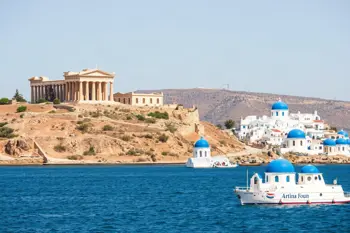
Domestic flights can reduce transit time between Athens and islands such as Santorini, Rhodes, and Corfu, while island-to-island ferries often provide the most direct geographic connection within the Cyclades. One documented ten-day route uses a morning Santorini to Naxos fast ferry lasting about 90 minutes, followed by departure from Naxos by ferry or direct flight. Transport schedules are seasonal, making timetable verification essential. 7
Mainland alternatives and inland history
A mainland-focused ten-day itinerary can combine Athens, Argolida, Delphi, and Meteora before adding an island segment. Argolida commonly includes Mycenae, Epidaurus, and Nafplio. Delphi contributes an archaeological site and museum in a mountain setting, while Meteora is known for Byzantine monasteries positioned among distinctive rock formations. This route offers more historical and geographic variety than an itinerary devoted entirely to the Cyclades. 4
Meteora is accessible by train from Athens, with Kalambaka serving as the practical base described in itinerary research. A typical sequence includes arrival, a sunset viewpoint, a monastery visit the following day, and onward travel. Combining Meteora with Santorini in seven days is possible but logistically heavy because it may require a train, an overnight stay, and a later flight. The route is therefore more suitable for travelers prioritizing inland history. 6
Seasonality, costs, and travel constraints
May, June, September, and early October are repeatedly identified as favorable planning periods. These shoulder-season months are associated with more moderate conditions and reduced crowd pressure compared with July and August, which research describes as especially hot and overcrowded. Swimming conditions are generally identified as strongest from late May through mid-October, although local weather and sea conditions remain variable. 3
Published itinerary estimates place a mid-range eight-to-ten-day trip at approximately US$1,500 to US$2,400 per person, excluding international flights, while luxury planning can exceed US$5,000. Other packaged itinerary references begin around €1,200 for seven days and €1,700 for ten days, illustrating how route design, accommodation category, transport, and guided activities affect totals. These figures are general estimates, not live prices or guarantees. 3
Booking, entry, and risk considerations
The Acropolis may use timed entry, and research advises advance reservation because peak-season daily capacity can sell out days ahead. Ferry and accommodation availability also becomes more constrained during high summer, while taxis on Santorini are limited and may require advance arrangement. These conditions create market friction even when a route appears simple, particularly when multiple ports, flights, and check-in dates are combined. 3
Travelers must also confirm entry requirements according to nationality, passport validity, and Schengen rules. United States citizens are described as needing a valid passport for travel within the Schengen Area, but requirements can change and should be checked through current government guidance. Crete requires special pacing because its size and concentration of sites, including Knossos, commonly justify five to seven days rather than a brief add-on. 8
Sources
- SantoriniDave.com, Greece Itinerary
- Travel With Hello, Greece in 10 Days
- Packzup, 10-Day Greece Itinerary
- FindToursIn, Greece 10-Day Itinerary
- Miles and Flavors, 12-Day Greece Itinerary
- National Geographic, Meteora Monasteries
- Aegean Airlines, Greece Destinations
- U.S. Department of State, Greece Travel Information