
Train tours along the Amalfi Coast: A route and logistics report
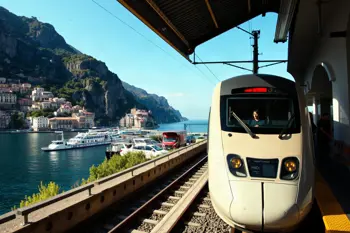
A private day trip to Positano and the Amalfi Coast by high-speed train typically means traveling from Rome to a rail gateway, then continuing toward the coast by ferry, road transfer, or both. The arrangement is designed to connect Rome with Positano and Amalfi in a single long day while replacing much of the slowest road travel with high-speed rail and coastal boat journeys.1
How train access to the Amalfi Coast works
The Amalfi Coast itself has no direct railway along its towns because the mountainous shoreline is formed by steep cliffs and limited buildable terrain.6 As a result, train tours do not usually end in Positano or Amalfi. Instead, rail travel reaches an inland or peripheral gateway, after which travelers transfer to ferries, buses, private cars, or local road services.
Salerno is the principal high-speed rail gateway described in the research. Trenitalia and Italo connect Salerno with major Italian cities, including Rome and Milan, making the station a practical starting point for boat connections toward the coast.712 Sorrento is another important access point, but reaching it normally involves travel from Naples on the Circumvesuviana railway or the seasonal Campania Express service rather than a direct train from Rome to the coastal towns.89
Rome to Salerno by high-speed train
The Rome-to-Salerno format is prominent in several documented day tours. One itinerary describes a roughly 11-hour experience using round-trip high-speed rail, a ferry from Salerno, an English-speaking escort, and visits to Positano and Amalfi.2 Another itinerary similarly describes a one-hour cruise from Salerno to Positano, time for town exploration, lunch, a later stop in Amalfi, and a return cruise to Salerno.
The principal logistical advantage is the division between fast rail and scenic coastal travel. A train covers the long inland distance, while the ferry provides views of cliffs, villages, and shorelines that are less visible from an enclosed vehicle.3 The research also identifies guided train-to-pier transfers as a feature of some small-group itineraries, reducing the need for visitors to coordinate the station, port, ferry departure, and return rail connection independently.
What a full-day itinerary may include
Documented schedules vary, but the common pattern is an early meeting at Roma Termini, high-speed rail toward southern Italy, a transfer to a port, and boat travel along the coast. One small-group itinerary lists a 7 a.m. meeting at Termini, travel toward Naples, a driver connection to Piano di Sorrento, and embarkation for a coastal boat journey.4 The route then includes views of Marina Grande and visits to Positano and Amalfi.
Other itineraries begin and end at Rome Termini without hotel pickup. A listed meeting point is inside the station near the shopping area facing track one, where a representative identifies the departure group.3 The exact meeting procedure, train departure, port transfer, and return connection therefore matter as much as the headline destinations. A day lasting approximately 11 to 13 hours can contain several separate transport stages, leaving limited tolerance for delays.
Comparing ferry, bus, and private-car connections
Ferries are frequently used between Salerno, Positano, and Amalfi because they combine transportation with broad coastal views. The documented ferry-based tours emphasize cruising between towns, swimming or snorkeling on some boat formats, and viewing places such as Minori, Maiori, Cetara, and Ravello from the water.34 Boat seating may not be assigned, so passengers seeking an unobstructed view may need to consider where they sit when boarding.
Road connections remain essential because not every destination is served by a pier at every time of day. SITA buses provide the principal public ground transport between coastal towns such as Positano, Amalfi, and Ravello after rail travel ends.10 Private-car tours use a different model: a driver can meet travelers at Naples after a train journey and continue through Positano, Amalfi, and Ravello, with town visits conducted independently rather than as continuous guided walks.5
Tour formats and documented differences
The supplied tour data shows several distinct formats rather than one standard train tour. A private Rome departure lists a 12-hour duration, hotel pickup and drop-off, second-class return rail tickets between Roma Termini and Napoli Centrale, and ferry tickets as part of the transport plan.1 A separate Rome-to-Salerno itinerary lists approximately 11 hours, a maximum group size of 18, guided connections, and separate periods for orientation and independent exploration.
Smaller boat-focused groups can run longer, with one documented option lasting 13 hours and limiting the group to 12 passengers.4 Its outline includes swimming, snorkeling, and a boat-based happy hour, while another review describes approximately 2.5 hours in Positano and 1.5 hours in Amalfi on a train-and-ferry day trip.42 These differences affect pace, physical stamina, time in each town, and exposure to changing sea conditions.
Risks, seasonal constraints, and planning checks
Weather is a material operational risk for ferry-centered itineraries. Rough conditions can change boat times, shorten a stop, or alter the return arrangement, even when rail departures remain on schedule.2 Rail delays create a separate risk because a late arrival can reduce the time available for port transfers and coastal visits. The combination of fixed train departures and variable maritime operations makes the day less flexible than a stay based entirely in one coastal town.
Travelers assessing any itinerary should verify the actual rail gateway, meeting point, included transport, group size, duration, and contingency arrangements. Public buses can be affected by road congestion, while ferry services depend on sea conditions and operating schedules. The broader transport guidance describes the region as a train-to-Salerno-or-Sorrento-then-bus system, with ferries serving as an important alternative to limited rail and road infrastructure.111314 The Campania tourism portal is also identified as a regional source for transport information.15
Who this travel structure suits
A train-and-ferry day trip suits visitors who want to connect Rome with the coast without spending the entire outbound journey on coastal roads. The documented itineraries provide access to both Positano and Amalfi, combine guided transitions with town exploration, and use the sea journey as part of the sightseeing experience.2 This format is particularly concentrated, however, because transport, port access, walking, sightseeing, and the return to Rome all occur within one day.
It is less appropriate for travelers seeking an unhurried beach stay, extensive time in Ravello, or complete independence from fixed departures. Positano contains steep and narrow streets, and coastal boat schedules can change with weather. The central practical question is therefore not simply whether a train reaches the Amalfi Coast, but whether the traveler prefers a structured sequence of rail, road, and maritime connections over a slower overnight itinerary based near the coast.
Sources
- Gray Line Rome, Private Day Trip to Positano and Amalfi Coast by High-Speed Train
- Explore Amalfi Coast, Amalfi Coast Day Trip from Rome by High-Speed Train
- Travel Network, Amalfi Coast and Scenic Day Trip from Rome by High-Speed Train
- Travel Network, Positano and Amalfi Small Group Boat Tour from Rome with Fast Train
- Through Eternity, Day Trip to the Amalfi Coast from Rome
- Rick Steves Europe, Amalfi Coast
- Trenitalia, Official Rail Information
- EAV Campania, Regional Railway Information
- Visit Sorrento, Campania Express Information
- SITA Sud, Regional Bus Information
- Lonely Planet, Amalfi Coast Travel Information
- Italo Treno, High-Speed Rail Information
- Travel Amalfi, Coastal Transport Information
- Italy Heaven, Amalfi Coast Transport Guidance
- Visit Campania, Regional Tourism and Transport Information