
Train tours across the Copper Canyon: A Technical Analysis of Logistics and Regional Geography
Train tours across the Copper Canyon represent one of the most complex engineering and logistical feats in North American rail transport, traversing the rugged topography of the Sierra Madre Occidental in Mexico 4. The region, known as Barrancas del Cobre, comprises a network of six distinct canyons that span roughly 65,000 square kilometers, with depths and dimensions that significantly exceed those of the Grand Canyon in Colorado 3, 7. Understanding the mechanics of these tours requires a clear distinction between the dedicated tourist rail services and the local transport systems that historically supported the region.
The Dual Rail System: Express vs. Regional Services
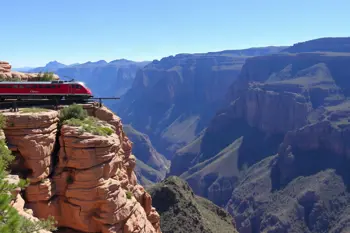
The primary transit mechanism for visitors is the Chepe Express, a dedicated tourist-class railway that links Los Mochis in Sinaloa to Creel in the state of Chihuahua 3. This service operates on a fixed schedule, typically running three to four times per week in each direction, and is specifically engineered to provide panoramic viewing capabilities through specialized window configurations 5. The route covers approximately 350 kilometers and involves traversing an intricate system of 86 tunnels and 37 bridges, showcasing the challenging mountain terrain required to connect the coastal lowlands to the high-altitude plateau 4, 5.
Conversely, the Chepe Regional service serves a functional role for local Rarámuri communities and residents in towns lacking consistent road access 5. Unlike the Express, which prioritizes tourist comfort with dining cars and lounge access, the Regional service utilizes more basic carriages with bench-style seating and follows a less predictable timetable 5. Travelers selecting between these options must weigh the necessity for curated, amenities-focused travel against the requirement for an authentic, local transit experience that stops at numerous minor intermediate stations 5.
Geographic and Operational Logistics
The journey involves significant shifts in elevation, transitioning from near sea level in Los Mochis to altitudes exceeding 2,400 meters in the Sierra Tarahumara within a few hours of transit 3, 5. This rapid elevation change dictates much of the climate experience, moving from the hot, subtropical conditions of Sinaloa to the cooler, mountain environment of the Chihuahua plateau 3, 8. Given this transition, logistical planning regarding acclimatization is frequently noted by industry analysts as a critical factor for travelers starting from the Pacific coast and moving inland toward the higher mountain ranges 3.
Infrastructure at key transit points such as Divisadero is built to accommodate concentrated visitor volume, serving as the primary hub for canyon overlooks and proximity to adventure infrastructure 4, 8. The strategic placement of stations allows for multi-day itineraries, which experts suggest are necessary to fully traverse the region's depth. Rather than a singular point-to-point transit, successful excursions usually involve scheduled stops at locations such as El Fuerte, Bahuichivo, and Creel, allowing for regional exploration before continuing the journey 4, 8.
Classifications of Service and On-Board Experience
The Chepe Express categorizes its service into three distinct tiers, each influencing the overall journey experience. The Tourist class offers standard amenities, including access to a dedicated dining car, which serves as a baseline for most international visitors 3, 5. The Executive class provides a higher density of service with fewer passengers per carriage, while the First class tier includes premium seating, inclusive meals, and exclusive access to a terrace carriage designed for unimpeded landscape observation 3.
| Service Tier | Feature Set |
|---|---|
| Tourist | Panoramic windows, dining car access, standard seating |
| Executive | Premium seating, lower capacity per car, included snacks |
| First | Pullman-style seats, full meals, exclusive terrace, beverage service |
These service levels are operational choices that dictate the physical comfort of the nine-hour transit. Because the route crosses remote terrain, the consistency of these services is contingent on the maintenance of the railway line itself, a massive engineering project that requires ongoing upkeep to ensure safety and schedule reliability across the 37 bridges and 86 tunnels that define the corridor 5.
Regional Hubs and Accessibility
Gateways for these tours are primarily located in Los Mochis and Chihuahua City, both of which serve as the essential entry points for regional transit 3, 7. Travelers often utilize air connections to these cities before transferring to rail stations. In Los Mochis, the train station is located approximately 30 minutes from the city center in the area of Sufragio, requiring additional ground transport to facilitate the connection 3. Planning for these connections requires rigorous attention to timing, as missing the early morning departure of the Chepe Express can necessitate an unplanned overnight stay 3.
Creel, the major mountain hub, provides access to the Sierra atmosphere and serves as a base for exploring local sites such as Lake Arareco and the Jesuit missions 2, 3. The integration of road transport for side trips-such as visiting the valley of the monks or traveling to Batopilas-is a common component of comprehensive itineraries, illustrating the reliance on a hybrid model of rail and private or group ground transport to access the more remote sectors of the canyon system 2, 6.
Regulatory Oversight and Safety Considerations
International travelers considering these routes are advised to consult current government travel advisories for northern Mexico 4, 10. While the tourism infrastructure along the rail line remains focused on visitor experience, the surrounding geography is vast and remote, necessitating standard travel risk management 4, 10. Documentation requirements, including valid passports and necessary entry permits for Mexico, are mandatory prerequisites for all foreign nationals intending to use these services 10.
Operational reliability remains subject to environmental conditions and infrastructure demands. Because the rail line is a vital conduit for both commerce and community life in the Sierra Madre, service disruptions, while uncommon, are handled through established institutional protocols 5. Visitors are generally encouraged to finalize their itineraries through official, verified channels and to confirm booking conditions directly with the operator to avoid reliance on third-party aggregators that may lack real-time access to the rail system’s internal scheduling updates 5.
Summary of Planning Requirements
Successful engagement with the Copper Canyon rail system requires a 3-to-5-day minimum window to account for the transit time and regional exploration 7. Travelers should prioritize booking directly through the authorized railway portal to secure specific carriage classes and departure dates. Given the varied topography and high-altitude transitions, physical preparation for elevation and the selection of seasonal travel dates-which influence both the climate and the operational schedule of the train-are essential planning components 3, 4.
Ultimately, the value of the experience lies in the combination of technical rail transit and access to the cultural landscapes of the Rarámuri communities 4. By balancing the logistical constraints of the rail network with the time-intensive requirements of canyon exploration, visitors can achieve a structured view of the Barrancas del Cobre system. Accurate expectations regarding the duration of transit and the necessity for supplemental ground transport in remote areas remain the primary factors in ensuring a consistent experience during any visit to this northern Mexican region 5, 7.
Sources
- Chepe: Official Rail Service Information (https://chepe.mx/)
- Civitatis: Chepe Express 3-Day Tour Details (https://www.civitatis.com/en/chihuahua/chepe-express-tour-creel-copper-canyon/)
- RutasMéxico: 2026 Guide to Chepe Express and Copper Canyon (https://rutasmexico.com.mx/en/blog/chepe-express-barrancas-cobre-guia)
- HeyMondo: Copper Canyon Planning Guide (https://heymondo.com/blog/copper-canyon-mexico/)
- The Mexico Guides: El Chepe Railway and Copper Canyon Overview (https://www.themexicoguides.com/things-to-do/copper-canyon-railway/)
- Journey Mexico: 9-Day First Class Railway Adventure (https://journeymexico.com/itinerary/9-day-first-class-copper-canyon-railway-adventure-on-el-chepe/)
- Mexico Travel and Leisure: Copper Canyon 2026 Analysis (https://www.mexicotravelandleisure.com/blog/copper-canyon-mexico/)
- Euronews: Rail Travel and Cultural Diversity in Chihuahua (https://www.euronews.com/travel/2026/04/14/chepe-express-a-train-journey-through-mexicos-natural-and-cultural-diversity)
- Mexico Cassie: Documentation and Booking Logistics (https://mexicocassie.com/how-to-book-copper-canyon/)
- U.S. Department of State: Mexico International Travel Information (https://travel.state.gov/content/travel/en/international-travel/International-Travel-Country-Information-Pages/Mexico.html)