
Best Hospitals for Cardiac Care by State in the United States: A Data-Based Guide to Comparing Heart Programs
People researching the best hospitals for cardiac care by state in the United States will find that no single ranking measures every heart service in the same way. Recent evaluations emphasize outcomes, procedure volume, patient experience, safety, and specialty scope, so a hospital recognized for cardiac surgery may not be the strongest option for electrophysiology, heart failure, or interventional cardiology.
How cardiac-care rankings are constructed
U.S. News evaluated nearly 500 heart hospitals for its 2026-2027 cardiology, heart and vascular surgery ranking. The review covered eight cohorts: abdominal aortic aneurysm repair, aortic valve surgery, heart arrhythmia, coronary artery bypass surgery, heart attack, heart failure, pacemaker implantation, and transcatheter aortic valve replacement. An initial pool of 665 hospitals was narrowed to 488 after minimum procedure-volume requirements and a transfer-pattern review designed to identify major referral centers. 1
The scoring approach also gives different weight to different measures. Survival represented 45% of the U.S. News score in the cited state and national reports, with the remaining components including discharge-to-home rates, readmission prevention, and patient experience. A separate report on the updated rankings states that 41 risk-adjusted patient outcomes accounted for 80% of the score, illustrating why the edition and methodology should always be identified before comparing facilities. 2
- Cardiology and heart surgery rankings cover multiple conditions rather than one procedure.
- Cardiac-care awards may emphasize outcomes in bypass surgery, coronary intervention, valve surgery, heart attack, and heart failure.
- Accreditation programs evaluate participation in structured quality-improvement and registry activities.
State leaders identified in the U.S. News snapshot
The available U.S. News state report identifies one leading high-performing heart hospital for each listed jurisdiction and provides a total score. The reported examples range from 48.5 to 83.1. California had 20 facilities classified as high performing in cardiology care, while New York had 10, making them the states with the largest counts in that report. These figures describe the number of recognized facilities, not a complete measure of all cardiac services available in either state. 1
| State or district | Hospital identified | Reported score |
|---|---|---|
| Alabama | University of Alabama at Birmingham Hospital | 56.1 |
| Alaska | Providence Alaska Medical Center, Anchorage | 56.2 |
| Arizona | Mayo Clinic-Arizona, Phoenix | 72.0 |
| Arkansas | Washington Regional Medical Center, Fayetteville | 48.5 |
| California | Cedars-Sinai Medical Center, Los Angeles | 83.1 |
| Colorado | Intermountain Health Saint Joseph Hospital, Denver | 63.0 |
| Connecticut | Hartford Hospital | 61.4 |
| Delaware | ChristianaCare Hospitals | 48.5 |
| District of Columbia | MedStar Heart and Vascular Institute | Not stated in supplied excerpt |
Hospitals appearing near the top nationally
National rankings provide another way to compare hospitals across state lines, particularly for complex surgery, transplant, structural-heart treatment, and advanced vascular care. Newsweek’s 2026 specialized-care cardiac list placed Mayo Clinic in Rochester first, Massachusetts General Hospital’s Corrigan Minehan Heart Center second, Cleveland Clinic third, NYU Langone Hospital-Tisch fourth, and Johns Hopkins Hospital fifth. The list describes standout areas such as coronary angioplasty and stent placement, bypass surgery, valve surgery, and heart transplant. 3
| Hospital | Location | National position reported |
|---|---|---|
| Mayo Clinic | Rochester, Minnesota | U.S. News No. 3; Newsweek No. 1 |
| Massachusetts General Hospital | Boston, Massachusetts | Newsweek No. 2 |
| Cleveland Clinic | Cleveland, Ohio | U.S. News No. 8; Newsweek No. 3 |
| NYU Langone Hospitals | New York City, New York | U.S. News No. 1 |
| Johns Hopkins Hospital | Baltimore, Maryland | Newsweek No. 5 |
| Cedars-Sinai Medical Center | Los Angeles, California | U.S. News No. 4 |
The U.S. News national list reported NYU Langone Hospitals at 97.5, NewYork-Presbyterian Hospital-Columbia and Cornell at 89.9, Mayo Clinic at 83.3, Cedars-Sinai at 83.1, Mount Sinai Hospital at 82.6, Massachusetts General Hospital at 81.5, Northwestern Memorial Hospital at 80.9, and Cleveland Clinic at 80.3. Rankings can change when the methodology changes, so scores should not be treated as permanent grades. 4
What Healthgrades adds to state comparisons
Healthgrades uses a different framework centered on clinical outcomes across common cardiac procedures and conditions. Its 2026 Cardiac Care Excellence evaluation considered heart bypass surgery, coronary interventional procedures, heart valve surgery, heart attack, and heart failure after reviewing about 4,500 hospitals across 31 procedures and conditions. Florida had 11 hospitals on the Healthgrades 100 Best Hospitals for Cardiac Care list, the highest number for any state in the cited report. 5
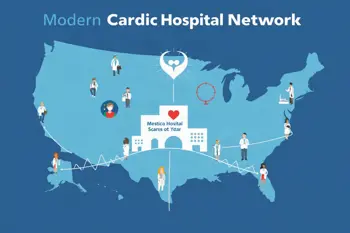
- Arizona: HonorHealth Scottsdale Shea Medical Center and Mayo Clinic Hospital in Phoenix.
- California: Cedars-Sinai, Stanford Hospital, UC Davis Medical Center, UC San Diego Health Hillcrest, UCSF Helen Diller Medical Center, Mills-Peninsula Medical Center, and Providence Holy Cross Medical Center.
- Connecticut: Danbury Hospital, Hartford Hospital, and Yale New Haven Hospital.
- Florida: facilities listed included AdventHealth Daytona Beach, AdventHealth Orlando, Cleveland Clinic Hospital in Weston, Mayo Clinic in Florida, Sarasota Memorial Hospital, and Orlando Health Orlando Regional Medical Center.
- Georgia: Piedmont Hospital and Wellstar Kennestone Regional Medical Center.
Healthgrades also separates cardiac care, cardiac surgery, cardiology, and coronary intervention state rankings. The organization reports cardiac-care recognition in 14 eligible states, cardiac-surgery recognition in seven, cardiology recognition in 23, and coronary-intervention recognition in 10, meaning a state may appear in one category but not another. 6
Quality designations and clinical specialization
The American College of Cardiology HeartCARE Center designation is not a conventional national rank. It recognizes hospitals and health systems participating in at least two ACC Accreditation Services programs, National Cardiovascular Data Registry activities, and targeted quality-improvement initiatives. The supplied report lists 100 HeartCARE Centers, including hospitals in California, Colorado, Delaware, Florida, Georgia, Illinois, Indiana, and other states. 7
Specialty scope matters because cardiac care includes distinct clinical pathways. Cedars-Sinai is described as providing cardiology, cardiac surgery, electrophysiology, and transplant-related services. Cleveland Clinic’s Heart, Vascular and Thoracic Institute covers integrated heart and vascular care, while Massachusetts General Hospital’s Heart Center includes cardiology, cardiac surgery, and vascular services. These institutional descriptions establish service breadth, but they do not by themselves prove that one facility is appropriate for every diagnosis. 8
How to interpret results before choosing a hospital
A state leader may be a useful starting point, but the relevant comparison depends on the condition and treatment. A person needing valve replacement may need a hospital with substantial valve and transcatheter experience, while someone with an irregular heartbeat may need electrophysiology and pacemaker expertise. For advanced heart failure, transplant capability and coordinated specialty services may be more relevant than a general cardiology score. The supplied research identifies Duke University Hospital, UPMC Heart and Vascular Institute, and Texas Heart Institute as prominent regional options, but the available rankings do not establish a universal winner for every patient. 9
- Confirm that the hospital treats the specific condition or procedure involved.
- Review outcome, safety, readmission, patient-experience, and procedure-specific information through Medicare Care Compare.
- Check whether a recognition applies to cardiac care, cardiac surgery, cardiology, or coronary intervention.
- Consider referral requirements, travel, follow-up care, rehabilitation, and emergency transfer arrangements.
Limitations, oversight, and practical risks
Rankings are analytical tools rather than clinical instructions. Eligibility thresholds can exclude lower-volume hospitals that still provide appropriate local care, while referral-center checks can favor institutions receiving complex cases. Scores may also combine different procedures and conditions, making direct comparisons difficult when two hospitals serve different patient populations. Medicare Care Compare, Leapfrog safety ratings, ACC quality programs, and hospital-specific outcome reports can provide additional context, but each source uses its own definitions, reporting periods, and eligibility rules. 10
Patients should also account for regulatory and operational realities. Cardiac programs must maintain staffing, technology, accreditation, registry participation, and quality-improvement processes over time. Insurance networks, authorization rules, transfer logistics, specialist availability, and continuity of care can affect access even when a hospital has a prominent ranking. A clinician’s assessment remains necessary because hospital-level statistics cannot capture every individual risk, comorbidity, urgency, or treatment preference.
Sources
- Becker’s Cardiology, “The top heart hospitals by state: US News,” https://www.beckerscardiology.com/cardiology/the-top-heart-hospitals-by-state-us-news/
- Cardiovascular Business, “The best hospitals in the United States for heart care,” https://cardiovascularbusiness.com/topics/patient-care/care-delivery/best-hospitals-united-states-heart-care
- Newsweek, “Cardiac Care,” https://rankings.newsweek.com/americas-best-hospitals-for-specialized-care-2026/cardiac-care
- Becker’s Cardiology, “50 best hospitals for cardiology, heart and vascular surgery,” https://www.beckerscardiology.com/cardiology/50-best-hospitals-for-cardiology-heart-and-vascular-surgery/
- Becker’s Cardiology, “Top 100 hospitals for cardiac care: Healthgrades,” https://www.beckerscardiology.com/cardiology/top-100-hospitals-for-cardiac-care-healthgrades/
- Healthgrades, “The Best U.S. Hospitals for Cardiology in 2026,” https://b2b.healthgrades.com/insights/blog/the-best-cardiology-hospitals-in-2026/
- Becker’s Cardiology, “The only 100 hospitals to earn ACC’s highest heart care designation,” https://www.beckerscardiology.com/cardiology/the-only-100-hospitals-to-earn-accs-highest-heart-care-designation/
- Massachusetts General Hospital, “Heart Center,” https://www.massgeneral.org/heart-center
- General research sources, including Duke Health, Texas Heart Institute, and UPMC Heart and Vascular Institute
- Medicare Care Compare, https://www.medicare.gov/care-compare/