
itinerary travel to France: A Practical Route and Planning Report
Choosing a Trip Length and Route
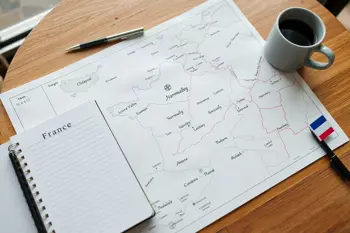
A seven-day France itinerary is most manageable with two main bases rather than several rapid transfers. One documented route uses three days in Paris, a Versailles day trip, and four days in Lyon with Annecy as a day trip, while another recommends four nights in Paris followed by three nights in Provence. 1
Ten days allow a broader circuit, but the regions should still be selected carefully. One plan combines four days in Paris with the Loire Valley and Provence, while another uses Paris, two nights in the Loire Valley, three nights in Provence, and a final morning in Marseille. A separate route adds the French Riviera, including Nice and Èze, but requires an internal flight or a return through Paris. 2
| Trip length | Documented structure | Main character |
|---|---|---|
| 7 days | Paris plus Lyon, Provence, or the Loire | Focused and comparatively measured |
| 10 days | Paris plus two or three regions | Broad highlights with more transfer pressure |
| 12 days | Paris, Loire Valley, Bordeaux, and Paris | Châteaux, wine culture, and urban heritage |
| 14 days | Paris, Lyon, Avignon, Nice, and day trips | Culture, food, Provence, and the Riviera |
Paris as the First Base
Paris generally deserves three or four full days in a first-time itinerary. Suggested areas include the Eiffel Tower and Trocadéro, the Louvre, Tuileries Garden, the Seine, Notre-Dame and Île de la Cité, Montmartre, Sacré-Cœur, the Marais, Saint-Germain-des-Prés, and the Latin Quarter. The historic banks of the Seine are listed by UNESCO as a World Heritage property encompassing important central landmarks and riverfront areas. 3
Daily plans should group nearby sights instead of treating the city as a checklist. A documented sequence places the Louvre in the morning, followed by the Tuileries, the Champs-Élysées, and Arc de Triomphe; another combines Montmartre with Musée d’Orsay. Louvre entry should be arranged ahead through its official visitor information, and Eiffel Tower ticket and opening details should also be checked before assigning a timed visit. 4
Normandy and the Loire Valley Extensions
Normandy is a strong two-day extension for travelers interested in D-Day sites, coastal scenery, and historic towns. The practical transport pattern described in the research is to use trains for Paris and the Paris-to-Normandy leg, then consider a car around Bayeux or Caen for rural areas. Normandy Tourism provides regional planning information for coastal destinations, historical locations, cultural attractions, and accommodations. 5
The Loire Valley offers a different two-day extension centered on châteaux and surrounding towns. Documented itineraries mention Tours, Chenonceaux, Chambord, Cheverny, Amboise, château gardens, and Loire wine experiences. A 12-day route assigns Paris to Days 1 through 4, Tours to Days 5 and 6, Bordeaux to Days 7 through 10, and a final Paris return. Loire Valley Tourism supplies information on local châteaux, towns, activities, and lodging areas. 6
Provence, Lyon, and the French Riviera
Provence and the Riviera provide a southern contrast to Paris and northern France. A 14-day route uses Lyon for Days 5 through 7, Avignon for Days 8 through 10, and Nice for Days 11 through 14, with Annecy, Arles, and Cannes as day trips. Another 10-day plan travels from Avignon toward Nice and schedules Èze and Monaco. These sequences combine historic cities, markets, Mediterranean scenery, and coastal destinations. 7
Lyon can replace Provence when food culture and city life are priorities. The documented Lyon route includes Vieux Lyon, a bouchon lunch, the Presqu’île, Les Halles, the Musée des Confluences, and riverside walks, with Annecy as a scenic day trip. In Provence, Avignon functions as a rail-connected base, while Marseille provides an alternative departure point and access to the wider Mediterranean area. 8
Transport, Timing, and Regional Friction
High-speed rail is generally the most efficient way to connect Paris with major French cities. The research gives approximate journey times of just over two hours from Paris to Bordeaux, roughly two hours from Paris to Avignon, about two hours and thirty minutes from Paris to Avignon on one route, and about one hour and forty minutes from Paris to Lyon on the fastest trains. SNCF Connect provides route planning, schedules, and ticket booking. 9
Transport becomes less straightforward outside major urban corridors. Rural Normandy, the Dordogne, and inland Provence may require a car, creating rental, parking, navigation, and one-way return complications. One planning source cites a mid-size car estimate of €40 to €60 per day and advises checking TGV fares several weeks ahead, with advance fares beginning at €19 compared with €80 or more on the day. These figures are planning references, not guaranteed current prices. 3
Entry Rules, Costs, and Practical Risk Controls
Entry eligibility depends on nationality, travel purpose, and length of stay, so travelers should consult France’s official visa portal before departure. U.S. travelers should also review the France country page maintained by the U.S. Department of State for entry, safety, health, and transportation information. These official sources are more authoritative than itinerary articles when rules or local conditions change. 10
Published trip estimates vary by traveler profile and origin. One source gives Indian-traveler estimates of approximately ₹90,000 to ₹1.5 lakh for budget travel, ₹1.8 lakh to ₹3 lakh for mid-range travel, and ₹4 lakh or more for luxury travel over ten days; its seven-day estimates range from ₹65,000 to ₹1.05 lakh for budget travel and ₹1.3 lakh to ₹2.1 lakh for mid-range travel. Airfare, accommodation, admissions, meals, currency changes, and regional transfers create substantial variation. 1
Operational risks include overloading a short itinerary, missing timed museum entries, underestimating walking distances, and scheduling a long transfer immediately after an international arrival. A Paris day in one plan involves more than 12 kilometers of walking. Practical controls include leaving recovery time on arrival, grouping attractions geographically, carrying some euros for small cafés, bakeries, markets, and local shops, and saying “Bonjour” before asking staff for assistance. 4
Sources
- destination.com, “10 Days in France: Paris, the Loire, and Provence”
- FranceTravel.wiki, “France Itinerary: 7 Days Across Paris and Beyond”
- Love France, “10 Days in France: Paris + Regions Complete Guide”
- Packzup, “France 10-Day Itinerary 2026”
- Normandy Tourism
- Loire Valley Tourism
- MyTripBlueprint, “France itinerary 14 days”
- Marseille Tourism
- SNCF Connect
- France-Visas and U.S. Department of State France country information