
Sophisticated Mid-Length Styles for Every Occasion: A Practical Editorial Analysis
Why Mid-Length Cuts Remain Adaptable
Mid-length hair occupies a practical middle ground between short and long styling. A collarbone-length blunt cut creates a clean, polished outline that can appear sleek in formal settings or textured for more relaxed occasions. The shape relies on a strong perimeter, so the finish looks intentional even when the styling is relatively simple. This makes the cut suitable for people who want visible structure without committing to a very short silhouette. 1
A shoulder-length lob offers a broader styling range than its precise shape may suggest. It can be worn straight, wavy, curled, tucked behind the ears, or gathered into a ponytail, giving the wearer several presentation options without the maintenance demands associated with very long hair. Its versatility also allows the same haircut to move between professional, social, and informal settings through changes in texture and accessories. 2
Blunt Lines and Lobs for Polished Occasions
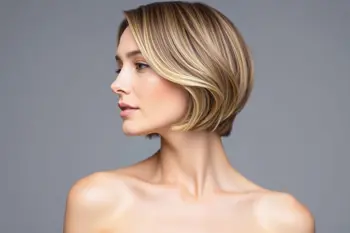
Blunt lines are particularly effective when the desired result is controlled and minimalist. A sleek finish emphasizes the geometry of the cut, while a smooth blowout can soften the outline by adding curved ends. Shoulder-grazing bobs and lobs are frequently included among adaptable medium-length shapes because they retain enough length for variation while maintaining a visually deliberate profile. The most suitable version depends on preferred styling time, natural texture, and the amount of movement wanted. 3
Formal styling can be created without changing the haircut itself. A deep side part combined with a smooth blowout gives a more structured impression, while a center part with natural texture produces a less formal interpretation of the same length. A flat iron can support a straight, pared-back finish, whereas a round brush can create lift and curved ends. These differences demonstrate how parting and tools influence presentation as much as the haircut. 4
Layers and Face-Framing Details
Long layers introduce movement and can help medium-length hair hold soft waves. Their placement should reflect the wearer’s density and styling goals. Excessive layering may reduce the appearance of fullness in fine hair, while carefully distributed layers can prevent thicker hair from looking visually heavy. Layering therefore involves a structural trade-off between motion and density, rather than a universally flattering formula that works identically for every head of hair. 5
Face-framing layers can be adjusted to emphasize the cheekbones, jawline, or collarbone. They may be styled away from the face for a refined finish, or left with natural texture for a softer effect. The versatility of this detail comes from its position around the front of the haircut, where small changes in length and direction alter the visual focus without requiring a major reduction in overall length. 6
Work, Weddings, and Evening Styling
Low buns, low ponytails, and half-up arrangements are practical choices when medium-length hair needs to remain controlled. These styles work across office settings, weddings, dinners, and other occasions because they contain the hair while preserving the shape and proportion of the cut. A low placement generally maintains a restrained appearance, while a half-up arrangement leaves enough hair visible to show layers, waves, or a polished perimeter. 7
Medium-length hair also supports braids, textured ponytails, and compact updos when a more distinctive finish is appropriate. Styling can be adjusted through the degree of smoothness, the placement of the part, and the use of subtle accessories. Barrettes and headbands can add visual definition without altering the haircut. The key distinction between an everyday and formal result is often refinement of finish rather than complexity of construction. 8
Texture, Accessories, and Occasion Matching
Soft waves provide movement while preserving the manageable scale of a mid-length cut. Polished ends can make the same wavy shape appear more intentional, whereas natural texture creates a more relaxed impression. Medium-length styling guidance commonly includes waves, sleek finishes, ponytails, braids, and other variations because the length can support both loose and gathered arrangements. Choosing among them should account for the occasion, clothing neckline, desired formality, and tolerance for restyling. 9
Accessories are most effective when they complement rather than compete with the haircut. A simple barrette can secure one side of a deep part, while a headband can organize volume around the crown. A polished low ponytail may suit a work environment, and a textured half-up style may provide a softer result for dinner or a social event. These choices preserve the haircut’s central proportions while changing its visual emphasis. 10
Heat, Trims, and Long-Term Maintenance
Heat protectant should be applied before blow-drying, curling, or straightening because repeated high-heat styling can contribute to hair damage. Gentle care practices and reduced exposure to excessive heat are recommended for minimizing preventable damage. This is especially relevant for blunt cuts and precision layers, where split or weakened ends can make the intended outline appear less controlled. A sophisticated result therefore depends on hair condition as well as styling technique. 6
Regular trims help maintain the intended shape of blunt cuts, bobs, lobs, and precision layers. Maintenance needs vary according to how exact the perimeter or face-framing sections are meant to remain. People selecting a style should consider natural texture, hair density, daily styling time, and willingness to schedule upkeep. A cut that looks polished in a reference image may require ongoing shaping and careful heat practices to retain the same effect. 1
Sources
- Vogue
- Allure
- Glamour
- Byrdie
- Harper’s Bazaar
- American Academy of Dermatology
- Cleveland Clinic
- John Frieda
- L’Oréal Paris
- TRESemmé