
7-day cruise to Mexico: An itinerary and documentation report
The phrase “7-day cruise to Mexico” generally describes an approximately one-week sailing from a U.S. port, with routes differing substantially between the Pacific and Caribbean coasts. Documented Mexican Riviera itineraries from Los Angeles commonly include Cabo San Lucas, Mazatlán, and Puerto Vallarta, while Caribbean routes may feature Cozumel or Costa Maya alongside other regional destinations. 2
How Mexican cruise routes are organized
Los Angeles is a major gateway for Pacific itineraries to Mexico. A Princess Royal Princess sailing recorded a Los Angeles departure followed by Cabo San Lucas, Mazatlán, Puerto Vallarta, and two sea days before returning to California. 8 A Royal Caribbean itinerary sold through Times Holidays followed the same broad three-port pattern, with Cabo on day three, Mazatlán on day four, and Puerto Vallarta on day five. 4
Not every seven-night voyage uses the same sequence or ports. Virgin Voyages documented a round trip from Los Angeles with a sea day, Cabo San Lucas, La Paz, Mazatlán, and two additional sea days before arrival back in Los Angeles. 3 Another Virgin itinerary described San Diego, an overnight stay in Cabo San Lucas, and two sea days, demonstrating that overnight calls and California stops can alter the usual Mexican Riviera format. 7
Representative day-by-day patterns
A typical three-port Mexican Riviera schedule begins with embarkation in Los Angeles, followed by a full day at sea. Cabo San Lucas often appears next, followed by Mazatlán and Puerto Vallarta on consecutive days, then two sea days before disembarkation. The Princess itinerary listed Cabo from noon to 8 p.m., Mazatlán from 9 a.m. to 6 p.m., and Puerto Vallarta from 8 a.m. to 5 p.m. 8
Timing varies enough that port-day planning requires attention to the individual sailing rather than reliance on a generic route. Virgin’s documented itinerary reached Cabo from 2 p.m. to 9 p.m., La Paz from 8 a.m. to 5 p.m., and Mazatlán from 9:30 a.m. to 5 p.m. 3 A Sunway listing for Navigator of the Seas identified a seven-night route including Ensenada, Cabo, and Mazatlán, with departure from Los Angeles on September 4, 2026. 6
Pacific ports and shore-time considerations
Cabo San Lucas, Mazatlán, Puerto Vallarta, La Paz, and Ensenada represent distinct itinerary choices rather than interchangeable stops. The documented schedules show that Cabo may be a shorter afternoon and evening call, while La Paz and Mazatlán may provide daytime access. 3 The Princess itinerary also listed shore activities connected with Los Angeles, Puerto Vallarta, Mazatlán, and Cabo San Lucas, including beach, city, family, and sightseeing options. 8
Port logistics create practical friction. A cruise passenger must account for the ship’s stated all-aboard time, local time changes, tendering or terminal procedures when applicable, and the possibility that an excursion returns late. The supplied Virgin itinerary instructed passengers to be aboard one hour before departure and noted that disembarkation could take up to an hour after arrival in Los Angeles. 3 These details make independently timed activities more complex than a land-based visit.
Caribbean alternatives from U.S. ports
Seven-day Mexico cruises are not limited to the Pacific coast. General destination information identifies Miami, Galveston, and Fort Lauderdale among common U.S. departure areas, while Caribbean itineraries frequently combine Cozumel and Costa Maya with Belize, Honduras, or the Bahamas. 10 Cozumel is identified as one of Mexico’s principal cruise destinations and has infrastructure and visitor services designed for cruise passengers. 13
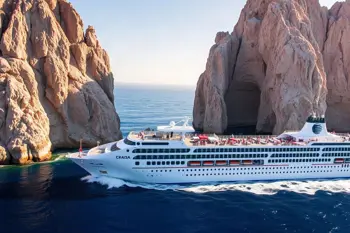
PortMiami is a major embarkation point for Western Caribbean voyages, and the Port of Galveston publishes passenger information for Caribbean cruise services. 17 18 The route from Miami is therefore materially different from a Los Angeles Mexican Riviera sailing: it may involve the Caribbean side of Mexico, different weather and sea-day patterns, and a separate airport, transfer, and port-planning process.
Ships, facilities, and fare inclusions
Shipboard facilities vary by vessel and line. Carnival Firenze’s documented profile includes Italian-themed dining and bars, multiple restaurants, theater entertainment, a market, a burger venue, and a private-deck concept associated with Terrazza staterooms. 2 Holland America’s itinerary page lists venues and activities including World Stage, Rolling Stone Lounge, a fitness center, movies on demand, pickleball, casino access, several bars, and specialty dining such as Pinnacle Grill. 1
Standard cruise fares generally cover the cabin, main dining, selected entertainment, and access to ship facilities, but gratuities, drinks, shore excursions, specialty restaurants, and internet may be additional charges. 10 The Royal Princess information specifically identified breakfast, lunch, dinner, water, juice, coffee, tea, shows, and ship facilities as included, while listing Crown Grill, Chef’s Table Lumiere, Gelato, Ocean Terrace, and Sabatini’s as additional-cost venues. 8
Documentation, health, and operational risks
U.S. citizens returning to the United States by sea from Mexico generally need a passport or another document compliant with the Western Hemisphere Travel Initiative. 14 Requirements can differ by nationality and itinerary, so passengers should verify current Mexican entry rules, passport validity expectations, and any transit requirements with official authorities before departure. The U.S. Department of State’s Mexico information page provides current guidance on passports, entry, safety, and travel conditions. 15
Health preparation is another eligibility and risk issue. Travelers should review current CDC cruise-health guidance as well as the cruise line’s medical and vaccination policies, because public-health requirements and onboard procedures can change. 16 Additional operational risks include missed embarkation caused by flight delays, lost documentation, seasickness, restricted mobility during port calls, and itinerary changes caused by weather or port conditions. The supplied research does not establish a universal remedy for these disruptions.
How to compare a seven-day itinerary
The most useful comparison begins with the departure port, not the ship name. Los Angeles routes typically emphasize Cabo San Lucas, Mazatlán, Puerto Vallarta, La Paz, or Ensenada, while Miami-based routes may focus on Cozumel, Costa Maya, and nearby Caribbean destinations. 2 10 The number of Mexican ports, length of each call, overnight stays, and number of sea days determine how much time is available ashore.
Ship characteristics should then be matched to the traveler’s priorities. Royal Princess is documented with a capacity of 3,560 guests, a crew of 1,346, a length of 1,083 feet, and gross tonnage of 141,000. 8 Virgin’s Brilliant Lady is listed with 2,770 passengers and 1,150 crew, and it was launched in 2025. 5 Such figures describe scale, but they do not replace checking cabin location, accessibility, dining structure, cancellation terms, port transport, and medical arrangements.
Sources
- Holland America Line, 7-Day Mexican Riviera Cruise Itinerary
- Carnival Cruise Line, 7-Day Mexican Riviera from Los Angeles
- Virgin Voyages, 7 Nights Mexican Riviera Cruise
- Times Holidays, 7 Night Mexican Riviera Cruise
- Global Journeys, Mexican Riviera Cruise, Virgin Voyages
- Sunway, 7 Night Ensenada, Cabo and Mazatlán
- Global Journeys, Mexican Riviera and Cabo Overnight
- Cruisebound, 7 Night Mexico Cruise on Royal Princess
- Global Journeys, Mexico, Belize and Perfect Day
- General research summary on seven-day Mexico cruise patterns and inclusions
- Norwegian Cruise Line, Mexico Cruises
- Princess Cruises, Mexico Cruises
- Cozumel Parks, official tourism information
- U.S. Customs and Border Protection, Western Hemisphere Travel Initiative
- U.S. Department of State, Mexico International Travel Information
- Centers for Disease Control and Prevention, Cruise Ship Travel
- PortMiami, Cruise Information
- Port of Galveston, Cruise Information