
Train tours along the Rhine Valley: An Analytical Overview of Regional Rail Connectivity
The Rhine Valley, particularly the stretch known as the Upper Middle Rhine, serves as a primary corridor for rail-based tourism in Germany, connecting major metropolitan centers with medieval landscapes 1. Navigating this region requires an understanding of the intersection between regional transit systems, historical geography, and the integration of river-based excursions 2. Travelers often utilize the Mittelrheinbahn, a regional rail network that facilitates connectivity between major nodes like Cologne, Koblenz, Bingen, and Mainz 3.
Geographic Scope and Infrastructure
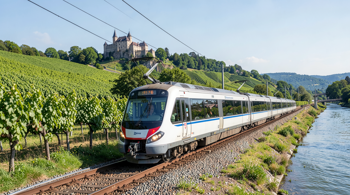
The core of the Rhine Valley tourist experience centers on the UNESCO World Heritage area, which spans approximately 65 kilometers between Bingen, Rudesheim, and Koblenz 4. Rail infrastructure in this region is unique because tracks are positioned on both the left and right banks of the river, providing distinct vantage points for passengers 5. The left-bank line is typically favored for its higher frequency of passenger services and direct access to historically significant towns such as Bacharach, St. Goar, and Boppard 6. These stations act as primary gateways for travelers looking to explore the surrounding castle-topped hills and vineyard landscapes 7.
Operational Logistics and Scheduling
Planning a rail-based tour of the Rhine Valley requires careful attention to regional transport schedules and seasonal operational adjustments 8. The primary regional operator, the Mittelrheinbahn, manages services that make it logistically practical for independent travelers to create flexible itineraries 9. Trains on the route from Cologne to Mainz run for roughly 180 kilometers, with a standard travel time of approximately 2.5 to 3 hours for the full transit when no transfers are involved 10. It is standard practice to consult the official Deutsche Bahn journey-planning platforms to verify engineering works and timetable shifts that occur throughout the year 11.
Integrating Rail and River Excursions
A distinctive feature of Rhine Valley travel is the ease with which rail itineraries integrate with river-based transit 12. Major towns such as Koblenz, Boppard, St. Goar, and Rudesheim possess railway stations located in close proximity to river cruise docks 13. This proximity allows travelers to combine rail transit with short-duration boat cruises, which provide a perspective of the Loreley Rock and various medieval ruins that may be obscured from the train carriage window 14. Companies such as Kln-Dsseldorfer operate these cruise services, offering a functional complement to the land-based rail journey 15.
Historical and Cultural Context
The Rhine Valley is characterized by its legacy as a vital trade route since Roman times, which necessitated the construction of over 40 castles in the 12th to 14th centuries 16. These structures were initially designed to facilitate the collection of tolls and defense, but they eventually became the foundation of 19th-century Rhine Romanticism, a cultural movement championed by figures such as Goethe and Heine 17. Today, the region retains this historical aesthetic, with landmarks like Rheinstein Castle and the Niederwald Monument drawing significant interest from international travelers 18.
Considerations for Multi-Day Planning
For visitors structuring longer trips, the Rhine Valley often functions as a component of a wider European journey, with platforms like Eurail offering resources for integrating these stops into larger rail passes 19. When booking, travelers encounter a spectrum of service levels, ranging from self-guided regional rail hopping to escorted rail holidays that include curated accommodation and pre-arranged sightseeing activities 20. Professional tour operators, such as Great Rail Journeys, provide structured packages that handle the logistics of hotel placement and regional transfers for those seeking a more managed travel experience 21.
Seasonal Constraints and Travel Tips
The optimal period for rail-based exploration of the Rhine Valley is generally from spring through early autumn 22. During these months, the infrastructure supporting regional tourism, including river excursions and site access at local monuments, operates at peak capacity 23. Visitors should account for the fact that some smaller riverside amenities may follow restricted schedules during the winter season 24. Furthermore, checking local fare rules and maintaining mobile or paper tickets remains an essential aspect of navigating the German regional rail system efficiently 25.
Sources
- UNESCO World Heritage Centre: Upper Middle Rhine Valley
- Germany Travel: Rhine Valley Destination Guide
- MittelrheinBahn: Regional Passenger Services
- UNESCO World Heritage Centre (whc.unesco.org)
- Rick Steves Europe: Rhine Valley Travel Logistics
- Eurail: Suggested Scenic Rail Itineraries
- Romantic Rhine Tourism: Regional Trip Planning
- Deutsche Bahn: Official Journey Planner
- MittelrheinBahn Operator Documentation
- Regional Rail Transit Analysis: Cologne-Mainz Corridor
- Deutsche Bahn Official Timetable Resources
- Kln-Dsseldorfer Deutsche Rheinschiffahrt
- Romantic Rhine Tourism Regional Data
- Kln-Dsseldorfer Cruise Information
- Kln-Dsseldorfer Operations Overview
- Euro Travelo: Rhine Valley History Analysis
- Euro Travelo: 1.5-Hour Boat Tour Documentation
- Euro Travelo: Regional Landmark Overview
- Eurail: European Rail Itinerary Planning
- Great Rail Journeys: Rhine Valley Holiday Packages
- Great Rail Journeys: Organized Rail Travel Logistics
- Regional Tourism Analysis: Seasonal Operation Metrics
- Romantic Rhine Tourism: Peak Schedule Information
- byFood: Rhine Valley Seasonal Trip Considerations
- Deutsche Bahn: Fare and Ticketing Rules