
Modern Interior Design Tips for Apartments: A Professional Framework for Functional Living
Modern interior design for apartments involves a delicate balance between maximizing limited square footage and maintaining a cohesive, sophisticated aesthetic 4. Successfully styling a compact urban residence is not about filling space, but rather shaping it through intentional, functional choices that merge practicality with contemporary elegance 2. By focusing on structural lines, strategic spatial planning, and deliberate material selection, individuals can transform standard apartment layouts into curated, livable environments 7.
Foundational Principles of Modern Spatial Planning
Before initiating any decorative changes, the fundamental layout of the apartment must be evaluated to ensure optimal flow and utility. In modern apartment design, furniture should be arranged to preserve clear walkways and maintain open sightlines, which prevents a room from feeling psychologically cramped 2. Pushing larger furniture pieces against walls or using floating furniture can help maintain a sense of openness throughout the unit 2, 4.
For open-plan layouts, defining distinct zones for living, dining, and working is essential to prevent visual chaos. Professionals often utilize area rugs to delineate these functional zones without the need for physical barriers, which helps maintain the architectural integrity of the floor plan 6. Strategic use of negative space is equally important; keeping surfaces clear of excess clutter allows the room to breathe, adhering to the core minimalist principle that every piece should serve a specific, intentional purpose 4, 8.
Establishing a Cohesive Color and Texture Palette
A well-curated modern apartment relies on a restrained color foundation to create a sense of harmony and visual expansion. A common strategy involves using a single dominant neutral tone for approximately 60% of the room, followed by 30% in a secondary accent shade, and 10% for high-contrast finishes such as brushed brass or matte black iron 3. Utilizing warm whites, soft charcoal, or greige provides a timeless base that remains versatile regardless of shifting interior design trends 6.
Beyond color, modern design emphasizes the layering of textures rather than an over-reliance on patterns, which can quickly feel overwhelming in smaller footprints 3. Combining disparate textures, such as nubby boucle fabrics, smooth natural woods, and matte-finished ceramics, adds visual depth and richness to a space 5, 6. This tactile approach ensures that the environment feels warm and personal rather than cold or sterile, even when adhering to a strictly neutral, minimalist framework 1, 5.
Strategic Furniture Selection for Limited Square Footage
In modern apartment living, furniture serves as both a structural anchor and a functional utility tool. The primary objective is to select streamlined silhouettes that command attention without dominating the physical volume of the room 7. Bulky or heavily ornamented furniture should be avoided in favor of pieces with exposed legs, which allow more of the floor to be visible, creating the illusion of greater spatial depth 1, 9.
Multi-functional furniture is a critical component for apartments where every square inch must be earned. Examples include ottomans with hidden internal storage, daybeds that function as both seating and guest sleeping quarters, and streamlined coffee tables with integrated shelving 1, 2, 7. Investing in a few high-quality, durable foundational pieces, such as a well-constructed sofa in a neutral tone, often provides better long-term value than purchasing multiple smaller, trendy items that may lack structural integrity 6.
Optimizing Lighting and Vertical Storage
Lighting plays a transformative role in the perception and warmth of an interior environment. Replacing cold, high-kelvin overhead bulbs with warmer color temperatures is often the most impactful change a resident can make, as lighting temperature significantly affects the perceived coziness of a home 5. Implementing a layered lighting scheme that incorporates ambient, task, and accent fixtures allows for greater control over the atmosphere throughout the day 4, 5.
For storage, the most efficient solution is to leverage vertical space. Wall-mounted shelving units and tall storage cabinets keep the floor area clear, which is vital for maintaining an organized and open flow in high-density dwellings 4, 10. Furthermore, mirrors should be positioned strategically to reflect natural light and views, effectively doubling the perceived depth of an apartment room while simultaneously increasing its overall luminosity 2, 4.
Refining the Aesthetic with Curation
Modern design often incorporates statement elements to provide character, yet these must be curated with extreme care to avoid clutter. Rather than populating shelves with many small decorative items, designers recommend using a single, large-scale piece of artwork or a unique statement accessory to establish a focal point 5, 10. This approach ensures that the room appears sophisticated and intentionally designed rather than filled with disorganized remnants 3.
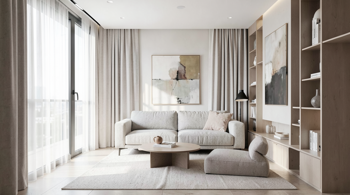
Renter-friendly adjustments often rely on removable solutions, such as installing tension-rod curtains to manage natural light or utilizing modular furniture that can be easily reconfigured. When selecting window treatments, sheer curtains are preferred, as they provide necessary privacy while allowing light to penetrate and fill the space, which is critical for making compact urban apartments feel significantly more spacious and airy 1, 8.
Maintenance and Long-Term Design Realities
Maintaining a modern, minimalist apartment requires ongoing commitment to organization. A common friction point is the tendency for surfaces to accumulate personal items, which can quickly disrupt the clean lines that define the contemporary style 7. Regular decluttering, where items are evaluated for their continued utility and visual contribution, is an essential practice for those living in limited residential environments 8.
It is also important to recognize the limitations imposed by rental agreements or standard builder layouts. Many apartments lack custom built-ins or high-end architectural features, meaning residents must rely on portable storage and mobile furniture to mimic high-end design principles 3. By prioritizing quality over quantity and adhering to a consistent, neutral-based color scheme, it is possible to achieve a modern, cohesive look that remains timeless even within the constraints of a standard rental unit 3, 6.
Sources
- Planner 5D: How to Style a Modern Apartment
- Human Home: Modern Apartment Decor Guide
- Keadecor: Apartment Decorating and Renter-Friendly Hacks
- Stellaresidence: Modern Apartment Interior Design 2026
- Decorbeam: 11 Apartment Decor Inspiration Cozy Modern Tips
- Courtney Decoration: Modern Apartment Decor Ideas That Stay Timeless
- The Karighars: Modern Apartment Decor Guide
- Engineers and Architects of America: How to Style Your Apartment with Minimalist Decor
- Real Simple: Small Space Decorating Tips
- The Spruce: Small Apartment Storage Ideas