
Lower Back Pain vs. Sciatica: Understanding the Key Differences
Pain in the lower back is an incredibly common ailment, affecting millions of people. However, not all lower back pain is the same. Two frequently confused terms are general lower back pain and sciatica. Distinguishing between them is crucial because it points to different underlying causes and influences the most effective ways to find relief.
What Constitutes General Lower Back Pain?
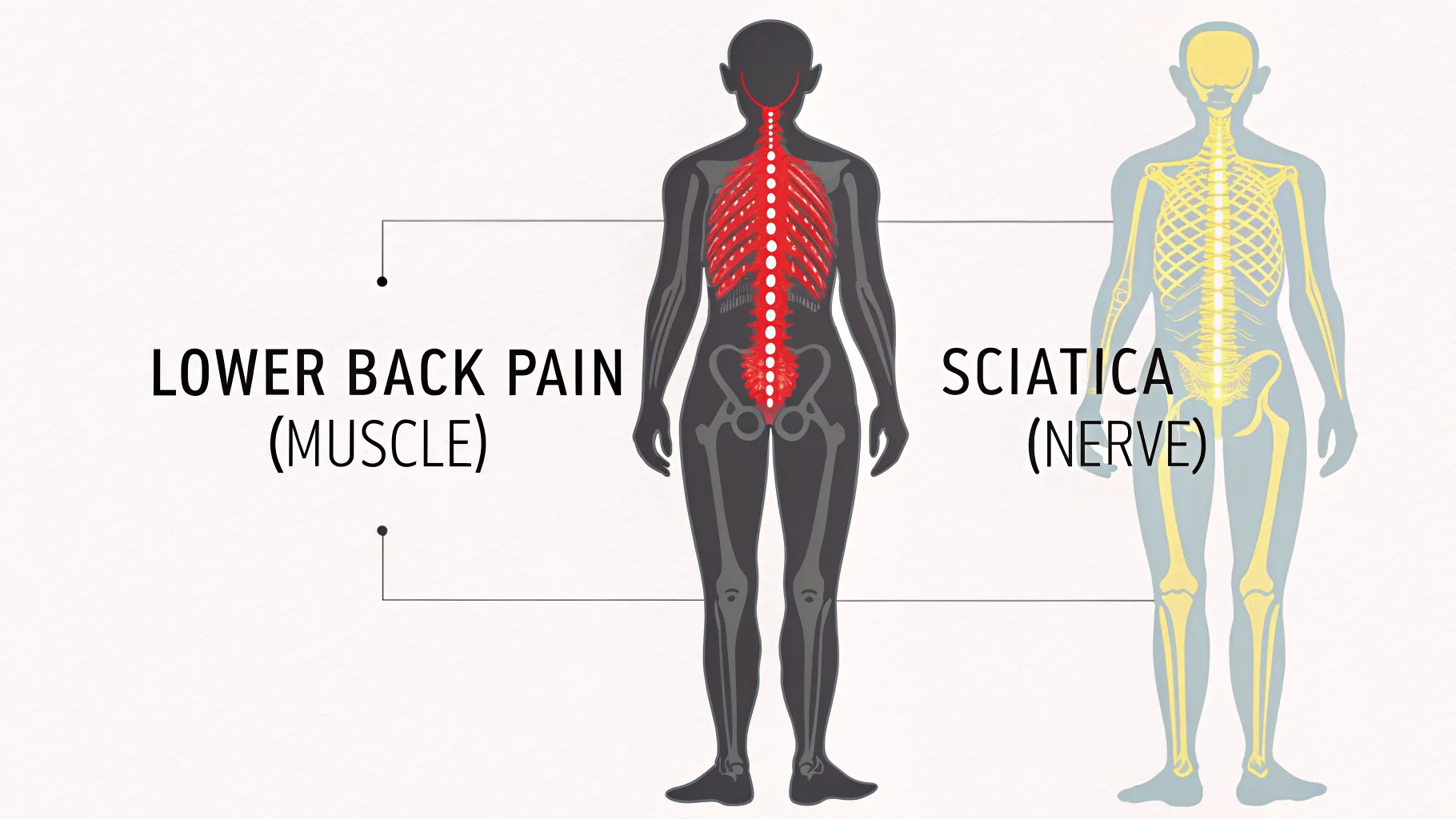
General lower back pain, often referred to as lumbago, is discomfort or soreness located specifically in the lumbar region of the spine. This area supports most of the upper body's weight, making it susceptible to strain and injury. The pain is typically mechanical in nature, meaning it relates to the moving parts of the back: the muscles, ligaments, and bones.
This type of pain is usually localized. You might feel a dull ache, stiffness, or a sharp, acute pain contained within your lower back area. It often worsens with certain movements like bending or lifting and may feel better with rest. The most common culprits are muscle or ligament strains from overexertion, poor posture, or sudden awkward movements.
Understanding Sciatica
Sciatica is not a diagnosis in itself but rather a symptom of an underlying medical issue. It specifically refers to pain that results from irritation or compression of the sciatic nerve. The sciatic nerve is the longest and thickest nerve in the body, originating in the lower back and running down through the buttocks and into each leg.
When something presses on or irritates this nerve, it can cause a distinct set of symptoms along the nerve's path. Unlike general back pain that stays in one area, sciatica is characterized by pain that radiates. This is the key distinction; the problem originates in the lower back, but the pain is felt elsewhere.
Symptom Comparison: Location and Sensation
The primary way to tell the difference is by carefully observing the location and nature of the pain. General lower back pain is typically confined to the area between the bottom of your rib cage and your buttocks. It might feel like a constant ache or a spasm that comes and goes.
Sciatic pain, on the other hand, almost always affects only one side of the body. The pain starts in the lower back or buttock and travels down the back of the thigh, potentially reaching the calf or foot. Sufferers often describe sciatica as a sharp, shooting, or burning sensation. It can also be accompanied by other neurological symptoms like numbness, tingling, or muscle weakness in the affected leg or foot.
Contrasting the Common Causes
The triggers for each type of pain often differ significantly. Understanding the cause is fundamental to determining the right course of action for management and relief.
Common causes of general lower back pain include:
- Muscle or ligament strains from heavy lifting or sudden movements.
- Poor posture over long periods, such as sitting at a desk.
- Arthritis, which can cause joint inflammation in the spine.
- Structural issues like scoliosis.
Sciatica is almost always caused by nerve compression. The most frequent causes are:
- A herniated or slipped spinal disc that presses on the nerve root.
- Spinal stenosis, a narrowing of the spinal canal that can impinge on the nerve.
- Piriformis syndrome, where the piriformis muscle in the buttock spasms and irritates the sciatic nerve.
- Spondylolisthesis, a condition where one vertebra slips forward over another.
How Diagnosis Differs
A medical professional will typically begin the diagnostic process with a physical examination and a review of your medical history. For general back pain, a doctor will often assess your range of motion and palpate the area to identify the source of the tenderness. In most cases of simple muscle strain, imaging tests are not necessary.
When sciatica is suspected, the examination is more specific. A doctor may perform tests like the straight leg raise, where you lie on your back while the doctor lifts your straightened leg. This maneuver can stretch the sciatic nerve, and if it reproduces the radiating pain, it is a strong indicator of sciatica. If the cause of the nerve compression is unclear or symptoms are severe, imaging tests like an MRI or CT scan may be ordered to get a detailed view of the spine and discs.
Approaches to Treatment and Management
Treatment strategies are tailored to the specific condition. For acute, general lower back pain from a muscle strain, conservative care is usually effective. This often includes short-term rest, applying ice or heat, gentle stretching, and using over-the-counter anti-inflammatory medications.
Treating sciatica involves addressing the underlying cause of the nerve compression. Physical therapy is a cornerstone of treatment, focusing on exercises that can relieve pressure on the nerve. Medications may be prescribed to reduce inflammation and pain. For persistent cases caused by issues like a significant herniated disc or severe spinal stenosis, a doctor might discuss more advanced options.