
Plan a scuba diving trip to Fiji's Great Astrolabe Reef
Planning a scuba diving trip to Fiji's Great Astrolabe Reef means committing to one of the most remote and ecologically intact reef systems in the South Pacific. Unlike the polished resort corridors of Denarau or the Mamanuca Islands, Kadavu Island operates on a different rhythm entirely, one shaped by tides, boat schedules, and a barrier reef structure so large it defines the entire southern coastline of the island group.
The Great Astrolabe Reef: Scale, Structure, and Global Standing
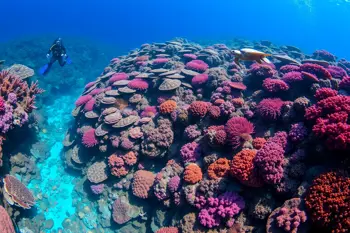
The Great Astrolabe Reef stretches over 100 kilometers along the southern coast of Kadavu Island, making it the fourth-largest barrier reef in the world. 1 It takes its name from the French exploration vessel Astrolabe, which struck the reef during the 1820s in an incident associated with explorer Jules Dumont d'Urville. 2 The reef system encloses channels, passages, and lagoon environments around the Kadavu island group, creating a layered underwater landscape of walls, bommies, drop-offs, and sheltered coral gardens. The total reef area covers over 15,000 hectares, and its coral formations support a reported 1,000-plus species of fish and more than 300 coral species. 3 On global reef ranking indices, the Astrolabe Reef sits at position 13 of 114 reefs rated, placing it ahead of Jackson Reef and behind Palmyra Atoll Reef in terms of composite scoring. 4
Fiji as a whole holds the informal title of Soft Coral Capital of the World, a description attributed to oceanographer Jacques Cousteau, and the nutrient-rich currents that sustain the Astrolabe Reef are central to that reputation. 5 Visibility at the reef regularly ranges between 25 and 30 meters during optimal conditions, and water temperatures hold between 24 degrees Celsius in winter and 29 degrees Celsius in summer year-round. 6 Because Kadavu is Fiji's least-visited major island, reef sites experience minimal boat traffic, which conservation surveys link to the overall health of coral coverage across the system.
Seasonal Timing and Dive Conditions
The dry season running from May through October represents the most reliable window for a scuba diving trip to Fiji's Great Astrolabe Reef. 7 Visibility peaks during July through October, with recorded underwater sightlines reaching 25 to 30 meters on many outer reef sites. 8 The winter months of August through October also tend to bring calmer surface conditions, which matters given Kadavu's exposure to open-ocean swell on the southern reef edge. Manta ray sightings at known cleaning stations are most reliably reported from May through October, which overlaps neatly with the dry-season visibility window.
The wet season from November through April brings warmer water temperatures and generally softer coral colors, but also increased rainfall, reduced visibility, and a higher probability of cyclonic weather affecting flight schedules and boat operations. Diving remains technically possible year-round, but travelers planning around a short trip window should weigh the risk of lost dive days against the logistical reality that domestic flight schedules to Kadavu are limited and do not always allow flexible rebooking.
Getting to Kadavu: Flights, Transfers, and Logistics
Access to Kadavu requires a domestic flight from Nadi International Airport to Vunisea Airport on the island, with flight times of approximately 45 minutes from Nadi or 30 minutes from Suva. 9 These domestic connections are operated on small aircraft with limited seat availability, and schedules can change. Booking domestic flights well in advance and confirming current connections is essential rather than assuming a daily service. From Vunisea, a boat transfer of between 10 and 60 minutes reaches individual resorts depending on location, as there is no road network circling the island. 10
For international travelers arriving from the United States, total travel time to Fiji from the West Coast typically runs 17 to 18 hours including connections through Pacific hubs. 11 US citizens receive a four-month visitor visa on arrival and require only a valid passport. 12 The absence of road infrastructure on Kadavu means that all movement between resorts, villages, and reef sites happens by boat, which contributes directly to the remote character of the experience but also adds a logistical layer that requires careful coordination with chosen accommodation providers before arrival.
Accommodation Options and Dive Operations
Most divers base themselves at small eco-focused resorts located on the southern shores of Kadavu or on Ono Island, both of which provide direct boat access to the primary reef sites. 13 Resorts in the north of Kadavu offer more modern facilities and access to a different set of sites, while properties in the south focus specifically on the untamed Great Astrolabe Reef. Accommodation on Kadavu is intentionally intimate, with properties typically running between a handful and around twenty rooms, and many are locally operated. One documented example is Mai Dive Astrolabe Reef Resort on Ono Island, which is run by local Fijians and offers dive access to reef sites including cleaning stations for eagle rays and seasonal manta ray aggregations. 14
A two-tank dive day at most Fiji operators is priced between FJD 220 and FJD 280, equivalent to roughly USD 100 to 125. 15 For non-certified divers, PADI Discover Scuba introductory dives run between FJD 250 and FJD 350 at most resort operators. 16 All major dive operators across Fiji are PADI or SSI affiliated, and safety standards are described as high by industry sources. A minimum of PADI Open Water certification or an equivalent qualification is required for guided reef dives; outer passages with strong currents and blue-water exposure are generally matched to advanced certifications by responsible operators. 17
Marine Life and Dive Site Variety
The reef system supports a documented range of marine habitats across lagoon sites, outer passages, drop-offs, and sheltered coral gardens. 18 Key species encounters reported by divers and operators include manta rays at seasonal cleaning stations, hawksbill sea turtles, eagle rays, reef sharks, and a broad spectrum of reef fish exceeding 300 identified species. 19 Pelagic species including tuna appear on the outer reef, and the Astrolabe's hard coral coverage is consistently cited as a distinguishing feature compared to Fiji's more famous soft coral regions further north. The reef also features a shipwreck, the Satitoa, off Kadavu, which adds wreck diving to the range of available site types. 20
Site selection on any given day depends heavily on tidal conditions, wind direction, and a diver's certification level. Operators match divers to conditions using local knowledge accumulated over years of daily boat operations. Sheltered inner lagoon sites can suit less experienced divers, while the outer passages require comfort with current and some level of blue-water exposure. Visitors should be transparent with their dive operators about logged dives and recent experience, as conditions can change significantly within a single tidal cycle.
Planning Realities, Risks, and Practical Considerations
Several friction points distinguish a Kadavu dive trip from a more accessible Fiji destination. Domestic flight schedules are limited and subject to change, meaning a missed connection or weather cancellation can eliminate dive days with little recourse. The lack of road infrastructure makes independent movement between sites impossible; all logistics depend on boat coordination through the chosen resort. Internet connectivity and mobile coverage are minimal or absent at many properties, which affects communication before and during the trip. 21
Travelers should also consider the physical demands of multi-day reef diving in a remote location. Decompression illness management requires evacuation to a hyperbaric facility, and the nearest such facilities are on the main island of Viti Levu, adding urgency to the case for conservative dive profiles and adequate surface intervals. Dive travel insurance that explicitly covers emergency medical evacuation is recommended by most industry sources for any remote Pacific reef destination. Finally, Kadavu's village communities operate within traditional Fijian cultural protocols, including the sevusevu ceremony for visiting villages, and travelers are expected to approach local culture with awareness and respect.
Sources
- fijitours.com.au - Exploring Fiji's Barrier Reef: Guided Boat Tours to the Great Astrolabe Reef
- lunoo.com - Astrolabe Reef Overview and FAQ
- travelandtourworld.com - Explore Fiji's Kaleidoscopic Coral Reefs and Thrilling Marine Diversity
- lunoo.com - Astrolabe Reef Ranking Position
- scubadivingindustry.com - A Group Dive Guide to Fiji by David Prichard and Lily Mak
- fijidream.co.jp - Fiji Scuba Diving: Ultimate Guide for Every Diver
- farandawayadventures.com - The Best Marine Adventures in Kadavu, Fiji
- hideawayfiji.com - Scuba Diving in Fiji: Complete Guide to Sites, Operators and Trip Planning
- myfijistay.com - Kadavu Island Fiji: A Refined Guide to Fiji's Wild Luxury Frontier
- fijitravelpro.com - Diving in Kadavu: What You Need to Know
- US State Department - International Travel Country Information: Fiji
- US State Department - International Travel Country Information: Fiji
- myfijistay.com - Kadavu Unscripted: Fiji's Least Visited Major Island
- global.almosafer.com - Mai Dive Astrolabe Reef Resort, Ono Island
- hideawayfiji.com - Scuba Diving in Fiji: Complete Guide to Sites, Operators and Trip Planning
- hideawayfiji.com - Scuba Diving in Fiji: Complete Guide to Sites, Operators and Trip Planning
- lunoo.com - Astrolabe Reef FAQ: Suitability for Beginner Divers
- lunoo.com - Astrolabe Reef: Coral Formations and Marine Life
- travelandtourworld.com - Explore Fiji's Kaleidoscopic Coral Reefs and Thrilling Marine Diversity
- all.accor.com - A Guide to the Best Scuba Diving Sites in Fiji
- myfijistay.com - Kadavu Unscripted: Fiji's Least Visited Major Island