
Best time to visit Fiji for sunny weather and clear waters
Travelers planning a South Pacific escape consistently ask the same question: when does Fiji actually deliver the turquoise lagoons and cloudless skies seen in photographs? The answer is grounded in a well-defined two-season climate system that separates comfortable, sun-drenched conditions from humid, storm-prone months. Understanding this split is the foundation of any informed Fiji itinerary, whether the priority is snorkeling visibility, beach stability, or simply predictable sunshine. 1
Fiji's Two Seasons: The Climate Framework
Fiji operates on a tropical maritime climate with two dominant patterns rather than four distinct seasons. The dry season runs from May to October, while the wet season spans November to April. 2 Average daytime temperatures remain fairly consistent year-round, generally sitting between 26°C and 31°C, meaning the primary variable between seasons is not temperature but rather rainfall, humidity, and cloud cover. 3 This distinction matters enormously for travelers focused on sunny skies and clear water, since a cloudy, humid day in the wet season can suppress both surface conditions and underwater visibility even without a formal storm.
Geographic position within the archipelago also influences conditions independently of the season. The western side of Fiji's main islands, including the area around Nadi, is generally drier and sunnier. The eastern side, including Suva, is greener and more humid due to trade wind patterns. 3 Travelers who specifically want maximum sunshine should factor island and coastal orientation into their planning alongside seasonal timing.
Dry Season (May to October): Peak Conditions for Sun and Visibility
The dry season is broadly recognized across multiple travel and climate sources as the optimal window for sunny weather and clear water in Fiji. During these months, southeast trade winds keep humidity lower, skies clearer, and rain events shorter and less frequent. Rainfall during peak dry season months can range from a light 60 to 120mm per month, compared to over 300mm in the wettest wet-season periods. 4 These conditions translate directly into better snorkeling and diving visibility, with underwater clarity on many sites reaching 100 feet or more during the driest months. 5
Water temperatures during the dry season sit at approximately 77°F to 81°F (25°C to 27°C), which many divers actually prefer for longer sessions with appropriate exposure protection. 6 Sea conditions are generally calmer during this window, supporting island-hopping, kayaking, sailing, and sustained beach time without the disruption of afternoon thunderstorms. The dry season is also when manta rays gather in the Yasawa Islands, adding a distinct wildlife dimension to the timing decision for divers and snorkelers. 7
Month-by-Month Breakdown: Where the Data Points
Within the dry season, not all months perform equally. Climate scoring data rates June and July as the top-performing months, each receiving a 7.7 out of 10 climate score, followed closely by May and August at 7.6. 8 July and August deliver average temperatures around 26°C (79°F) with minimal rain, and rainfall is typically limited to 4 to 8 days in the month, with most showers brief. 9 Fiji Airways CEO Paul Scurrah identified July specifically as the ideal month for Australians, citing sunny days, cooler temperatures, and lower humidity as conditions suited to both beach holidays and outer island exploration. 10
| Month | Season | Climate Score (out of 10) | Key Conditions |
|---|---|---|---|
| January–February | Wet | 4.9 / 4.8 | Hottest, highest humidity, cyclone risk peak |
| March | Wet | 4.8 | Worst-rated month; heavy rain, rough seas possible |
| April | Transition | 7.5 | Rainfall tapering; improving conditions |
| May–June | Dry | 7.6 / 7.7 | Dry season onset; lower humidity, clear skies |
| July–August | Dry (Peak) | 7.7 / 7.6 | Most stable; best visibility and sunshine |
| September–October | Dry / Shoulder | 7.6 / 7.5 | Softer crowds; still reliable dry conditions |
| November–December | Wet onset | 7.3 | Humidity rising; cyclone season begins |
Shoulder Months: May and October as Strategic Alternatives
For travelers seeking a balance between reliable weather and reduced peak-season pressure, May and October function as the most strategically viable shoulder months. Both sit within the dry season calendar but outside the July-to-August peak, when accommodation prices can rise 30 to 50 percent above off-peak rates and popular resorts fill rapidly. 4 May and October typically offer average temperatures of 25°C to 29°C, excellent water clarity for aquatic activities, and fewer visitors at beaches and dive sites. 11
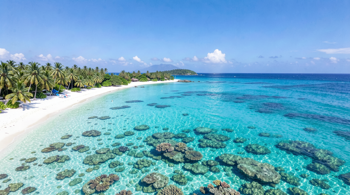
October specifically offers additional cultural value: Fiji Day celebrations, lovo feasts, the Uprising music festival, and Diwali fireworks all fall within or adjacent to this month. 12 May, by contrast, benefits from lush post-wet-season landscapes while conditions are already drying out and trade winds are establishing their seasonal pattern. Both months represent a practical entry point for travelers whose schedules are flexible enough to avoid the July-August peak entirely.
Wet Season (November to April): Risks, Realities, and Residual Appeal
The wet season delivers higher humidity, heavier afternoon rainfall, warmer sea temperatures reaching up to 86°F (30°C), and meaningfully reduced water clarity at many dive sites. 5 January through March represents the wettest period, with rainfall totals sometimes exceeding 300mm per month on windward island sides. 4 Critically, cyclone season in Fiji runs from November through April, with the highest risk concentrated in December to March. Cyclone Winston in 2016, a Category 5 storm, caused 44 fatalities and resulted in widespread infrastructure disruption, illustrating the realistic upper bound of wet-season risk. 8
Wet-season travel is not without legitimate appeal for specific traveler profiles. Landscapes are greener and more dramatic, sea temperatures are warmest, and accommodation rates are typically lower. Surfing conditions at world-renowned breaks like Cloudbreak at Tavarua are often stronger during wet-season swell patterns, attracting experienced surfers who prioritize wave quality over weather comfort. 12 However, travelers whose primary objective is sunny skies and optimal water clarity should treat November through March as a high-risk window that statistically underdelivers on those conditions.
Activity-Specific Timing: Matching the Month to the Goal
Different activities in Fiji respond to seasonal timing in distinct ways. Diving and snorkeling benefit most from May through October, when visibility is at its peak and sea states are more manageable for multi-dive days. 6 Family travel aligns naturally with July and August for weather reliability, though the school holiday overlap from Australia and New Zealand drives the highest demand and longest advance booking windows. Honeymooners seeking warmth with fewer crowds are often directed to September and October, which maintain dry-season weather quality while resort density softens. 4
Surfers chasing Cloudbreak and similar reef breaks find their best conditions in the dry season swell window from June through September, when consistent swells reach Fiji's outer reefs. 12 Wildlife-focused visitors targeting manta ray aggregations in the Yasawa Islands should plan within the May-to-October window, as these seasonal visitors align with dry-season oceanographic conditions. National Geographic notes Fiji's marine ecosystem includes over 1,500 species of fish, vibrant soft corals, and natural formations like the Great Sea Reef and Great Astrolabe Reef, all of which are most accessible and visually rewarding under dry-season clarity conditions. 13
Planning Friction Points: What the Data Does Not Resolve
Several realities complicate any straightforward seasonal recommendation. Rainfall totals differ substantially by island, with windward sides consistently receiving more precipitation than leeward sides regardless of season. 14 Cyclone intensity is inherently unpredictable season to season, meaning a wet-season trip cannot be assessed purely by historical averages. Accommodation costs during the July-August peak can be significantly higher than in shoulder or off-peak months, and popular resorts across the Mamanuca and Yasawa island groups book out well in advance for the school holiday windows. 10
Travelers should also note that Fiji's dry season does not guarantee cloudless days. Tropical weather patterns mean brief rain events occur even in June and July, particularly on eastern-facing coastlines. The western coastal areas around Nadi and the Coral Coast statistically receive fewer overcast days and represent a more reliable choice for travelers whose trip hinges entirely on consistent sunshine. 3 Monitoring cyclone forecasts when traveling between November and April is a standard precaution recommended by travel safety authorities and adds a layer of contingency planning that dry-season visitors do not face to the same degree.
Sources
- Yahoo Travel - The best time to visit Fiji for clear water and calm seas (travel.yahoo.com)
- Virgin Australia - Fiji weather and climate guide: what to expect year-round (virginaustralia.com)
- Virgin Australia - Fiji climate and weather guide: seasons, rainfall and temperatures (virginaustralia.com)
- Polynesian Pride - Finding the Best Time to Travel to Fiji by Month and Activities (stories.polynesianpride.co)
- World Travel Guide / LLM General Research - Water visibility and dry season clarity data
- Coral Coast Divers - Best Time to Dive Fiji for Sharks and Reefs (coralcoastdivers.com)
- Baongoc Travel - Plan Your Perfect Fiji Vacation: Best Time to Go (baongoctravel.com)
- BestDateWeather - When to Visit Fiji? 2026: 7.7/10 climate score (bestdateweather.com)
- FijiDream - Fiji in July Travel Guide: Everything You Need to Plan Your Trip (fijidream.co.jp)
- Nine.com.au - Best time to visit Fiji: When is the best time to go to Fiji if you want ideal weather (nine.com.au)
- Fiji Islands Travel and Tourism - Shoulder Season Travel (fijislands.com)
- Lonely Planet - The best time to visit Fiji (lonelyplanet.com)
- National Geographic - Fiji 2026: When to visit, where to stay, and what to do (nationalgeographic.com)
- Oz Focus Hub - Best Time to Visit Fiji: Month-by-Month Guide to Weather (ozfocushub.org)