
14-Day Alaskan Expedition Departing from Seattle in 2026: An Independent Planning Guide
Key facts
- A 14-day Alaska route can combine Anchorage, Seward, Denali and Fairbanks without covering every major region.
- Published 2026 guides place a seven-day Alaska trip around $2,500 to $7,000 per person, depending on travel style.
- Late May through early September generally offers the longest daylight and widest access to Alaska’s visitor services.
- Remote parks and wilderness areas may require advance transport planning, permits or activity-specific rules.
A 14-day Alaskan expedition departing from Seattle in 2026 is best understood as an independent planning framework rather than a single guaranteed package. Seattle provides practical air, marine and road links, while Alaska itself requires careful choices because Anchorage, Denali, Fairbanks, Seward and Southeast Alaska are separated by substantial distances.
What an expedition-style Alaska trip involves
In travel terms, an expedition usually emphasizes wilderness access, wildlife observation, glacier scenery, hiking and small communities rather than a fixed sequence of urban sightseeing. A land itinerary may combine road travel, rail, guided boat trips and occasional small-aircraft connections. It differs from a standard cruise because travelers spend more time inland and must manage transport, weather buffers and accommodation changes independently.
Two weeks is long enough to connect Southcentral Alaska with the Interior, but not long enough to cover the entire state comfortably. A practical first visit normally focuses on Anchorage, the Kenai Peninsula and Denali, with Fairbanks added when the schedule allows. A 14-day route published for 2026 follows Anchorage, Denali, Fairbanks, a return-south buffer and Seward, while deliberately leaving Juneau and Glacier Bay for a separate Southeast Alaska journey 1.
Routes from Seattle to Alaska
The simplest starting pattern is a flight from Seattle to Anchorage, followed by a land circuit through Southcentral and Interior Alaska. Anchorage works as the main transport hub for road rentals, rail connections and excursions toward Seward, Homer, Talkeetna and Denali. A one-way itinerary can arrive in Anchorage and depart from Fairbanks, although separate transport planning and potentially higher airfare complexity should be considered.
Other approaches have different trade-offs. Marine travel from Seattle can connect with Southeast Alaska, but it does not place travelers directly beside Denali or Fairbanks. Driving through western Canada and the Alaska Highway creates a longer overland journey with fuel, border, vehicle and weather considerations. For a first 14-day trip, combining an arrival flight with a Southcentral and Interior route generally leaves more time for Alaska itself than an all-road journey from Seattle.
A workable 14-day regional itinerary
A balanced outline begins with one or two nights in Anchorage, then continues north toward Denali for several nights. Fairbanks can follow for two or more nights, with a return-south travel day before the itinerary moves toward Girdwood, Seward or the Kenai Peninsula. The sequence reflects a published 14-day plan allocating days 1 and 2 to Anchorage, days 3 to 5 to Denali, days 6 and 7 to Fairbanks, and later days to Seward and Kenai Fjords 1.
Another route prioritizes coastal scenery by spending more nights around Seward and Homer, then using Denali as the principal Interior destination. A separate 14-day local itinerary combines train travel, driving and flying, with Anchorage, Denali, Homer, Seward and Girdwood included in a slower sequence 2. The main planning risk is overloading the schedule with Juneau, Glacier Bay, Valdez and Fairbanks together, because each addition introduces long road, marine or air connections.
Season, weather and access
Late May through early September is the main visitor season, offering long daylight periods and the broadest operation of roads, rail services, wildlife tours and lodges. June and July generally provide the strongest combination of daylight and open visitor infrastructure, while August and early September can bring changing weather and a greater need for flexible plans. Coastal Alaska is typically wetter and milder than the Interior, where temperature swings can be more pronounced.
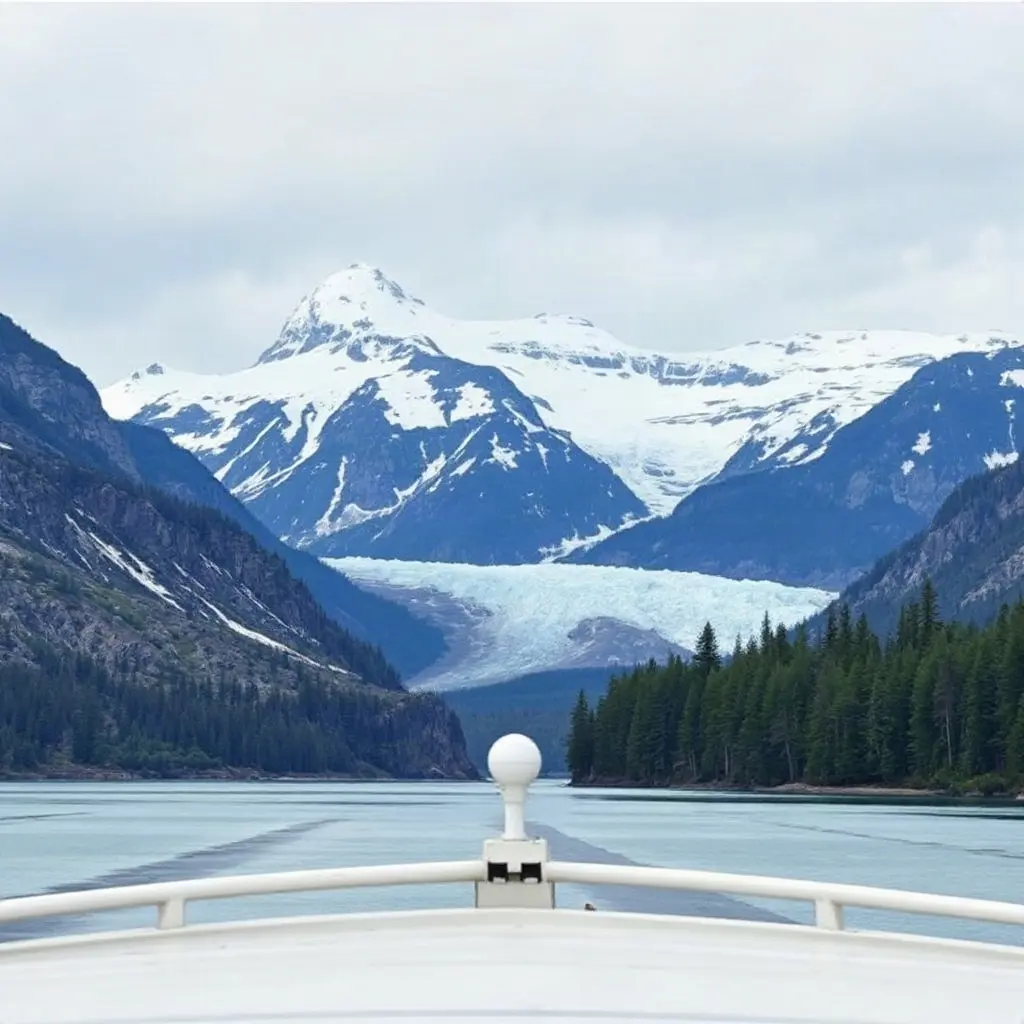
Seasonal access is a major limitation. Snow, ice and road conditions can affect national park transport and remote trails, while some marine or flightseeing operations operate only within particular windows. Published route guidance specifically advises matching dates with Denali bus schedules, Alaska Railroad services and Kenai Fjords tours 1. A weather buffer near the end of the itinerary reduces the risk of missing an onward flight after a delayed boat, train or road journey.
Typical 2026 costs and what they cover
There is no single market price for a 14-day expedition because lodging standard, transport mode, season and paid excursions change the total substantially. A 2026 Alaska cost guide places a typical seven-day trip at approximately $2,500 to $7,000 per person, with luxury travel reaching $9,000 to $15,000 or more before international flights 3. Another guide places broad trip budgets at $1,500 to $3,000 for budget travel, $3,000 to $6,500 for mid-range travel and $6,500 or more for higher-comfort travel 4.
| Expense area | Published planning figure | What affects it |
|---|---|---|
| Seven-day total | $2,500 to $7,000 per person in 2026 | Flights, lodging, activities and travel style 3 |
| Budget daily spending | $150 to $250 per person | Camping, cooking and self-directed transport 5 |
| Rental car example | Around $200 per day | Vehicle type, season, insurance and rental duration 2 |
| Mid-range trip benchmark | $3,000 to $6,500 per person | Hotels, mixed transport and several paid activities 4 |
For a 14-day plan, the relevant comparison is not a quoted package but the sum of two weeks of rooms, meals, transport and activities. Lodging is often the largest variable: one 2026 guide describes hostels around $30 per night, hotels around $200 to $400 and lodges from $500 to $1,000 or more 5. These are market benchmarks, not fixed prices, and peak summer dates can create higher costs.
Entry rules, permits and practical preparation
Travelers entering the United States should check passport, admission and transit requirements based on nationality and route before departure. A Seattle start can involve a domestic US itinerary, a marine journey or an overland crossing through Canada, and each path may involve different documentation. National parks and protected areas can also apply rules for camping, boating, wildlife viewing, fishing, backcountry travel and commercial guiding.
Preparation should match the environment rather than the calendar alone. Layered clothing, waterproof outerwear, sturdy footwear, insect protection and navigation equipment are useful for rapidly changing conditions. Remote travel also requires attention to fuel, food, communications and evacuation arrangements. The principal risks are delayed transport, limited services outside population centers, wildlife encounters, wet weather and expensive last-minute changes, making conservative timing and clear cancellation terms important when comparing independent travel components.
How to compare itinerary options
The strongest comparison starts with geography. A route covering Anchorage, Seward, Denali and Fairbanks provides a coherent land journey, while adding Juneau or Glacier Bay turns the trip into a mixed air or marine itinerary. Published 14-day guidance recommends avoiding constant hotel changes and building travel buffers around fixed rail, park-bus and boat departures 1. A slower itinerary usually sacrifices one destination but improves time for hiking, wildlife viewing and weather recovery.
Cost comparisons should identify what is included and what remains separate. A headline figure may exclude flights, park transport, meals, equipment, fuel, gratuities, permits or guided activities. Independent travelers should also examine vehicle restrictions, one-way drop charges, accommodation location, accessibility and emergency procedures. The most defensible 2026 plan is therefore a documented itinerary with realistic transport intervals, seasonal operating dates and a total cost range rather than an assumption that the phrase “expedition” represents one standardized product.
Sources
- Alaska Road Trip: A Realistic 14-Day Anchorage–Denali–Fairbanks–S...: https://exploringtheunitedstates.com/alaska-road-trip-itinerary/
- An Incredible 14-Day Alaska Summer Itinerary (from a local) -: https://www.travelingigloo.com/incredible-14-day-alaska-summer-itinerary/
- What Is the Average Cost of a Trip to Alaska?: https://thealaskafrontier.com/average-cost-trip-alaska/
- Alaska Trip Cost Guide: Budget, Mid-Range, and Splurge Pric…: https://alaskan.life/alaska-trip-cost-guide
- Alaska on a Budget: What It Actually Costs and Where to Save -: https://www.alaskaexplored.com/alaska-on-a-budget/