6-day Swiss Alps getaway with train passes, mountain chalet, and dining credit: A practical cost and itinerary analysis
Key facts
- A six-day first visit commonly combines Zurich, Lucerne, and Interlaken rather than attempting the entire Swiss Alps.
- A 2026 Swiss Travel Pass for six consecutive days costs CHF 399 in second class or CHF 634 in first class for adults.
- Comparable Swiss accommodation ranges from CHF 100 to CHF 450 per room nightly across lower-cost hotels and four-star properties.
- Mountain excursions, dining-credit rules, airport transfers, and entry requirements require separate verification because coverage varies by itinerary.
A six-day Swiss Alps getaway with train passes, mountain chalet lodging, and dining credit is best understood as a trip structure rather than a standardized travel product. The phrase does not identify a particular valley, property, rail pass, meal allowance, or operating period. A realistic plan usually concentrates on one or two alpine bases, with rail travel linking arrival cities, lakes, villages, and mountain excursions.
What fits into six days
A practical first-time route can start in Zurich, continue to Lucerne, and finish around Interlaken and the Jungfrau region. One published 2026 itinerary places Zurich on the first day, Lucerne on the second and third, Interlaken on the fourth, and Lauterbrunnen, Wengen, or Grindelwald on the fifth, leaving the sixth day for departure or a final excursion 1. This structure limits repeated hotel changes while combining urban sights, lakes, and high mountain scenery.
Lucerne offers Chapel Bridge, the old town, Lake Lucerne, and access toward Mount Rigi or Mount Pilatus. Interlaken is a practical base for Lauterbrunnen Valley, Wengen, Grindelwald, and nearby viewpoints. A chalet-style stay is more plausible in a mountain village than beside Zurich Airport, but the final transfer may involve a regional train, bus, cable car, funicular, or walk with luggage. Zermatt, St. Moritz, and the Bernese Oberland are alternatives, although fitting several distant regions into six days creates a faster pace.
Rail passes and mountain transport
The 2026 Swiss Travel Pass adult price for six consecutive days is CHF 399 in second class and CHF 634 in first class. The same published table lists CHF 254 and CHF 405 for three days, CHF 309 and CHF 492 for four days, and CHF 439 and CHF 697 for eight days, respectively 2. The pass generally supports extensive travel on trains, buses, boats, and local public transport, but the exact validity map matters.
Ordinary rail coverage should not be confused with every mountain journey. The pass can provide full coverage on selected mountain routes and reduced fares on others, while Jungfraujoch, Pilatus, Titlis, cable cars, funiculars, and special panoramic services may require an additional payment or seat reservation. One 2026 comparison identifies full coverage for Rigi, Stanserhorn, and Stoos, while reporting a 25 percent reduction for Jungfraujoch and 50 percent reductions for Pilatus and Titlis 2. Scenic services may also have separate reservation rules.
Chalet lodging and likely accommodation costs
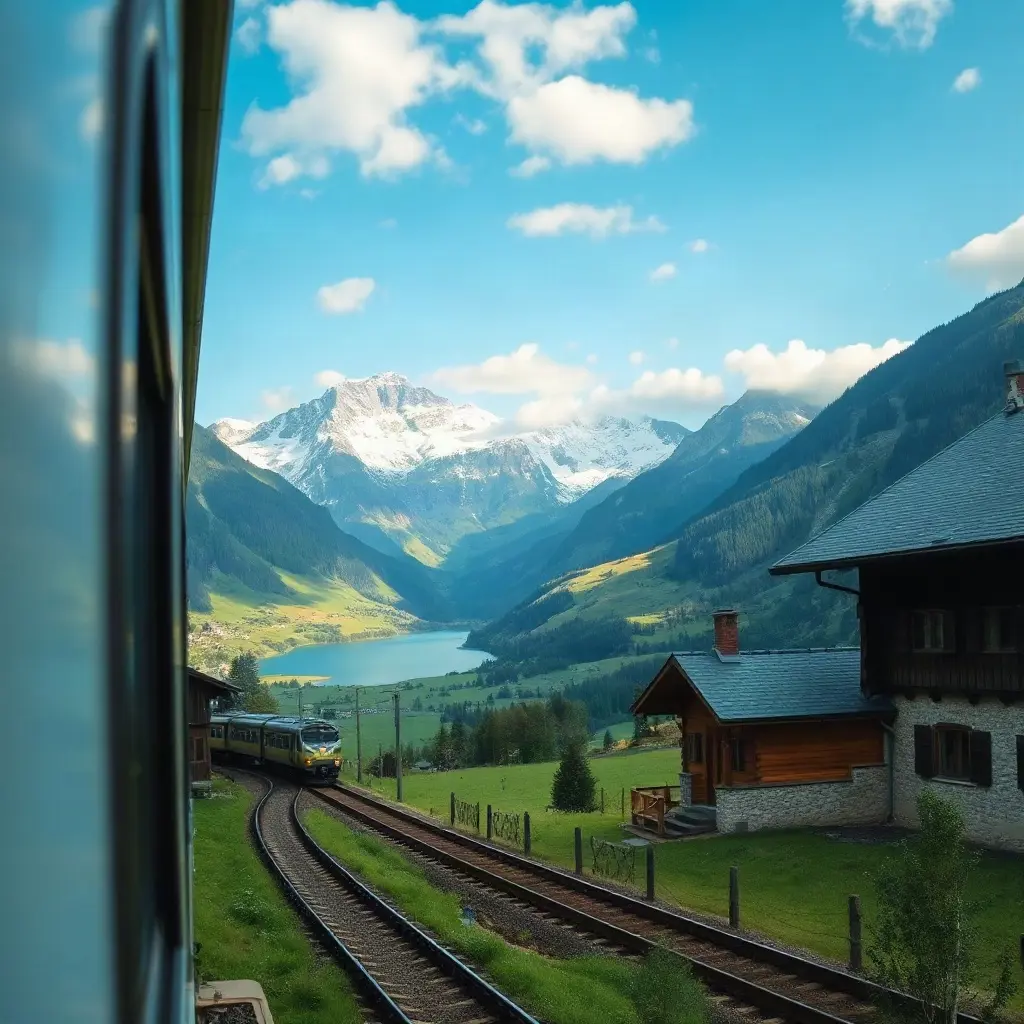
“Mountain chalet” can describe several arrangements: a standalone holiday property, a room in a shared chalet, a guesthouse, a lodge, or a hotel built in alpine style. Location affects the experience as much as the room itself. A village connected directly to the rail network is easier with luggage, while a remote property may require a private transfer, local bus, or uphill walk. Room occupancy, breakfast, kitchen access, cleaning charges, and cancellation terms should be treated as separate details.
A 2026 Switzerland cost guide places budget hotels and guesthouses at roughly CHF 100 to CHF 180 per double room nightly, three-star hotels at CHF 180 to CHF 280, and four-star properties at CHF 280 to CHF 450. Its figures are per room rather than per traveler and vary with season and location 3. Over five nights, that implies approximately CHF 500 to CHF 2,250 before taxes or additional property charges, although a private chalet can price differently from a comparable hotel room.
Dining credits and meal planning
A dining credit is normally an allowance tied to a traveler, room, day, or complete stay. It may apply only at named restaurants, to selected menus, or during specified meal periods. The useful value depends on whether taxes, service charges, drinks, room service, takeaway food, and special events qualify. A credit that cannot be carried forward or exchanged for cash is less flexible than an unrestricted meal allowance.
Swiss restaurant costs make the conditions important. A 2026 travel-cost guide reports that a three-course dinner for two at a mid-range restaurant averages about CHF 100, while comparable meals in Zurich can approach CHF 150 3. Travelers comparing any advertised credit should check its currency, daily or per-stay limit, expiration, participating venues, reservation requirement, unused balance rule, and treatment of children. The headline amount alone does not establish its practical value.
Overall cost considerations for 2026
The rail component alone can range from CHF 399 to CHF 634 for a six-day adult pass, depending on class 2. Five nights of comparable accommodation can range from roughly CHF 500 to CHF 2,250 using the published room-rate ranges above 3. Meals, mountain transport, local transfers, international airfare, taxes, and optional activities sit outside those two components unless the written terms expressly include them.
Airfare from the United States varies by departure city, season, routing, and baggage rules, so it should be treated as a separate cost rather than assumed to be part of a six-day land itinerary. A package comparison should distinguish the number of nights from the number of travel days, clarify whether arrival and departure flights are included, and identify whether the dining allowance is per traveler or per room. Weather-related changes and transport interruptions can also create incidental expenses.
Airports, rail routes, and mountain transfers
Zurich is a common starting point for central and eastern Switzerland because the airport connects directly with the national rail network. From Zurich, travelers can continue toward Lucerne and then Interlaken, with onward routes to Lauterbrunnen, Wengen, or Grindelwald. Geneva is useful for western Switzerland and routes toward Montreux, Bern, and Lucerne. A separate six-day rail itinerary describes Geneva, Montreux, Bern, Lucerne, and Zurich as a west-to-east sequence with frequent rail connections 4.
The final alpine leg is often slower than the map suggests. Rail journeys can involve changes, steep valley routes, mountain railways, or a cable car, and luggage access differs by village. Seat reservations are not automatically included simply because a rail pass is valid. Travelers should confirm the exact route, class, reservation requirement, luggage arrangements, and last connection before selecting a remote chalet. Road transfers may be necessary when accommodation lies outside a rail-served settlement.
Seasons, rules, and practical risks
Summer generally favors hiking, lake travel, and broad access to high trails, while winter emphasizes snow conditions, skiing, and operating schedules. Spring and autumn can offer quieter village conditions but may bring maintenance closures, reduced mountain transport, muddy trails, or limited restaurant hours. Alpine weather can change rapidly, affecting visibility and excursion safety. A six-day schedule benefits from keeping at least one flexible activity near each base.
U.S. travelers should verify current passport validity, entry conditions, health guidance, transport rules, and local safety notices before departure because official requirements and operating conditions can change. The main risks in comparing a trip described this way are unclear inclusions, a chalet far from transport, extra mountain fares, restrictive dining-credit terms, and a timetable too ambitious for six days. Written terms should identify the provider, accommodation standard, pass duration, covered routes, taxes, transfers, and arrangements when weather disrupts services.
Sources
- 6 Days Trip in Switzerland: Itinerary & Cost: https://switzerlandtourpackage.com/6-days-trip-in-switzerland-complete-itinerary-stay-cost-breakdown-travel-guide/
- Swiss Travel Pass price 2026: is it worth it? | Premier Switzerland: https://premierswitzerland.com/swiss-travel-pass-or-point-to-point/
- How Much Does a Week in Switzerland Really Cost in 2026 - SwitzerLanding: https://switzerlanding.com/week-cost/
- 6 Days in Switzerland: Lakes, Old Towns, and Alpine Capitals by Rail — 6-day itinerary | Short Stay Guide: https://shortstayguide.com/itineraries/switzerland-in-6-days/