
The Essential Guide to Taking an Online ADHD Test for Adults
Fast Facts:
- Initial Insight: Get preliminary results in minutes, not weeks.
- A growing trend for adults seeking clarity before a clinical consultation.
Understanding Your Focus: A Guide to Online ADHD Assessments
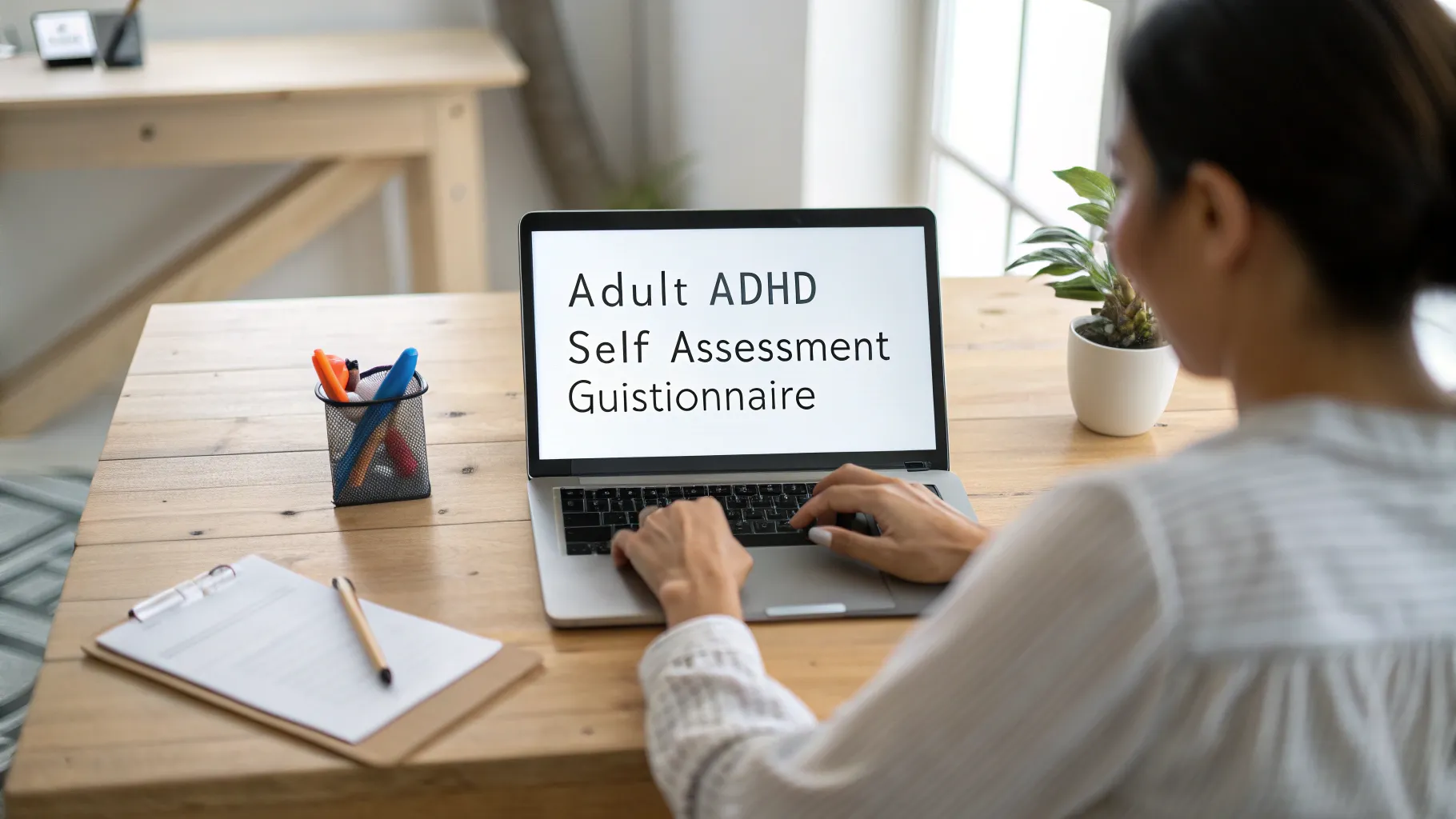
In a world demanding constant attention, many adults find themselves struggling with focus, organization, and impulsivity, wondering if there's an underlying cause. This is where an online adhd test for adults can serve as a valuable first step. These digital screening tools are designed to help you evaluate your symptoms against common criteria for Attention-Deficit/Hyperactivity Disorder from the privacy of your own home. While they are not a substitute for a professional diagnosis, they provide a structured way to gather information and decide whether to seek a formal evaluation from a healthcare provider. They offer a convenient, low-pressure starting point on a journey toward better self-understanding and management.
How Do These Digital Screenings Actually Work?
Most reputable online ADHD tests are based on established diagnostic criteria, such as the DSM-5. They typically present you with a series of multiple-choice questions or rating scales about behaviors and feelings you've experienced over the past six months. These questions are designed to measure the core symptoms of ADHD: inattention (e.g., difficulty sustaining focus, disorganization, forgetfulness) and hyperactivity-impulsivity (e.g., restlessness, interrupting others, acting without thinking). After completing the questionnaire, you usually receive a report that scores your responses and indicates whether your symptoms are consistent with those of ADHD. This report can be a crucial document to bring to a doctor or therapist to start a more informed conversation.
Finding a Credible ADHD Screener: Your Checklist
The internet is filled with quizzes, so it's vital to choose a reliable tool. A credible online adhd test for adults should be used for informational purposes only. Here are key factors to consider when selecting a screening tool:
- Check the Source: Prioritize tests developed or endorsed by clinical psychologists, psychiatrists, or reputable mental health organizations.
- Understand the Purpose: The tool should clearly state that it is a screening test for educational purposes and not a diagnostic instrument.
- Review Privacy Policies: Ensure your personal data and responses are handled confidentially and securely, especially if you are required to enter an email address.
- Avoid Exaggerated Claims: Be wary of sites promising an 'instant diagnosis' or pressuring you to buy supplements or programs based on your results.
Frequently Asked Questions
Are online ADHD tests accurate?
Reputable tests can be a good indicator and a helpful starting point, but they are not as accurate as a full clinical evaluation. They rely on self-reported symptoms and cannot account for other conditions, such as anxiety or depression, which can have overlapping symptoms with ADHD.
Can an online test provide a formal diagnosis?
No. A formal ADHD diagnosis can only be made by a qualified healthcare provider (like a psychiatrist or psychologist) after a comprehensive assessment. This evaluation often includes detailed interviews, a review of your medical and personal history, and sometimes input from family members. An online adhd test for adults is just the first step.
What should I do after taking an online test?
If the results suggest you may have ADHD, the recommended next step is to schedule an appointment with a healthcare professional. Bring a copy of your test results to discuss them and explore the possibility of a formal evaluation and potential treatment options.
References
- American Psychiatric Association. (2013). Diagnostic and statistical manual of mental disorders (5th ed.).
- Fayyad, J., et al. (2017). The descriptive epidemiology of DSM-IV adult ADHD in the World Health Organization World Mental Health Surveys.
- Kessler, R. C., Adler, L., et al. (2006). The World Health Organization Adult ADHD Self-Report Scale (ASRS).