
Concerned About Your Thoughts? Take This Online Paranoia Test for Adults
Fast Facts:
- Initial Insight: Quickly assess persistent suspicious thought patterns.
- Digital self-assessment tools are gaining traction among adults seeking confidential mental health resources.
Decoding Your Worries: A Guide to Digital Paranoia Assessments
In a world of constant information and digital connection, it's easy for feelings of suspicion and anxiety to arise. Many find themselves questioning interactions and events, wondering if their concerns are valid or potentially signs of something more. For those seeking clarity, a confidential and accessible first step can be an online paranoia test for adults. These digital screeners are designed not to diagnose, but to provide a structured way to reflect on your thought patterns and help you determine if seeking professional advice would be a beneficial next step. They offer a private space to explore feelings that might be difficult to articulate otherwise.
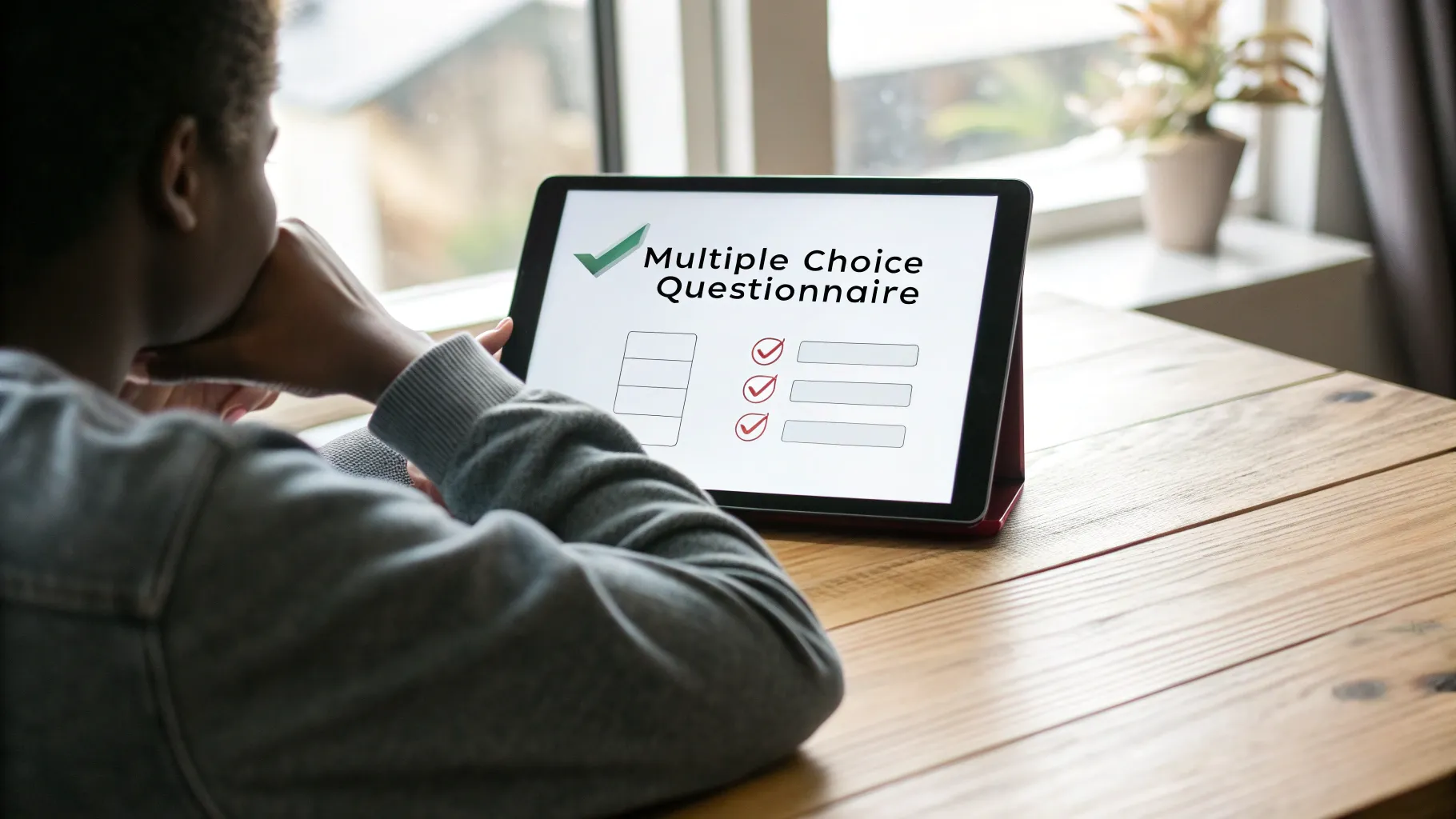
What to Expect from a Reputable Online Screening
Navigating the world of online mental health tools requires some understanding of what they can and cannot do. A well-designed test focuses on presenting scenarios and questions that reflect common experiences associated with paranoid ideation. It's crucial to approach these tests as preliminary tools rather than definitive diagnostic instruments. Below are key aspects you will encounter.
1. Confidential and Anonymous Input
Your privacy is paramount. Reputable tests do not require personal identification. The process is designed to be anonymous, allowing you to answer questions honestly without fear of judgment or data tracking. The focus is entirely on the self-assessment experience.
2. Scenario-Based Questioning
Instead of abstract questions, many tests use relatable scenarios. You might be asked to rate your level of agreement with statements like, "I often feel that I am being followed or watched," or "I am wary of others' intentions, even friends and family." This approach helps to ground the assessment in real-world feelings and situations.
3. Understanding the Scoring System
Upon completion, the test will provide a score or a categorical result (e.g., low, moderate, high). It is vital to read the accompanying interpretation carefully. This feedback will typically explain what your score signifies in general terms and strongly recommend consultation with a mental health professional for a true evaluation, especially if your results are in the moderate to high range.
Actionable Steps After Taking a Test
Receiving your results is just the beginning. The real value of an online paranoia test for adults lies in how you use the information to move forward. Here are constructive actions to consider:
- Consult a Professional: If your results cause you concern, the most important next step is to speak with a therapist, psychologist, or psychiatrist. They can provide a comprehensive and accurate diagnosis.
- Start a Thought Journal: Begin documenting situations where you feel suspicious or paranoid. Note the trigger, your thoughts, and your emotional response. This can be valuable information to share with a professional.
- Practice Grounding Techniques: When anxious thoughts spiral, grounding exercises can help bring you back to the present moment. Focus on your five senses: name five things you can see, four you can touch, three you can hear, two you can smell, and one you can taste.
- Curate Your Information Diet: Constant exposure to negative or fear-inducing news and social media can exacerbate feelings of paranoia. Consider limiting your intake and focusing on more positive or neutral content.
Frequently Asked Questions
Is an online paranoia test a formal diagnosis?
No. An online test is a self-screening tool, not a diagnostic instrument. A formal diagnosis can only be made by a qualified healthcare professional after a thorough evaluation.
How accurate are these online tests for adults?
The accuracy varies. Tests developed by mental health organizations tend to be more reliable as preliminary screeners. However, they should always be seen as a starting point for self-reflection, not a definitive conclusion.
What should I do if the test results concern me?
If your test results are concerning, it is highly recommended that you schedule an appointment with a doctor or mental health professional. They can offer guidance, support, and appropriate treatment options if necessary.
References
- National Institute of Mental Health (NIMH) - Resources on Anxiety and Psychosis
- American Psychiatric Association - Diagnostic and Statistical Manual of Mental Disorders (DSM-5)
- Mind - UK Mental Health Charity - Information on Paranoia