
The Future of Healthcare: Vein Scanners Latest Innovation in Medicine
Facts:
- Vein visualization improves patient comfort significantly.
- Global market for vein finders expected to grow steadily for medical practitioners.
Revolutionizing Patient Care with Advanced Vein Scanning Technology
The medical field is constantly seeking advancements to improve patient outcomes and procedural efficiency. Among the most impactful developments, vein scanners latest innovation in medicine stand out, transforming how healthcare professionals approach venipuncture and vascular access. These sophisticated devices are designed to enhance visibility of subcutaneous veins, making procedures smoother and less stressful for patients and clinicians alike. The ability to accurately check blood flow and vein patterns quickly is crucial for various medical interventions, from routine blood draws to complex IV insertions. This article delves into the transformative power of these technologies.
How Vein Scanners Enhance Medical Procedures and Patient Safety
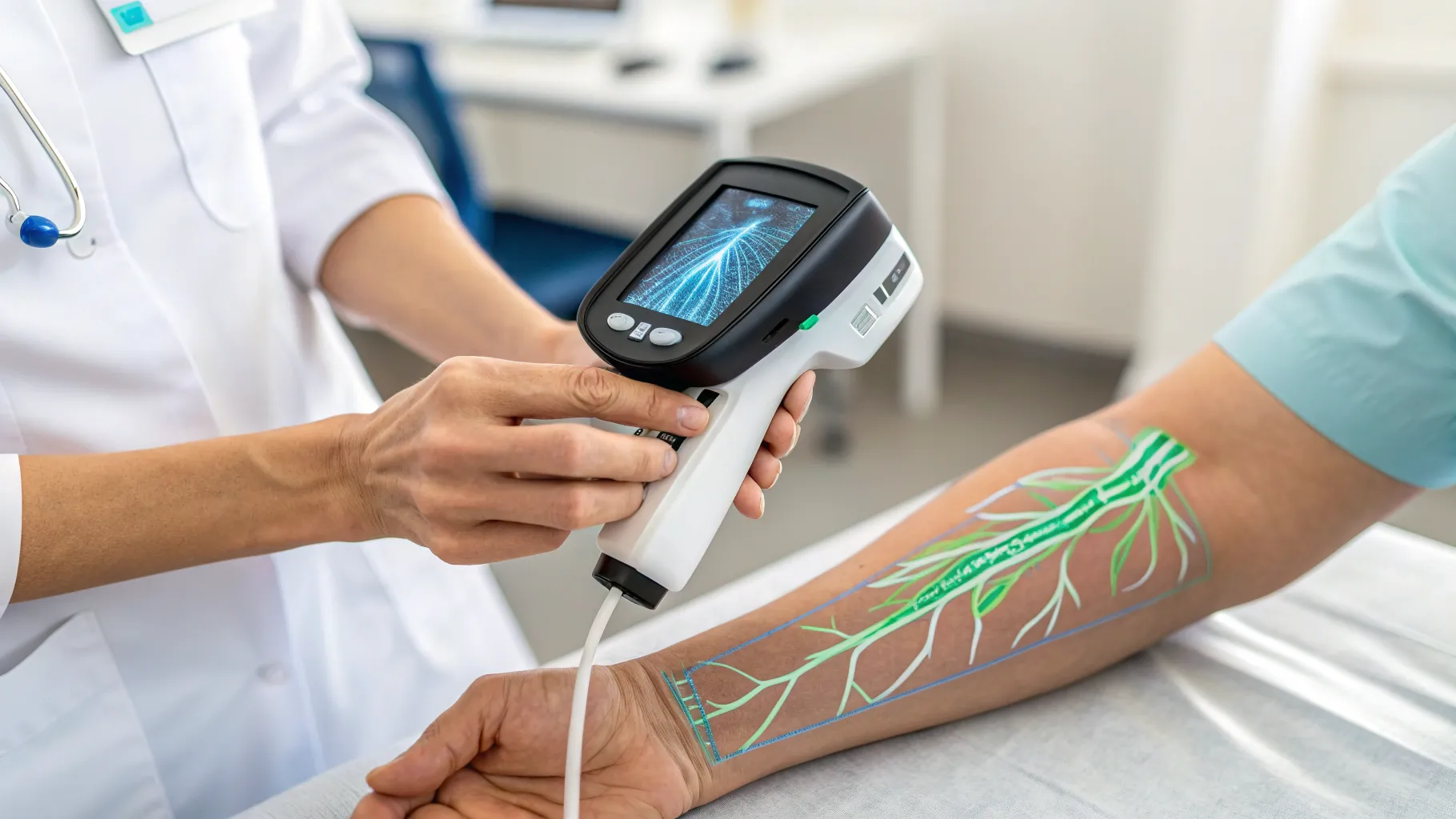
Vein scanners latest innovation in medicine employ various technologies, primarily near-infrared light, to detect hemoglobin in the blood. This light is absorbed by the blood and reflected by the surrounding tissue, creating a real-time, high-contrast image of the venous network on the skin surface. This immediate visualization capability is critical for a fast diagnose of suitable vein access points, especially in patients with difficult venous access (DVA) such as infants, the elderly, obese individuals, or those undergoing chemotherapy. The enhanced visibility minimizes the need for multiple needle sticks, which significantly reduces patient pain, anxiety, and the risk of complications like hematoma or nerve damage. The ability to precisely locate and assess the quality of veins helps medical staff perform procedures with greater confidence and accuracy, leading to improved patient satisfaction and operational efficiency within healthcare facilities.
The Impact on Diagnostic Speed and Accuracy
One of the most significant advantages of vein scanners latest innovation in medicine is their contribution to a fast diagnose and subsequent treatment. In emergency situations or critical care environments, every second counts. Rapid and accurate vascular access can be life-saving. By providing a clear map of the veins, these devices allow medical professionals to quickly identify the best site for venipuncture or cannulation, reducing procedural delays. This immediate feedback loop not only speeds up the diagnostic process but also ensures that medications or fluids can be administered without unnecessary delays. The precision offered by vein scanners minimizes the guesswork traditionally associated with vein location, thereby increasing the first-attempt success rate and optimizing patient flow through various medical departments.
Comparing Different Vein Scanner Technologies and Their Applications
The market for vein scanners latest innovation in medicine offers a range of technologies, each with its specific advantages and ideal applications. Portable, handheld devices are popular for their mobility and ease of use in diverse clinical settings, from hospital wards to home care. Desktop or trolley-mounted units often provide larger projection areas and more advanced features, suitable for surgical suites or dedicated phlebotomy centers. Some scanners use direct projection, overlaying the vein map onto the skin, while others employ digital imaging with a separate screen. Each type plays a vital role in enhancing patient care. For instance, in pediatric care, non-contact projection models are preferred to minimize patient discomfort, while in emergency medicine, robust, fast-deploying handheld units are invaluable to check blood flow quickly. Understanding the nuances of these technologies allows healthcare providers to select the most appropriate device price point and model for their specific needs, ensuring optimal performance and value.
Understanding the Device Price and Return on Investment
While the initial device price for vein scanners latest innovation in medicine might seem like a significant investment, their long-term benefits often translate into substantial cost savings and improved operational efficiency. The reduction in failed venipuncture attempts means fewer wasted supplies (nees, catheters, bandages) and less time spent by highly paid medical staff on repeated procedures. Furthermore, by improving patient comfort and reducing the risk of complications, these devices can enhance a facility's reputation and patient satisfaction scores, potentially leading to increased patient volume. The investment in a high-quality vein scanner can also be justified by its role in facilitating a fast diagnose and treatment, which can lead to better patient outcomes and shorter hospital stays. Healthcare administrators must consider not just the upfront cost but also the total cost of ownership and the comprehensive benefits these innovative tools bring to both patients and practitioners.
Future Trends and Innovations in Vein Scanning Technology
The field of vein scanners latest innovation in medicine is continuously evolving, with exciting future trends on the horizon. Researchers are exploring integration with artificial intelligence (AI) to provide predictive analytics for vein health and identify the most suitable access points based on patient history and real-time data. Miniaturization will likely lead to even more compact and wearable devices, possibly integrated into smart medical equipment. Enhanced imaging capabilities, such as multi-spectral imaging, could offer even greater depth and clarity in visualizing veins and assessing their patency. The goal is to make these technologies even more accessible, intuitive, and integrated into routine medical practice, further solidifying their role in ensuring a precise and fast diagnose while making it easier for professionals to check blood flow patterns in even the most challenging cases. These advancements promise to further elevate the standards of patient care globally.
Frequently Asked Questions
How do vein scanners improve venipuncture success rates?
Vein scanners latest innovation in medicine use near-infrared light to project a real-time map of a patient's veins onto the skin surface. This visual guide allows healthcare professionals to clearly see the location, size, and bifurcations of veins, significantly increasing the likelihood of a successful first-attempt venipuncture. It reduces the need for palpation and guesswork, leading to a more efficient and comfortable procedure for the patient and assisting with a fast diagnose capability.
Are vein scanners suitable for all patient populations?
Yes, vein scanners are highly beneficial for a wide range of patient populations, particularly those considered to have difficult venous access. This includes infants, children, the elderly, individuals with dark skin tones, obese patients, and those with chronic illnesses or undergoing chemotherapy. The ability to accurately check blood flow and visualize hidden or collapsed veins makes these devices invaluable across various demographics, ensuring equitable access to effective medical procedures.
What factors influence the device price of a vein scanner?
The device price of a vein scanner can vary significantly based on several factors, including the technology used (e.g., near-infrared projection, ultrasound), its portability (handheld vs. cart-mounted), features (e.g., image enhancement, depth perception, battery life), brand reputation, and after-sales support. More advanced features and greater portability generally command a higher price. It's important for institutions to evaluate their specific needs and budget when considering purchasing a vein scanners latest innovation in medicine.
References
- Journal of Vascular Access, "The Efficacy of Near-Infrared Vein Finders in Pediatric Venipuncture."
- Emergency Medicine Reports, "Advances in Vascular Access Devices for Emergency Settings."
- Healthcare Technology Management, "Cost-Benefit Analysis of Vein Visualization Devices in Hospital Settings."
- Medical Device Innovation Journal, "Future Directions in Non-Invasive Vascular Imaging."